Astronauts Return to Earth in First ISS Medical Evacuation


January 15, 2026
2 min reading
 Add us on GoogleAdd SciAm
Astronauts return to Earth in first ISS medical evacuation
On Thursday, NASA chief Jared Isaacman said the Crew-11 return experience would be used to prepare for future human spaceflights, including to the Moon.
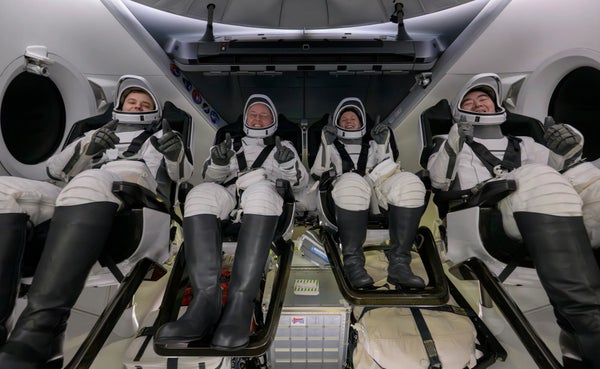
One of the most memorable chapters in NASA history is coming to an end: after requesting an unprecedented medical evacuation of four astronauts aboard the International Space Station (ISS), these space travelers returned home safely. The episode left myriad unanswered questions about what exactly happened to motivate the stunning decision to end their mission early – a first in the history of the ISS.
When asked at a news conference Thursday whether NASA planned to release more information about the medical situation that prompted the evacuation, agency head Jared Isaacman said it was “very committed to being transparent.”
“There are some medical privacy considerations here. That said, to the extent that we are able to share more information publicly and have the necessary consent, we would do so,” he said.
On supporting science journalism
If you enjoy this article, please consider supporting our award-winning journalism by subscription. By purchasing a subscription, you are helping to ensure the future of impactful stories about the discoveries and ideas shaping our world today.
“Obviously we took this action because this was a serious medical issue,” Isaacman said. “The astronaut in question is currently doing well, in good spirits and undergoing appropriate medical checks.”
Crew-11 crashed in a SpaceX Crew Dragon capsule off the coast of California around 3:41 a.m. EST. Escape Crew-11 includes NASA astronauts Mike Fincke and Zena Cardman, Japan Aerospace Exploration Agency astronaut Kimiya Yui, and Russian cosmonaut Oleg Platonov. NASA has not identified which of these astronauts experienced the medical problem. “The affected crew member is doing well. We will share updates on his condition as soon as it is appropriate,” Isaacman said Thursday.
The crew is undergoing medical evaluation on a receiving ship and headed to a hospital in San Diego, California, for further investigation and care, Joel Montalbano, deputy associate administrator for NASA’s Space Operations Mission Directorate, said at the same conference.
What happened to Crew-11 could influence how the agency prepares for future human spaceflight missions, including the next Artemis II flyby of the moon. NASA will conduct a full debriefing and review of the Crew-11 mission, Isaacman said.
“When we debrief on this, we’re going to learn a lot about the things that we did well and that we did very well and make sure we apply them in other applications in the future,” Isaacman said.
The ISS is equipped with a range of medical equipment, medications and diagnostic tools, all of which the station crew knows how to use. This means that most minor ailments can be treated on board: wounds can be sutured, blood can be drawn and ultrasound scans can be performed. But NASA obviously decided that what happened was serious enough that the ISS was not the ideal place to keep the sick astronaut. The agency plans for these contingencies for every mission, Isaacman said.
“There are early return options available on Artemis II. There are options to return astronauts to the space station in hours, not days. So I think the fact that we took a little bit longer here speaks to the stability of the situation,” he said.
It’s time to defend science
If you enjoyed this article, I would like to ask for your support. Scientific American has been defending science and industry for 180 years, and we are currently experiencing perhaps the most critical moment in these two centuries of history.
I was a Scientific American subscriber since the age of 12, and it helped shape the way I see the world. SciAm always educates and delights me, and inspires a sense of respect for our vast and magnificent universe. I hope this is the case for you too.
If you subscribe to Scientific Americanyou help ensure our coverage centers on meaningful research and discoveries; that we have the resources to account for decisions that threaten laboratories across the United States; and that we support budding and working scientists at a time when the value of science itself too often goes unrecognized.
In exchange, you receive essential information, captivating podcasts, brilliant infographics, newsletters not to be missed, unmissable videos, stimulating games and the best writings and reports from the scientific world. You can even offer a subscription to someone.
There has never been a more important time for us to stand up and show why science matters. I hope you will support us in this mission.


