100,000 mph ‘comet fragment’ explodes in green fireball over Great Lakes, eerie videos show


A meteor exploded over Michigan’s Great Lakes in a green fireball, videos reveal. This dramatic event was probably caused by the combustion of a comet fragment in the atmosphere.
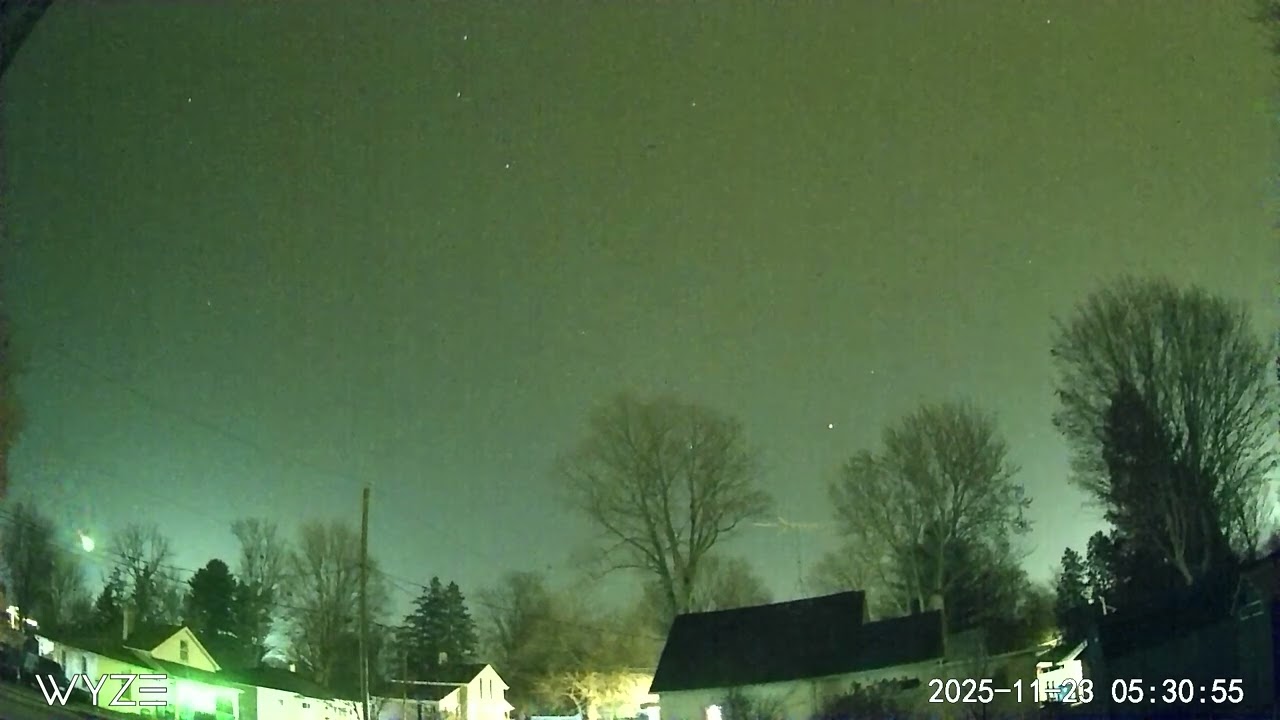
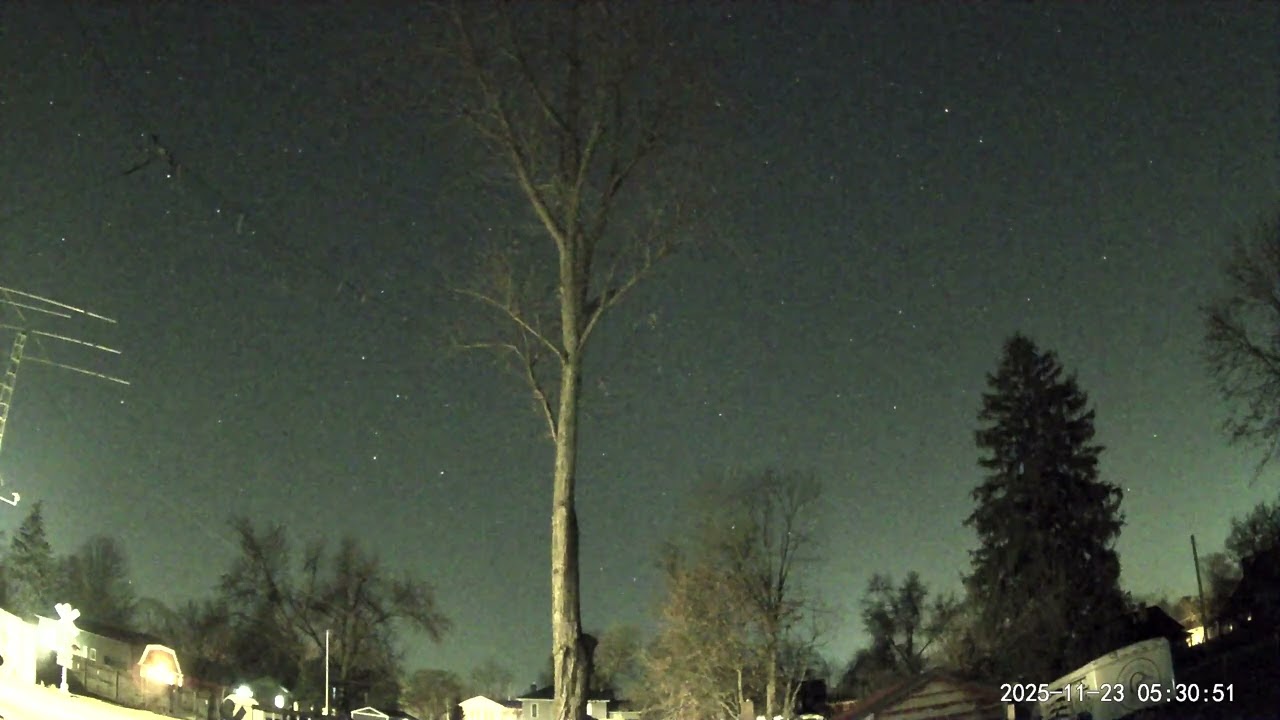
On Sunday, November 23, around 5:29 a.m. ET, dozens of witnesses reported a meteor streaking across the sky before exploding into a fireball. Cameras installed by the group Michigan Storm Chasers captured the object’s rapid passage and fiery descent, the group revealed in a statement. Facebook post.
Look on it
One video sent to AMS captured the astonishing fireball flying through the sky from Coldwater, Michigan, while another video showed the streaking light show in Tecumseh, Michigan.
NASA then tracked the meteor’s trajectory using videos and other reports. It became visible 62 miles (100 km) above Lake Hubbard, before racing at 98,500 mph (160,000 km/h) for another 82 miles (132 km) and disintegrating 46 miles (74 km) above Lake Huron, NASA officials wrote.
The streaking fireball was likely a one-off and not part of a larger rain shower, like the one currently underway. Leonid meteor showerwhich takes place from November 6 to 30. Leonid meteors are known for their speed, hitting Earth’s atmosphere at around 160,000 mph (260,000 km/h). This speed often produces bright meteors, or fireballs, some of which leave persistent trails. “This event appears to have been caused by a small comet fragment and was not part of any currently active meteor shower,” NASA representatives wrote.
Most comets and meteors can be seen with the naked eye, but photographing them requires a good set of astrophotography equipment.
Look on it
Fireball meteors sometimes give off a green color due to a high concentration of metals such as nickel, while faster meteoroids also usually produce brighter colors, according to MSA. Other elements can create different colored fireballs — for example, sodium produces a bright yellow color while magnesium appears blue-white, according to AMS.
Similar green colors have been emitted by other fireball meteors. For example, in July 2022, a green fireball was spotted over New Zealandand in November 2022, another crashed into Lake Ontario. Ontario’s fireball was the the smallest asteroid ever recorded in spacewith a width of only 16 to 24 inches (40 to 60 centimeters).


