Autonomous Deep-Sea Robots to Lead New Search for Missing Flight MH370


December 3, 2025
2 min reading
 Add us on GoogleAdd SciAm
Autonomous robots on the high seas to lead a new search for missing flight MH370
Texas company Ocean Infinity will send swarms of autonomous underwater vehicles into the southern Indian Ocean in a high-risk attempt to locate this missing plane.
ROB GRIFFITH/POOL/AFP via Getty Images
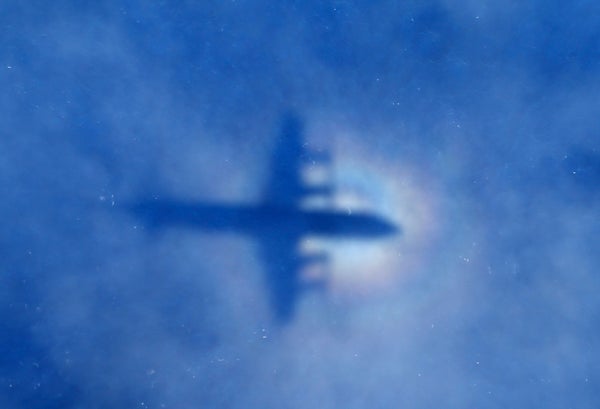
Malaysia restarts search for missing Malaysia Airlines flight MH370. The nation sends ships and robots into one of the most isolated stretches of ocean on the planet in hopes of solving one of aviation’s most haunting mysteries.
The Boeing 777 plane disappeared in 2014 with 239 people on board. Starting Dec. 30, Texas-based seafloor mapping company Ocean Infinity will spend 55 days scanning a 15,000 square kilometer (about 5,800 square mile) swath of the southern Indian Ocean that investigators believe may contain the plane wreckage.
It’s a high-stakes mission: The “no find, no fee” deal means Malaysia could pay Ocean Infinity up to $70 million, but only if the company produces major wrecks. Authorities are keeping the precise target area secret, but say it is based on satellite “handshake” tracking data and careful reconstructions of how dozens of pieces of debris could have drifted across the Indian Ocean before washing up on shore.
On supporting science journalism
If you enjoy this article, please consider supporting our award-winning journalism by subscription. By purchasing a subscription, you are helping to ensure the future of impactful stories about the discoveries and ideas shaping our world today.
The company relies on a more mature generation of ocean technology: largely unmanned surface ships coordinating swarms of autonomous underwater vehicles that can hover a few dozen meters above the seafloor and map the terrain to a depth of nearly 6,000 meters with multi-beam sonar, sub-sea profilers and high-resolution imaging. Ocean Infinity claims its improved system can cover more ground at higher resolution and with a lower carbon footprint than traditional survey fleets.
The new research comes after years of fruitless searches. From 2014 to 2017, Malaysia, Australia and China searched 120,000 square kilometers of seabed, at a cost of around $155 million (more than $200 million today). In 2018, Ocean Infinity scanned more than 100,000 additional square kilometers. None of these campaigns made it possible to discover the main wreckage or the victims. Only three confirmed wing pieces were recovered.
It’s time to defend science
If you enjoyed this article, I would like to ask for your support. Scientific American has been defending science and industry for 180 years, and we are currently experiencing perhaps the most critical moment in these two centuries of history.
I was a Scientific American subscriber since the age of 12, and it helped shape the way I see the world. SciAm always educates and delights me, and inspires a sense of respect for our vast and beautiful universe. I hope this is the case for you too.
If you subscribe to Scientific Americanyou help ensure our coverage centers on meaningful research and discoveries; that we have the resources to account for decisions that threaten laboratories across the United States; and that we support budding and working scientists at a time when the value of science itself too often goes unrecognized.
In exchange, you receive essential information, captivating podcasts, brilliant infographics, newsletters not to be missed, unmissable videos, stimulating games and the best writings and reports from the scientific world. You can even offer a subscription to someone.
There has never been a more important time for us to stand up and show why science matters. I hope you will support us in this mission.