Benefits fraud is long-standing in both blue and red states : NPR

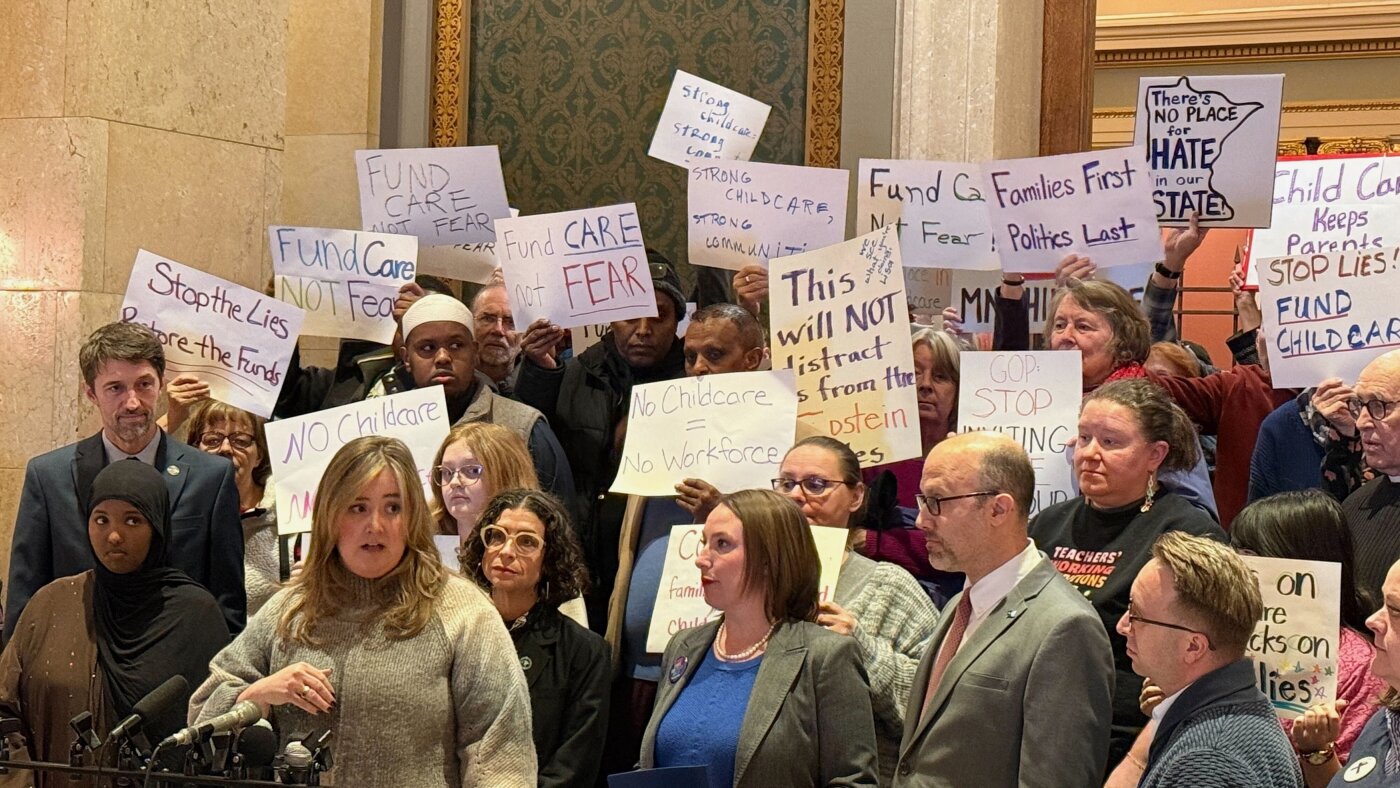

Child care advocates spoke at a news conference last month at the Minnesota State Capitol building in St. Paul.
Giovanna Dell’Orto/AP
hide caption
toggle caption
Giovanna Dell’Orto/AP
The Trump administration has stepped up its campaign against allegations of welfare fraud, freezing funding for social services in five Democratic-led states and announcing a new fraud-focused position within the Justice Department that will report directly to the White House. The authorities also point, without proof, to immigrants as the main drivers of fraud.
Friday evening, a district judge in New York blocked the funding freeze for now.
Public policy experts say the structure of America’s safety net programs creates opportunities for fraudsters and more could be done to address them. At the same time, there are concerns that the Trump administration’s unfounded fraud claims could undermine public trust in a system that millions of people rely on.

The issue gained momentum late last month after right-wing media influencer Nick Shirley alleged corruption at Somali American day care centers in Minnesota. Although his accusations were unfounded, they fueled a political storm. They also focused renewed attention on a massive, years-long benefits scandal in Minnesota that has already seen more than 60 people convicted and dozens more indicted.
Here’s a look at some of the issues.
Accusations of benefit fraud are as old as the programs themselves
America’s first major welfare program was for Civil War veterans’ pensions, “and that was also associated with a lot of accusations of fraud and mismanagement by the government,” says Don Moynihan, a public policy expert at the University of Michigan.
He says long-standing tropes around welfare fraud persist today, along with actual fraud, but that the Trump administration is politicizing the issue.
The extent of benefits fraud is not known as it is likely that not all criminal behavior goes undetected. But “ultimately, taxpayers lose billions and billions of dollars every year to improper payments, including fraud,” says Matt Weidinger, who studies poverty at the conservative American Enterprise Institute and has worked on unemployment benefits policy.
Most fraud is committed by outside providers or scammers, not as many recipients. The vast majority of people convicted of this type of fraud are American citizens. In fact, undocumented immigrant workers pay billions into Social Security each year, subsidizing a program they will never benefit from.

Wrongdoing occurs despite procedures required to prevent it, as well as investigations by inspectors general, state audits, and criminal prosecutions.
The Structure of the U.S. Safety Net Creates Opportunities for Fraud
It’s common for states to administer programs with federal money, which Weidinger says undermines their incentive to be “super vigilant.”
“It’s the same reason you don’t wash rental cars, right? They actually belong to someone else,” he says.
He notes that there are also more than 80 federal social service programs aimed at low-income people, a sprawling network that is confusing for people who need help and is “too complicated to administer effectively.”
Many benefits also accrue to private contractors for services already performed. Moynihan says this reflects Americans’ desire for smaller government, but it comes with a tradeoff.
“Once you make that choice, it also opens up more opportunities for bad apples to engage in fraud,” he says. “The government then needs to do more to monitor this behavior to try to prevent it.”
Democrats say Trump aims to ‘punish’ them, not fight fraud
The Trump administration specifically alleged “extensive and systematic fraud” in five Democratic-led states: California, Colorado, Illinois, Minnesota and New York. Letters sent to each this week say there is “reason to believe” they are “unlawfully providing benefits to illegal aliens,” although the administration has provided no evidence of ongoing fraud.
“For too long, Democratic-led states and governors have been complicit in allowing massive amounts of fraud to occur on their watch,” Department of Health and Human Services spokesperson Andrew Nixon said in a statement to NPR. “Under the Trump Administration, we are ensuring that federal taxpayer dollars are used for legitimate purposes. We will ensure these states follow the law and protect taxpayers’ hard-earned dollars.”

In total, the agency is seeking to withhold $10 billion in cash aid, child care subsidies and other social services for low-income families until states provide a large amount of data — going back several years — on recipients, providers and anti-fraud measures.
The five Democratic-led states have filed a lawsuit, arguing that the funding freeze is illegal and violates Congress’ spending authority. At a news conference Friday, New York Attorney General Letitia James called the move cruel and said it was “about punishing Democratic states that oppose the president.”
California Attorney General Rob Bonta compared it to the pause in SNAP food assistance during the recent federal lockdown, saying it amounted to “a political attack on the most vulnerable in our society.”
Fraud occurs in every state, blue and red, says researcher Weidinger, because criminals “will find weaknesses wherever they are.”
A recent massive cash aid scandal occurred in Mississippi. In December 2024, the Biden administration informed the state that it must repay $101 million in misspent welfare dollars. Last year, the Trump administration rescinded that penalty letter, granting the state’s request for additional time.