DNA reveals the diseases that devastated Napoleon’s doomed army


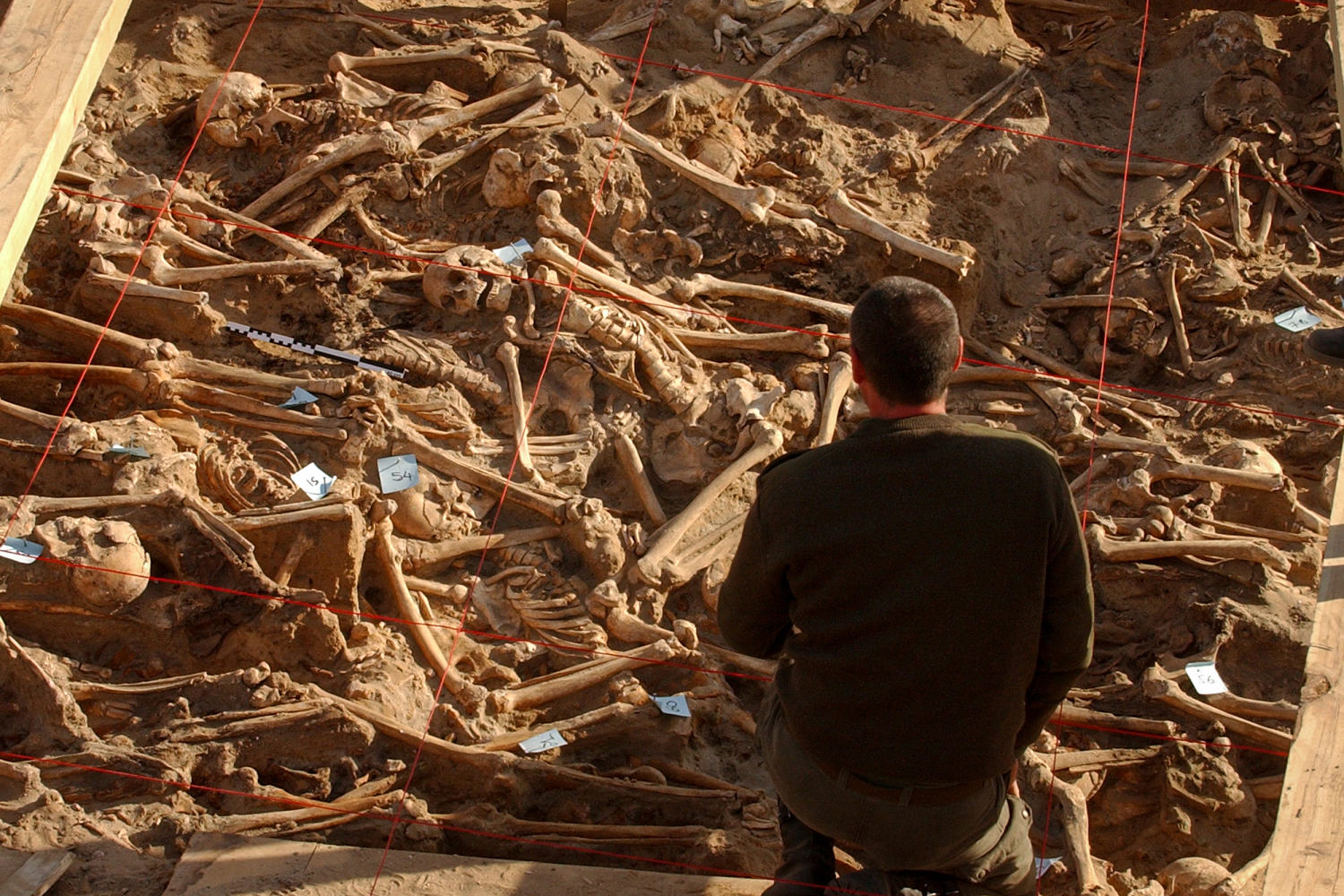
When Napoleon entered Russia in 1812, he took with him the largest army Europe had ever seen. When he limped back, he had found his adversary – not in musket or cannon fire, but in germs.
Researchers who analyzed DNA from the teeth of soldiers who died during the retreat from Moscow say they have identified two diseases that devastated the Emperor’s vaunted Great Army.
Since 1812, “people thought that typhus was the most common disease in the army,” said Nicolás Rascovan, head of the microbial paleogenomics unit at the Pasteur Institute and author of the study published in the journal Current Biology.
Using a technique called shotgun sequencing, Rascovan and his team were able to analyze ancient DNA from the dental remains of 13 soldiers found near Vilnius, Lithuania, and identify two “previously undocumented pathogens.”
“We have confirmed the presence of Salmonella enterica belonging to the Paratyphi C lineage,” he told NBC News, referring to the bacteria that causes paratyphoid fever, as well as “Borrelia recurrentis, the bacteria that causes relapsing fever,” which causes episodes of fever.
These diseases would have flourished where people “were in very poor sanitary or hygienic conditions”, he added.
The findings are consistent with historical descriptions of symptoms experienced by soldiers in Napoleon’s army, such as fever and diarrhea, researchers said in the study.
A “reasonable scenario” for these deaths would be “a combination of fatigue, cold and several illnesses, including paratyphoid fever and relapsing fever transmitted by lice,” they wrote.
“Although not necessarily fatal, relapsing fever transmitted by lice could significantly weaken an already exhausted individual,” they added.
Unlike a 2006 study that found traces of the bacteria that causes typhus or trench fever in four individuals out of a group of 35, the team found no traces of these illnesses.
But Rascovan said that while the previous study was limited by the technology of the time, its results remained valid and, coupled with the new findings, gave a better picture of the conditions that devastated Napoleon’s army.
“Finding four different pathogens in such a number of individuals really shows that there is a high prevalence of infectious diseases of all kinds,” he said.
By the time Napoleon’s troops withdrew, around 300,000 men were dead. It seems that even an emperor cannot outsmart a microbe.


