How the Mesopotamians Wrote About Their Feelings Gives Us Insight into Their Ancient World


Poets and writers have woven emotional stories through history. Often, we, writers, describe emotions through body parts. Our hearts hurt when we experience an unrelated love. We get butterflies in our stomach when our crushing is nearby. We “see” red when we are angry.
Although we often associate these emotions with specific parts of the body, some of our old ancestors have described these feelings in a slightly different way. A study in 2024 in iscience Explore how ancient Mesopotamians can have expressed their emotions, describing feelings such as “the full liver” or anger in their feet.
Learn more: These 5 ancient civilizations cherish their pets
Mesopotamia and old anatomy
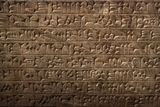
For this study, a multidisciplinary research team from the University of Helsinki, the University of Aalto, the University of Turku and Johannes Gutenberg-Universität Mainz Mainz examined Cunéiforms in clay written in Akkadian, a language used from 934 to 612 before our work
The team analyzed more than a million Akkadian words and determined that the former Mesopotamians had a complete knowledge of their internal anatomy. They were aware of their lungs, their liver and their hearts.
“Even in ancient Mesopotamia, there was an approximate understanding of anatomy,” said Professor Saana Svärd of the University of Helsinki, Assyrologist and Senior Researcher of the Study, in a press release. “For example, the importance of the heart, liver and lungs.”
According to the results, the former Mesopotamians have often described positive emotions as being felt in the liver and used words such as “open”, “brilliant” and “being full” to describe these feelings. Although this may seem similar to the way we describe emotions today, there are notable differences.
For example, modern humans tend to feel anger in their upper body, while the ancient Mesopotamians felt anger in their feet. And even if love can be felt in the “heart” by the two groups of people, the ancient Mesopotamians also felt love in the liver and the knees, according to the press release.
How to map ancient emotions
About 10 years before the release of this project, Finnish researchers published a study that has mapped emotions through the human body. The cartography study explores how emotions such as anxiety can be experienced as a waterproofing in the chest, and how love can be perceived as a warm sensation throughout the body.
According to the cartography study, our bodies react physically and mentally to these emotions, preparing us to respond with actions such as race, struggle or participation in pleasant interactions. The participants in the cartography study were presented with an emotion, then asked to color a body image that spoke of this emotion.
Researchers from the old emotions study have used the results to create body cards for former Mesopotamians.
“If you compare the old Mesopotamian body card of happiness with modern body cards, it is largely similar, with the exception of a notable glow in the liver,” said cognitive neuroscientist Juha Lahnakoski, guest researcher at Aalto University, in a press release.
Emotional expressions
Although it is interesting to compare the emotions of the ancient Mesopotamians and modern humans, the researchers underline that it is essential to consider that modern emotional expressions, such as those found in the writings and words of songs, come from first -hand experiences. On the other hand, the old Mesopotamian cards were based on recordings written on the clay.
Today, many more people have access to reading and writing tools and know how to use them. However, in the old Mesopotamia, everyone did not have access to reading and writing, therefore their thoughts, their experiences and their emotions were left at the mercy of the scribes.
“It remains to be seen if we can say something in the future on the type of emotional experience typical for humans in general and if, for example, fear has always been felt in the same parts of the body. In addition, we must keep in mind that texts are texts and emotions are lived and experienced,” said SVärd in a press release.
A study like this is a first of its kind. However, researchers believe that they can apply the method of combining emotions and body parts in other ancient languages to determine if other ancient people have experienced emotions differently.
“This could be a useful way to explore intercultural differences in the way we experience emotions,” Svärd said in a press release.
This article is a republished version of ther Article published previously.
Learn more: What was education for these 5 old companies like
Article sources:
Our Discovermagazine.com writers use studies evaluated by high -quality peers and sources for our articles, and our publishers examine scientific precision and editorial standards. Review the sources used below for this article:


