WHO Reports Global Rise in Antibiotic Resistance and Superbug Deaths


Global rise in superbugs, Chikungunya hits Long Island and satellite data leaks
A new WHO report warns of growing antimicrobial resistance, and researchers discover satellite data leaks and insect surprises.
Smith Collection/Gado/Contributor/Getty Images
Rachel Feltman: Happy Monday, listeners! For Scientific AmericanIt is Science quickly, My name is Rachel Feltman. Let’s start the week with a quick round-up of some of the latest science news.
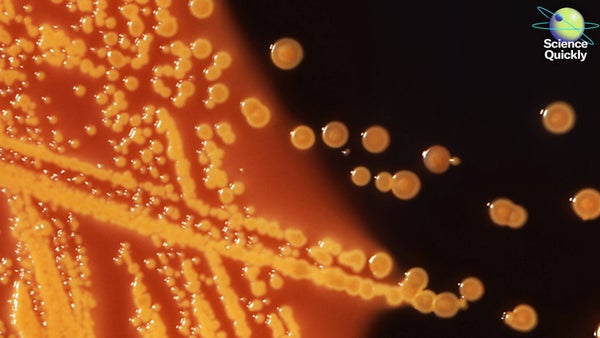
Last Monday, the World Health Organization warned that drug-resistant bacterial infections were on the rise around the world. According to the WHO, antimicrobial-resistant superbugs, or AMR, contributed to nearly five million deaths in 2019 and are directly responsible for more than a million. By 2023, one in six laboratory-confirmed bacterial infections had antibiotic resistance, and more than 40% of the drugs commonly used in these cases had lost their effectiveness in the previous five years. Low- and middle-income countries were more likely to experience antibiotic resistance, the study found. New York Times. And, in fact, the situation may be worse than it seems: WHO noted that only 48 percent of countries actually share data on antimicrobial resistance, and of those, about half lack tracking systems. Improving surveillance in the coming years will be crucial in the fight against superbugs, the agency said.
Focus on more localized public health news and much more important bugs. New York authorities confirmed last Tuesday that a Long Island resident had tested positive for the chikungunya virus. The infected person, who lives in Nassau County, reportedly traveled out of the county but not internationally before contracting the mosquito-borne illness, making it the first reported transmission in the United States since 2019.
On supporting science journalism
If you enjoy this article, please consider supporting our award-winning journalism by subscription. By purchasing a subscription, you are helping to ensure the future of impactful stories about the discoveries and ideas shaping our world today.
The Chikungunya virus is transmitted by two types of mosquitoes, one of which is found on Long Island. The virus can cause severe joint pain that persists for months, or even years in some cases. Other symptoms include fever, muscle aches, nausea, headache, joint swelling, fatigue and skin rashes. While most people make a full recovery in about a week, some may suffer serious eye, heart, and neurological complications. These serious cases are more common in infants, the elderly, and people with underlying health conditions. Although the virus is usually transmitted through a mosquito bite, it is possible for a newborn to catch chikungunya from its biological parent during delivery.
The last time we saw local transmission of chikungunya in the United States and its territories was in 2019. Transmission within states and territories began five years earlier, when cases emerged in Florida, Texas, Puerto Rico, and the U.S. Virgin Islands after an increase in people returning from international travel carrying the virus, according to the Centers for Disease Control and Prevention. Once a person brings the virus home, it is possible that local mosquitoes will bite them, contract the infection, and pass it on to others.
On the bright side, health officials have found no signs of continued transmission, and with fall temperatures arriving, local mosquitoes are unlikely to pose much of a threat in the coming weeks. But people traveling abroad should remain cautious: the virus is actively spreading in several countries, including China, which the WHO says is experiencing the largest outbreak on record.
Here are some health news you can use Scientific AmericanNovember Print Issue: Which Supplements Really Help Reduce Chronic Inflammation? After looking for consistent results across several large, well-designed studies SciAm I found three: omega-3 fatty acids, a compound called curcumin found in turmeric, and vitamin D, which may be beneficial in certain conditions. For more details on the evidence behind these anti-inflammatory agents, visit ScientificAmerican.com or check out our latest issue in print at your favorite newsstand.
Now for some space news.
Scientists analyzing data from the European Space Agency’s Swarm satellites have found that a vulnerable region of Earth’s protective magnetic shield above the South Atlantic has expanded by an area roughly half the size of continental Europe over the past 11 years. According to a recent study by Earth physics and planetary interiorsThese changes come from unusual activity where the Earth’s molten iron outer core meets the rocky layer of the mantle, creating areas in which the direction of the magnetic field is reversed. The study authors say this weak zone poses risks to passing satellites and spacecraft because it exposes objects to high levels of radiation that can damage their electronic components.
Speaking of satellites, it turns out that many of those currently in orbit could put sensitive information at risk. Last week, a team of researchers from the University of California, San Diego and the University of Maryland presented a new study on satellite communications at an Association for Computing Machinery conference in Taiwan.
The researchers pointed a commercially available satellite receiver at the sky to see what data they could collect. Using a simple installation on a single rooftop in San Diego, the team was able to observe the satellite communications of nearly 15 percent of the geostationary devices currently in operation. Aaron Schulman, a professor at UCSD who co-led the research, said Wired that his team expected that most of the information received in these signals would be encrypted. Instead, the team picked up phone calls and text messages from thousands of T-Mobile customers in the span of just a few hours, saw what people were checking on airplane Wi-Fi, and even picked up communications related to military helicopters, all because no one bothered to encrypt the data.
When researchers began alerting businesses and agencies to the problem in late 2024, some, like T-Mobile, quickly added encryption. But researchers say others still haven’t secured their systems.
We will end with a cool animal story. In a study published last Thursday in Science stink bugs turn out to be, if not more pleasant, at least more interesting than previously thought. Female bedbugs in the Dinidoridae family are known to have an enlarged structure on their hind legs that scientists thought was a tympanal organ. It is a simple hearing organ found in many insects.
But when researchers looked at one species in this family, they discovered something unexpected: This strange leg structure is actually a mushroom nursery. The surface of the structure is full of tiny pores from which the filaments of a symbiotic fungus grow. When stink bugs reproduce, they deliberately transfer some of the fungus into their eggs. As the fungus grows, it appears to provide physical protection against parasitic wasps.
That’s all for this week’s roundup of scientific news. We’ll be back Wednesday to learn the secret formula for writing a convincing apology.
Science quickly is produced by me, Rachel Feltman, with Fonda Mwangi and Jeff DelViscio. This episode was edited by Alex Sugiura. Shayna Posses and Aaron Shattuck check in on our show. Our theme music was composed by Dominic Smith. Subscribe to Scientific American for more recent and in-depth scientific news.
For Scientific American, It’s Rachel Feltman. Have a good week!


