Texas sued over cell-cultured meat ban that went into effect on September 1


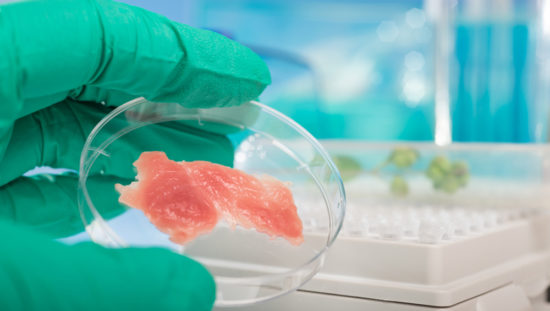
A second state law prohibiting meat cultivated by cells is challenged before the Federal Court.
The Institute for Justice (IJ), in collaboration with WildType and Upso Foods startups, continues Texas to reduce the newly promulgated ban on the sale of meat cultivated in the Lone Star State.
IJ and Upsy Foods are also the complainants of a trial against Florida, which promulgated a similar ban.
The last case was tabled in the United States District Court of the West District of Texas. IJ / Upsoid maintains that the law of Texas, SB 261, is nothing more than unconstitutional economic protectionism.
“For the same reason, California cannot prohibit Texas beef in California, Texas cannot ban California salmon or chicken,” said Uma Valeti, CEO and founder of Upso Foods. “Texans deserve the freedom to decide for themselves what to eat without politicians choosing for them.”
In the file, a preliminary injunction is sought to prevent Texas from enforcing SB 261 against the wild type and the increase, so that the two companies have the possibility of making their products available to Texas consumers while the case takes place. IJ has not been able to obtain a preliminary injunction in the dispute in Florida.
“Texas has always been a state with a” live-and-lelive “mentality-especially with regard to cooking,” said IJ’s main lawyer Paul Sherman. “No one forces Texans to eat everything they don’t want. But at the same time, the government should not prevent Texans from eating something they want.”
The Governor of Texas, Greg Abbott, signed SB 261 on June 20. The law, which entered into force on September 1, 2025, imposes a total ban on the sale of meat cultivated in the state of Texas. Violations bear steep penalties, including fines of up to $ 25,000 a day and even a prison sentence.
Wild food and upward foods are two of the rare so-called alt-Meat companies under the joint regulatory authority of the Food and Drug Administration and the US Department of Agriculture.
“We want the Texans to taste and have their own opinion,” said Justin Kolbeck, co-founder and CEO of Wildtype.
The trial disputes the prohibition of Texas under two provisions of the American Constitution. First, the trade clause prohibits states from promulgating protectionist measures that discriminate businesses from other states. Second, the supremacy clause prohibits states from promulgating laws that come into conflict with federal law.
A bench trial was planned for Upsoid v. Florida for February 17, 2026, for closer reasons. However, this date was withdrawn, judge Mark E. Walker providing for resetting the date of the trial once the court settles on the next summary judgment requests, which are now on March 13, 2026. The two parties have until February 24, 2026 to complete all the facts and the discovery of experts.
The other laws of the states adopted this year seeking to regulate on the cultivation products of cells prohibit.
Montana HB 401 (chap. No. 276-2025) deals with the sale of meat cultivated in the laboratory. The bill prohibits the sale or distribution of meats cultivated by cells. It provides that a retail food establishment which sells or distributes meat products cultivated by cells is subject to disciplinary measures
North Dakota HB 1151 (chapter n ° 503-2025) deals with cellular cultivated proteins. The bill authorizes a legislative management study on the regulation of cellular cultivated proteins, including an analysis of the dispute in other states, the regulatory landscape, the impacts on partners and the feasibility of adopting a prohibition on cellular cultivated proteins in the State.
South Carolina SB 103 Promulgué (Act 14-2025), which concerns labeling or false declaration of products derived from cellular cultivated meats and requires the labeling of cultural food products.
South Dakota HB 1022 (chap. N ° 168-2025) deals with cellular cultural proteins. The bill prohibits the poor extent of any carcass, part of it or the meat food product of any protein product cultivated by cells. A label is false or misleading if it contains proteins cultivated by cells and does not clearly indicate clearly and visible the words “cultivated by cell” or “cultivated in the laboratory” in a type of size and prominence uniform immediately adjacent in the name of food on the label.
Utah HB 138 (chapter No. 79-2025) requires a labeling of foods containing cultivated meat products and the labeling of foods containing meat substitutes based on factory or insects. The bill provides that a food establishment must inform the Department of Agriculture and Food, that the food establishment plans to sell, keep, offer sale or distribute a cultivated meat product or a substitute of meat based on plants or insects.
(To register for a free subscription to Food Safety News, Click here.)