‘Black moon’ 2025: Why Saturday’s new moon is a rare, once-in-33-month event


At 2:06 a.m. Hae on Saturday August 23, the moon will enter its new moon phase – something it does every 29.5 days. However, this new moon will have a special title and meaning on the calendar. Meet the “black moon”.
It is not something that can be seen in the sky, however. A new moon occurs when the moon roughly passes between the earth and the sunmaking the surface of the invisible moon of the earth. So why is this new particular moon called “black moon”?
A black moon is the opposite of a blue moon – and just as rare. As with blue moons, there are two types of black moon. A new moon can get this name if it is the second new moon in a single civilian month. This can happen when there is a new moon on the first day or two per month. It is then guaranteed that a second new moon will occur later this month. This genre – called a monthly black moon – occurs about once every 29 months, according to Time and date. (The next monthly black moon will occur on August 31, 2027.)
However, astronomers also use the term “black moon” to designate the third new moon in a season of four new moons. This special calendar oddity is what is happening this weekend – and everything is due to a new moon shortly after a solstice or an equinox.
The current season – summer in the northern hemisphere and winter in the southern hemisphere – started with the Solstice on June 20 or 21 (Depending on your time zone) and will end with the equinox on September 22. During this period, there are new moons on June 25 (only four days after the solstice), July 24, August 23 and September 21 (one day before the equinox). It is a tight pressure, but there is just enough time for four new moons to happen in a single summer.
The third of these new moons (August 23) is known as a seasonal black moon. This type of new moon occurs once 33 months – making it slightly rarer than a monthly black moon.
In relation: The 10 best Stargazing events of 2025
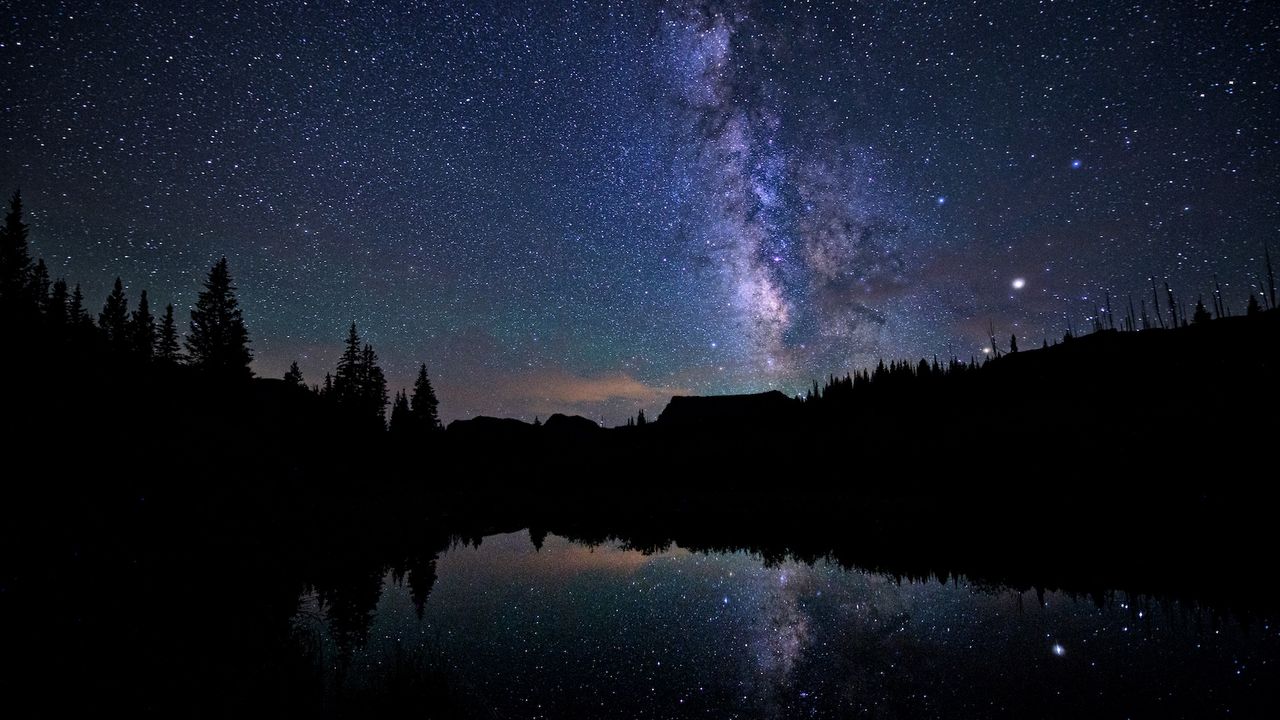
Although you cannot see the black moon with a naked eye, its timing offers a special opportunity for stars: a perfect moonless night to enjoy the summer stars just like The Milky Way is the best of the northern hemisphere.
The best way to see the arc of our general costs of our galaxy is to find a location far from light pollution, preferably somewhere without cities on the southern horizon. Find the three shiny stars of the vast Summer triangle In the Southeast – Vega, Deneb and Altair. The Milky Way will end through the left side of the summer triangle, about Deneb to Altair and from there on the southern horizon.
Although the Milky Way is visible in any moonless night sky, the Night of the Black Moon is the ideal opportunity to see it at its best.


