Gavin Newsom Claimed California’s Deficit Was Gone. His State’s Own Budget Analysts Just Blew That Up. – RedState


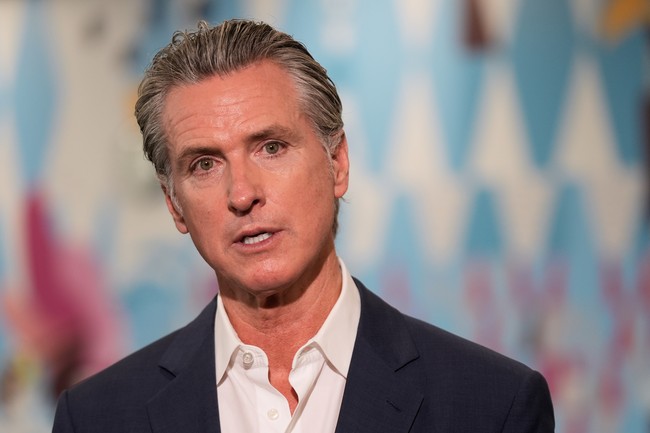
California Gov. Gavin Newsom wants to be president. Last Thursday, he gave America a preview of what that would look like.
Standing in front of cameras, California’s Democrat governor declared total victory over his state’s budget deficit. No deficit this year, he stated. No deficit next year. “$0 structural deficit through July 2028.” He called it proof that “fiscal discipline and progressive values go hand in hand.” He said it with the confidence of a man who has never once been held accountable by a hostile press corps.
Five days later, California’s own budget analysts sat down in front of the state legislature and told the truth.
At Tuesday’s budget hearing, state analyst Rachel Ehlers from the Legislative Analyst’s Office (LAO) told lawmakers that California’s fiscal condition is still not good, even after the strongest revenues in years.
“Despite these booming revenues, the state’s underlying fiscal condition, in our assessment, is not sound. We continue to have a structural deficit, both for the coming budget year, ’26-27, as well as forecast for ’27-28, even under the governor’s proposals,” Ehlers said.
Newsom left that part out. California is leaning on reserves and a revenue windfall while the spending problem goes unaddressed. And this isn’t the first time.
REDSTATE COVERAGE OF NEWSOM’S BUDGET BLUNDERS
Only Gavin Newsom Could Turn a $97 Billion Record Surplus Into a $73 Billion Deficit in Under Two Years
Newsom Tried to Use the Pandemic to Create a Progressive Paradise; Now CA’s Facing a $68 Billion Deficit
Planned expenditures still exceed projected revenues. The only way the budget balances is by draining reserves.
“Really, the only way the budget proposal before you is balanced is by relying on reserves,” Ehlers said. “Under the governor’s proposal, both withdrawals from reserves, as well as suspended requirements to put money into reserves, totals $20 billion.”
That is not fiscal discipline. That is raiding the emergency fund, suspending the rules that require you to refill it, and calling the result a balanced budget. In the private sector, this is called fraud. In Sacramento, it earns a press release.
Newsom’s own Department of Finance told lawmakers at the same hearing that the May Revision cuts the structural deficit “by more than half.” Not eliminates. Cuts by more than half. His own finance team was quietly admitting the problem is still there while he was in front of cameras declaring total victory.
The LAO puts the remaining hole at $16.9 billion. California’s revenues came in $30 billion higher than the LAO predicted just last June, a 30 percent surge in a single year. The state hit the jackpot. Newsom still cannot balance the books without draining reserves.
California has a spending problem. It has always had a spending problem. Newsom’s office will point to a $1.8 billion cut in General Fund spending and nearly $30 billion in reserves. What they won’t mention is that those reserves still exist only because the state suspended the rules requiring it to refill them.
The California Budget & Policy Center, a left-leaning Sacramento group that typically cheers progressive spending, warned that structural deficits are coming regardless.
“The May Revision relies on a mix of revenue, spending, and reserve solutions to balance the next two budgets, while both the administration and LAO project structural deficits in future years without additional action.”
When the people who want Newsom to spend more are telling him the math doesn’t work, the math really doesn’t work.
The rainy day fund sits at $4.5 billion this year. By 2027-28, it drops to $2.1 billion.
So where does the money go instead? Newsom’s “disciplined” budget finds room for his pet priorities. The Assembly Budget Subcommittee agenda shows $2.1 billion in climate bond funds for 2026-27. The state also plans to spend climate bond money to buy 161 acres of the shuttered Golden Gate Fields racetrack, because what a fiscally strapped state really needs is a “recreational hub” on the San Francisco Bay. And, of course, to Medi-Cal for illegal aliens.
Read More: JD Vance’s Explosive Fraud Crackdown Is About to Make Some Blue-State Governors Very Nervous
Steve Hilton Exposes the Real Cost of Gavin Newsom’s California
California can’t balance its books, but it can buy a horse racing track for a park.
Claim discipline loudly. Spend aggressively and quietly. Drain reserves when the math fails. Pray the stock market keeps delivering windfalls. That is the Newsom model.
Newsom wants credit for eliminating a deficit his own budget watchdog says is still there, and will still be there in 2027-28 under his own proposals.
If he runs, he will be running for president on California’s governance record. That record is a $16.9 billion hole papered over with a $20 billion reserve drawdown, sold to the national press as a balanced budget.
Editor’s Note: Thanks to President Trump’s leadership and bold policies, America’s economy is back on track.
Help us continue to report on the president’s economic successes and combat the lies of the Democrats. Join RedState VIP and use promo code FIGHT to receive 60% off your membership.