Toxic chemicals that pollute groundwater are formed up in the stratosphere, surprise findings show


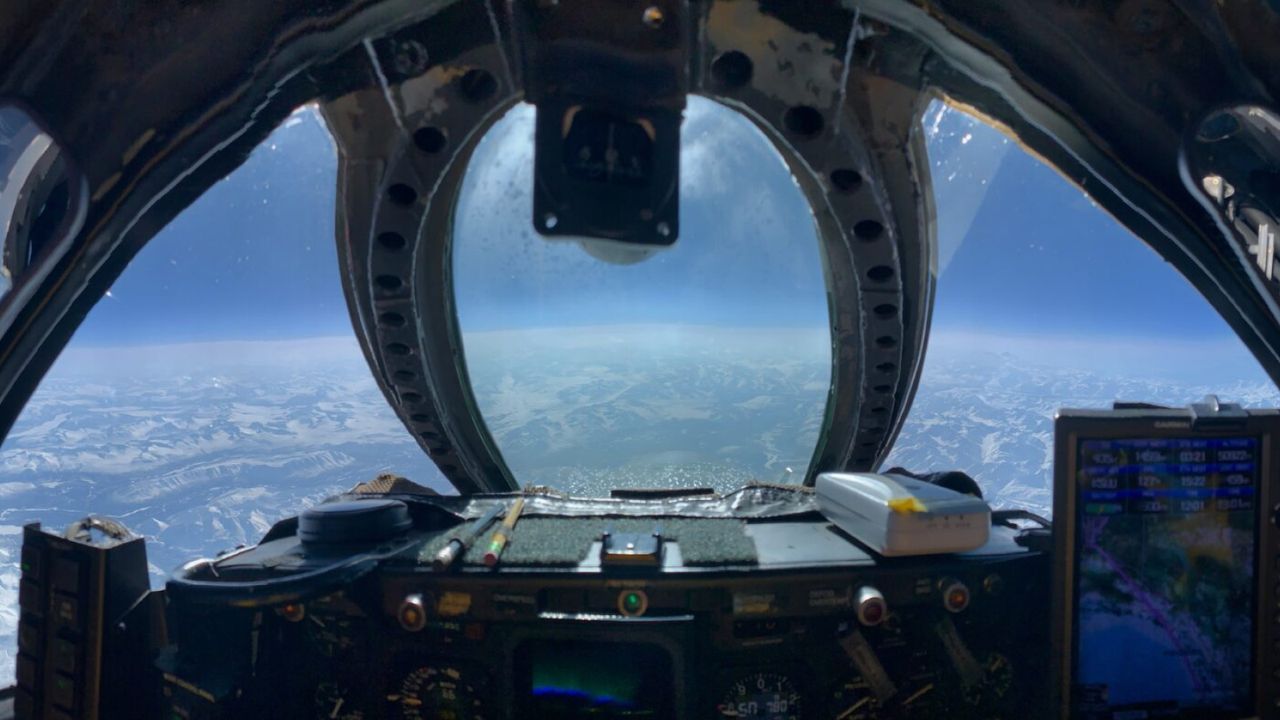
A toxic chemical that pollutes groundwater comes from the earth’s atmosphere, revealed a scientific flight.
Perchlorates, a group of chemicals containing chlorine which can disturb the thyroid function, are formed on smoke particles and organic materials in the stratosphere, between 6 and 31 miles (10 to 50 kilometers) above the surface of the planet, according to a new study.
Scientists already knew that perchlorates are formed in the atmosphere, because the natural forms of these chemicals show signs of zination by cosmic rays of space. However, it was not clear how and where they are formed.
The stratosphere is largely populated by tiny particles of sulfuric acid, but the researchers found that perchlorates did not stand for these common particles. Instead, the team has found toxic chemicals almost exclusively on particles rich in nitrogen and smoke particles – which does not frequently make their way so high in the atmosphere.
The question is now whether the increase in human pollution of the stratosphere could also increase perchlorates contaminating groundwater, when they end up falling on the surface of the earth.
“We do not know if the change of particles in the stratosphere will cause more perchlorate or not,” said Daniel MurphyThe program is underway in the properties and processes of aerosol at the Chemical Laboratory of the National Administration and the atmosphere (NOAA). The new study is a call for more research on this issue, he told Live Science.
In relation: Scientists say that diamond diamond dust in the sky could compensate for almost all climate change so far – but it will cost 175 billions of dollars
Synthetic perchlorates are found in explosives, batteries, airbags and rocket propellant. Manufacturing can sometimes cause groundwater pollution, but most perchlorates are natural. The Environmental Protection Agency (EPA) is defined Propose national regulations on Perchlorate drinking water In November.
Murphy and his colleagues discovered where perchlorates are formed during a more important project to explore the aerosol particles of the stratosphere. The data came mainly from the NASA WB-57 plane, which can fly up to 62,000 feet (19,000 meters). Commercial flights are generally between 30,000 and 42,000 feet (9,100 to 12,800 m).
“These are the most detailed measures in the perchlorate,” said Murphy. “They had information that we had never had before what the perchlorate was for this natural source of the stratosphere.”
Researchers, who published their research on July 28 in the journal PNACompared the perchlorates they detected to the previous measures of the perchlorates in the fuel of the rocket and found that they were not of the same kind. In other words, the stratospheric concentration is not caused by rocket launches but by natural processes in this layer of the atmosphere.
It is currently not known whether the fact that perchlorates are only clinging to organic and smoky particles are an intriguing oddity of the chemical product or if it has wider implications, Murphy said. If the existence of these particles allows perchlorates to train, adding more to the stratosphere could create more toxic chemicals. This could be a concern because perchlorates who fall to surface can last a very long time – at least 10,000 years in arid environments, According to the 2010 search.
“We know, for example, that forest fires are increasing worldwide and this could mean that this natural source of perchlorate could increase,” said Murphy.
Certain geo-engineering patterns also offer the injection of particles into the stratosphere to reflect sunlight, which could be risky if these particles trigger the formation of perchlorate.
However, researchers are already set up to study these chemicals. Perchlorate was found on Mars, which means that planetary scientists are already studying them. “People may have built laboratory instrumentation for this reason and they can move it,” said Murphy. Laboratory studies on perchlorate chemistry can determine whether human activity could inadvertently increase perchlorates to green heights, he added.


