Bourbon industry struggles as Jim Beam halts Clermont distillery production


NEWYou can now listen to Fox News articles!
A whiskey sour for the distilled spirits industry.
Consumers are unhappy with alcohol consumption.
And it’s one of many complex reasons why Jim Beam is putting its main distillery in Clermont, Ky., on ice for at least a year.
Claudia Coffey knows Kentucky bourbon country as well as anyone. She is a podcaster and bourbon insider.
CUSTOMS OFFICIALS PUSH US WINE INDUSTRY INTO UNCERTAIN TERRITORY: “REALLY CREATES A CHALLENGE”
“Bourbon is Kentucky, right? We love horse racing in Kentucky. We love bourbon in Kentucky. It’s the reason 2.7 million people come to visit the Commonwealth every year,” Coffey said. “This is some of the biggest news in Kentucky in some time, and it’s one of the most iconic brands in bourbon.”
Not everyone has heard of Willett or Four Roses when it comes to bourbon. But Jim Beam is American. Omnipresent. A bit like McDonald’s or Coca-Cola.
Americans are consuming less of it – down 6% from just two years ago. And more than 16 million barrels of Kentucky spirits — including bourbon and rye — age in warehouses across the state. Distillers pay taxes on these barrels as they age.
It’s a question of supply and demand. But the problem isn’t exclusive to Jim Beam.
“It’s not a question of who stops production,” said Charlie Prince, who runs the Drammers Whiskey Club. “The question is who admits it.”
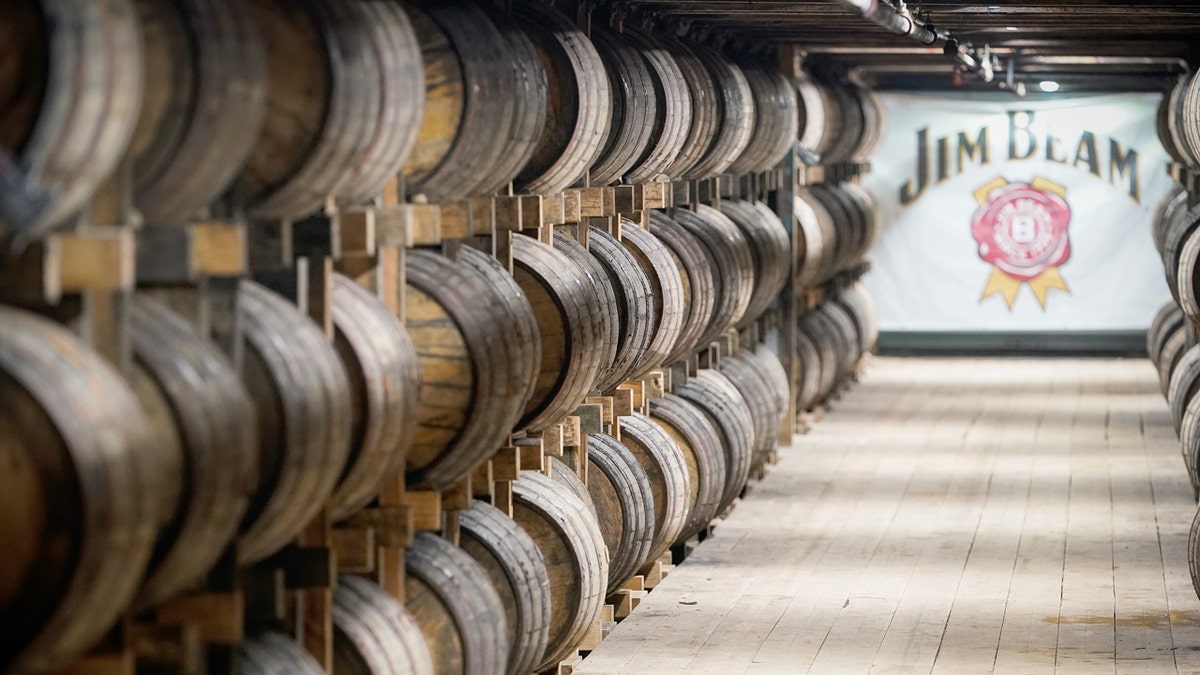
Barrels of bourbon are stacked in a barrel at the Jim Beam Distillery February 17, 2020 in Clermont, Ky. U.S. whiskey exports have fallen 27% to the European Union, the product’s largest export market, due to retaliatory tariffs imposed by the 27-nation alliance, a trade group said last week. (Bryan Woolston/Getty Images)
Foreign distillers like Midleton in Ireland, which makes Jameson, and Highland Park in Scotland, have all recently reduced production due to a glut of bourbon, whiskey and scotch on the market.
However, observers say the tariffs and trade war with Canada have hit Jim Beam particularly hard.
“Ten percent of Kentucky bourbon sales were to Canada, and that number has dropped to almost zero,” Prince said. “In Canada, it’s been seen as sort of a national mission for Canadians, saying, ‘Let’s buy Canadian’ and fighting against the politics that they don’t like coming from the United States. So you’re seeing stores removing all American products and banning them in certain provinces. So it’s definitely a political response.”
Democrats quickly seized on the tariff argument.
“Thousands of Kentuckians fuel the bourbon industry. We will all feel the impact,” said Rep. Morgan McGarvey, D-Ky. “It’s hard to overstate how devastating Trump’s tariffs are to America’s signature spirit.”
RECORD LOW NUMBER OF AMERICANS REPORT DRINK ALCOHOL, AND NEW TEETOTALERS EXPLAIN WHY
But one industry observer says tariffs are just one ingredient in a complex economic cocktail. Jessica Spector is a professor at Yale who studies the history and culture of alcohol and spirits.
“Anyone who tells you they have an explanation, ‘Oh, it’s tariffs,’ or ‘Oh, it’s a post-pandemic retraction,’ is giving you too simplistic an explanation,” Spector said. “It’s unclear what impact tariffs have and will have in the future. People have been arguing about tariffs for a long time. For as long as there has been trade, there have been arguments about tariffs. It’s not clear whether tariffs are somehow the coup de gras for an industry that was already suffering.”
Spector says yes, Gen Z is drinking less and consuming more cannabis. There are also health problems. But the spirits industry has already seen changes. She says people switched from brown liquor to vodka in the 1970s because it was considered healthier.
“They were also jogging more and doing a lot more cocaine because that was seen as more health conscious. So it gets really complicated when you break things down by generation,” Spector said.
But the prices remain extremely controversial. The Trump administration says tariffs are here to stay.
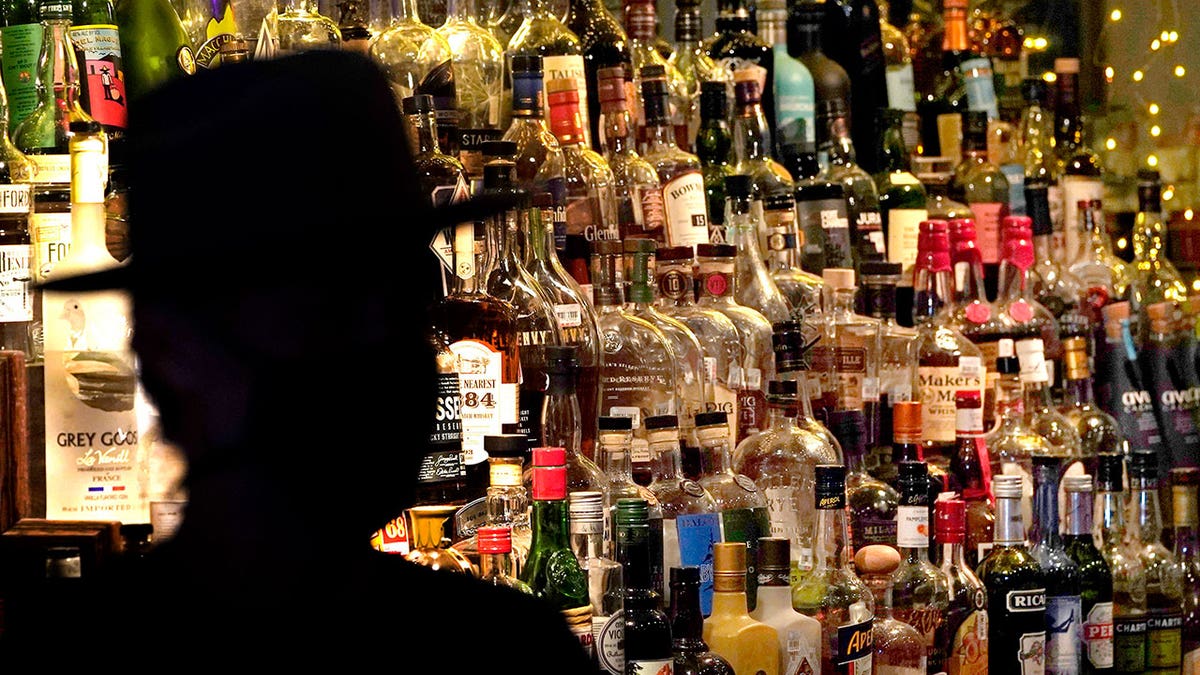
Bottles of alcohol sit on shelves at a bar in Houston on June 23, 2020. Moderate alcohol consumption was once thought to have beneficial effects on the heart, but better research methods starting in the 2010s have thrown cold water on that. (AP Photo/David J. Phillip, file)
“Tariffs will be part of the political landscape,” US Trade Representative Jamieson Greer told Fox. “We know they are successful.”
But customs duties could also evaporate.
The Constitution grants Congress the power to tax and impose tariffs. President Trump used his emergency powers to impose global tariffs earlier this year. This is why this issue ended up before the Supreme Court. Attorneys argued the case in October.
“Canada is one of our closest allies. I think it would be difficult to find Canada engaging in unfair trade practices because we have what used to be called the NAFTA agreement, between Canada, the United States and Mexico, to eliminate all trade barriers between the countries,” said John Yoo, a law professor at the University of California.
Based on the oral arguments, Yoo believes the high court will end Trump’s tariffs on the basis that the United States is facing a national emergency.
“Canada will benefit immediately and you will be able to find your choice of American bourbons on Canadian store shelves,” Yoo said.
FREEDOM AND FACTS, NOT FEAR, SHOULD FRAM AMERICA’S CHOICES ON ALCOHOL
In fact, Yoo thinks the Supreme Court could issue its decision sooner rather than later, especially if it overturns the tariffs. This is due to all the duties and fees that might be levied on the products for months – then waived.
It is important to note that Jim Beam will continue to operate two other distilleries for the time being. And Spector says Gen Z prefers cocktails. This could therefore force the industry to modify what it produces.
Now here’s a little information that you probably won’t learn anywhere else.
Walk through any distillery in Scotland, whether it’s Dalwhinnie in the Highlands, Glen Scotia in Campbeltown, GlenGrant in Speyside or Bowmore on Islay, and you’ll find distillers aging scotch in Jim Beam barrels.
It’s not just Jim Beam barrels that you’ll find in Scotland. It’s also Buffalo Trace. Hill of Heaven. Woodford Reserve. Wild turkey. Congress only allows American distillers to use American oak barrels to produce bourbon once. So, overseas Scottish distillers love to get their hands on a good bourbon barrel to age their spirit.
The barrels can partially give the expression a vanilla aroma, coming from the “vanillans” of the wood.
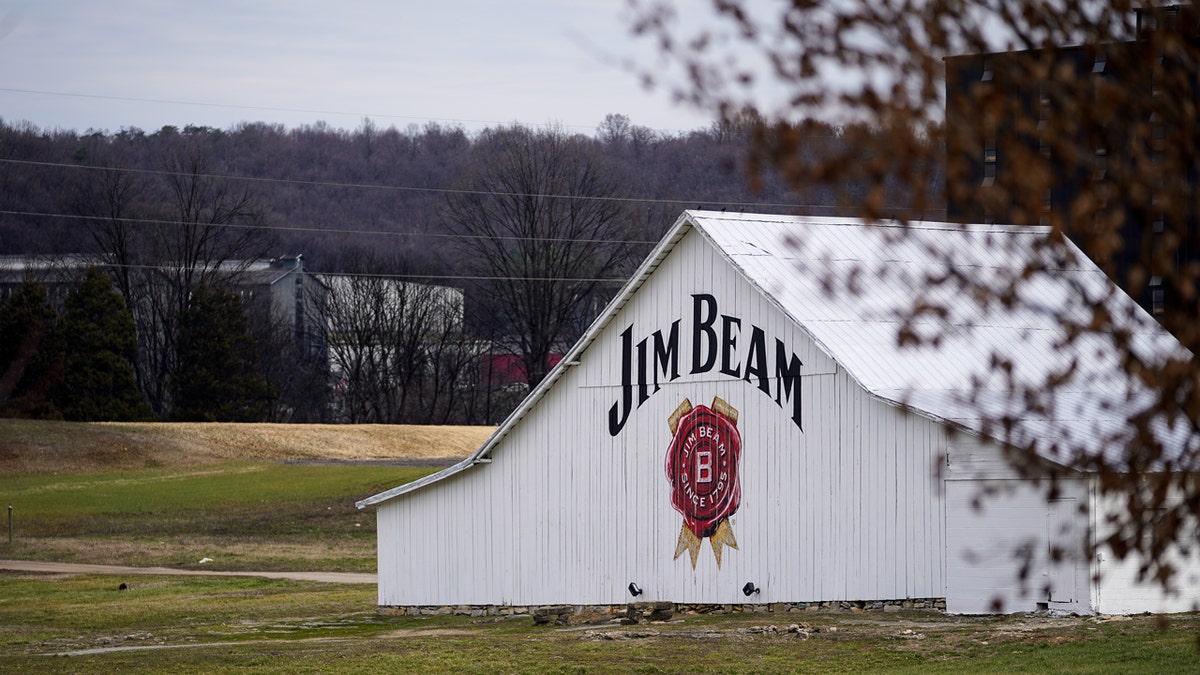
The Jim Beam Distillery on February 17, 2020, in Clermont, Kentucky. (Bryan Woolston/Getty Images)
The trend of using American bourbon barrels for scotch began in the 1940s, after the American market returned following the end of Prohibition. Scottish distillers started using sherry casks to age their spirits before this (hence the rich meaty flavors you get from Macallan). Sherry is still prevalent despite the decline in the number of people drinking it these days. But fewer bourbon barrels from a major producer like Jim Beam could alter the taste of scotch in about 15 to 20 years.
That said, demand for scotch is declining like that for bourbon. So some of them might even disappear.
It should be noted that Suntory Global Spirits owns Jim Beam. It was known until recently as Beam Suntory. Suntory also owns major Scottish brands including Bowmore, Admore, Laphroaig, Auchentoshan and Glen Garioch. Jim Beam’s barrel pipeline was a good proposition for Suntory to age scotch.
So it’s possible that in the future Scottish distillers will age some of their expressions in barrels that once held something other than Kentucky bourbon. And this is where the aromatic profile will evolve.
CLICK HERE TO GET THE FOX NEWS APP
It’s also impossible to know market trends and what people will be interested in drinking in 15-20 years. So what distillers put in a barrel today might not match market trends in the future.
In fact, maybe people will start drinking bourbon and scotch again. And the market glut could now turn into a spirits famine where the products consumers want are hard to find.


