Breakthrough cystic fibrosis drug that extends life by decades earns its developers a $250,000 ‘American Nobel’


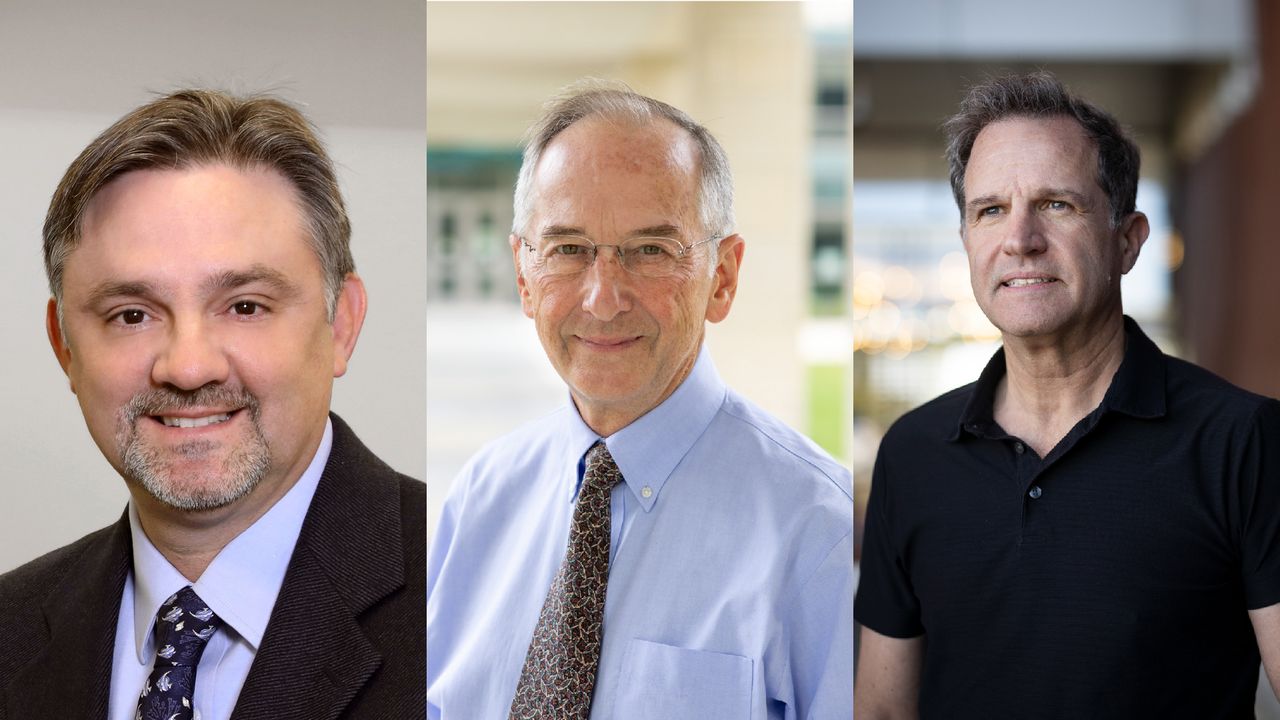
Three scientists won a prize of $ 250,000 for their contribution to the development of vital therapy for cystic fibrosis of genetic disease (CF).
The prize, called the Lasker-Debakey Clinical Medical Research Award, received Dr Michael Welsh of the Iowa University, Paul Negulescu de Vertex Therapeutics and Jesús (Tito) González Integro Theranostics. This is one of the Lasker Awards of this year – biomedical research prices established in 1945 which are often called “American Nobels”.
“It’s super gratifying,” said González, who was once the main director of biology at Vertex Therapeutics. “It’s very rare to have something [in medical research] This goes to the patients and is widely available, and to have such a dramatic effect, “he told Live Science.
Treatment, called Trikafta, has extended the life of people with cystic fibrosis for decades – and patients who start treatment in childhood or adolescence should live a lifespan near the average. In comparison, when the disease was discovered for the first time in the 1930s, most patients died in early childhood. And even in the 2010s, before Trikafta’s approval in 2019, around half of the patients with cystic fibrosis died before the age of 40.
“Today, the estimated median age of survival for people with cystic fibrosis born between 2020 and 2024 and which has access to treatment is 65 years”, ” Dr Eric Soroucher of Emory University wrote in a prize test, published in The New England Journal of Medicine. “Available projections suggest that health and longevity can increase more as modulators are starting to be administered at younger ages.”
Lasker Award “also brings a lot of good memories and that really warms your heart when you think of all the people you worked with, and all the time and efforts,” added González. “I just hope people understand how difficult it is to go so far.”
In relation: The scientist who discovered “ fire alarm ” of the organization against invasive bacteria wins the $ 250,000 Lasker prize
See is a hereditary disorder caused by mutations in a gene called CFTR. When functional, the gene allows cells to make tubes inside their membranes that the charged particles called ions can cross. This, in turn, allows the water to flow as it should be through the tissues and helps the organs, such as the lungs, the intestines and the pancreas, do their job properly.
But in CF, the CFTR gene is worked by dysfunction, which makes the thick and sticky mucus obstruct to obstruct the coatings of these organs. Mucus erases in the airways, increasing the risk of dangerous infections and scars in the lungs, and it can cause digestion problems, the absorption of nutrients and the signaling of insulin.
Laboratory research carried out by Welsh in the 1980s and 1990s helped lay the foundations of Trikafta, a drug that approaches the molecular cause of most types of cystic fibrosis. Working with cells from the respiratory tract of people with the disease, Welsh and colleagues have disentangled the “physiological consequences” of the most common genetic error observed in people with cystic fibrosis, explained González.
Their work has shown that this defect in the CFTR gene – known as Delta -F508 – ensures that the loaded particles cannot pass through the tubes of the cell membrane as easily. The mutation means that the tubes never reach the surface of the cell, so the ions are stuck. In various experiments that have involved the cooling of cells as they have developed in laboratory dishes, the Welshman showed that the tube could be made to reach the cell surface and therefore better transport ions.
Meanwhile, as a postdoctoral researcher in the laboratory of Nobel winner Roger Tsien, González co-invented a system that could precisely follow the flow of ions through the cellular membranes in real time. The initial inspiration behind the system was to study the functioning of the brain, because the ions moving through the membranes allow brain cells to shoot, he said. But the system was also perfect for testing the new potential CF drugs designed to solve ion transport problems.
“This allowed us to project tens of thousands of compounds a day,” said González. “While electrophysiology, the standard method at the time to study the ionic channels in depth was very slow, just one handle per day.”
The researchers refined the CF drug research process to the biotechnological company Aurora Biosciences, which was then acquired by Vertex Pharmaceuticals.
Negulescu, also in Aurora and later Vertex, led the project to screen the molecules to see how they affected the transport of ions. His team looked for “potentists”, which stimulates the flow of ions and “correctors”, which help move the tubes in good position in the cell membrane. This effort led to the approval of several CF medication iterations – in 2012, 2015 and 2018 – before finally leading to trikafta approval in 2019.
When they started recovering the data from the first human trials of their first generation medication, González recalled “it was super exciting because it became very real. It’s like” Oh Wow, it’s not just theory; It actually works in patients “.” “”
Trikafta combines three drugs to effectively treat most people with cystic fibrosis. Its use has reduced the number of pulmonary transplants and hospitalizations for infection in people with the disease and improving the quality of life of patients, according to a Lasker Awards Declaration.
“The achievements of Welsh, González and Negulescu offer people with the possibility of prospering now and planning a dynamic future,” said the press release.
Two additional lasker awards were awarded this year, including one for basic research and another for special achievements in medical science.
The old price went to Dirk görlich of the Max Planck Institute for multidisciplinary sciences in Germany and Steven McKnight from the University of Texas Southwestern medical center. These two researchers have revealed unknown roles for areas of low complexity – complex regions of protein sequences – which are the key to how cells organize their entrails, and also explored how this organization goes wrong in the disease.
This last price went to Lucy Shapiro From the University of Stanford to recognize her 55 -year career in biomedical sciences, during which she reshaped the understanding of biologists of the way in which bacterial cells are divided and develop. In particular, his work highlighted the importance of spatial organization in bacterial cells and how it relates to how they work internally. She is also recognized as the founding director of the Department of Biology for the Development of Stanford, which was created in 1989, as well as as a key consultant for world leaders on questions such as Antibiotic resistanceEmergences of infectious diseases and organic war.
This article is for information only and is not supposed to offer medical advice.


