Is William Ruto the most disliked president in Kenya’s history?

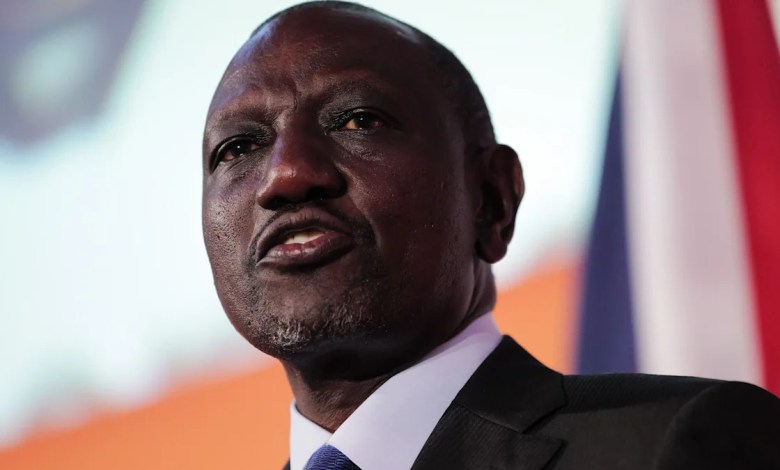
William Ruto of Kenya came into office on a wave of enthusiasm among ordinary people who hoped that he would hold his promises to improve their lives. Instead, he faces relentless criticism – considered unmatched in the history of the country.
Apparently frustrated by the intensity of the reaction, he asked on Wednesday why such public indignation was never directed towards his predecessors, including Daniel Arap me, who reigned with an iron fist for more than two decades marked by political repression and human rights violations, and others who have disappeared under clouds of controversy.
Wednesday [former presidents] Me, Mwai Kibaki, Uhuru Kenyatta … Why contempt and arrogance? “”
Analysts describe the current wave of public anger towards President Ruto, who has seen more than 100 people killed in the past year, as “unprecedented”, uniting the Kenyans through ethnic, religious and classy divisions.
Protests against his administration began barely a year after coming to power. Three years, many nasty Kenyans now want to have left – in the midst of relentless protests with rallying calls for “Ruto must go” and “Ruto Wantam” (Ruto for a quarter).
When Ruto argued in the presidency, he depicted as an ordinary man, who came from a childhood marked by poverty and resilience. He called on ordinary people as a person they could be inspired by – after spending the chicken seller to the president.
Compare this to the start of this year, when a newspaper splashed a title asking if Ruto was “the most hated president in Kenya”, a feeling that has often echoed social media platforms and public discourse.
He marks an extraordinary change in Kenyan politics, often shaped by ethnic allegiances and class divisions. Just as Ruto was considered to be transcending these obstacles to win the presidency, the same dynamic now seems to work against him.
This week, the expression “we are all kikuyus”, tend to go to social networks as young people rejected to reintroduce ethnic divisions that have long tormented Kenyan policy. A counterattack of “We Are All Kenyans” has emerged but failed to win a similar traction – some seeing it as an attempt to dilute the expression of solidarity in the first message.
Kikuyu, the largest ethnic group in Kenya in the Kenya region, massively supported Ruto during the 2022 elections, as well as Rigathi Gachagua, who is from the region, like his assistant.
But the hunting in Gachagua of his functions last year thanks to a dramatic indictment process, which he described as betrayal, aroused dissatisfaction in the region. The next day, some politicians allied to Ruto accused Kikuyu’s elites of having fueled the opposition against the president.
Political analyst Mark Bichachi says that opposition to the president is not ethnically motivated, but occurs in various communities in urban and rural areas.
He called the “outcry against a president and a” unprecedented “and” historical “” even “even” even the political upheavals of the 80s and 1990s when I led a single party.
The period was marked by brutal repression and a bloody struggle for multiparty democracy, but Mr. Bichachi tells the BBC that this did not generate the type of pressure that takes place on Ruto, adding that tensions were then linked to the Cold War and felt through the continent.
But Dr. Njoki Wami, Dr. Njoki Wamai, said that the criticisms exceeded to the president are not unusual, but part of a political tradition during moments of crisis.
“All the presidents, when they went against the Constitution, against the will of the Kenyan people, have always faced many criticism,” she told the BBC.
She underlines that the former leaders such as the founding president Jomo Kenyatta and his successor me – who both faced an intense reaction and the loss of confidence of the public during critical moments – including after the assassination of key political leaders and the attempted coup against me in 1982.

Former Kenyan presidents such as Daniel ARAP I also faced an intense reaction [Gamma-Rapho via Getty Images]
“What is different [this time] is that the extent of the dissemination of information is higher, “she said, noting that the impact of young people from Kenya digitally informed, including general access to social media and digital tools has amplified public discourse.
It also describes Ruto as having always been “very conservative”, suggesting that its political prospects come up against the most liberal values embraced by many Kenyans – especially young people.
This ideological inadequacy, she maintains, has contributed to increasing tensions.
Current resistance campaigns are largely directed by young people, online, decentralized and considered as a leader, which take place mainly outside the established political class. Since last year, they have been motivated by the anger of the high life of life, aggressive taxation, corruption and police brutality.
But emphasizing ethnic policy and incentive as fueling the last disorders, said the president on Wednesday: let’s stop ethnic division, hatred, pride and contempt. We are all Kenyans “.
He swore to use “whatever the necessary means” to maintain peace and stability. He called on the police to shoot in the leg demonstrators who were targeting companies, rather than killing them. His remarks aroused more indignation and mockery.
Since last year, the Kenyan government responded to protests and dissent with brutal repression, including mass arrests and abductions presumed by security agents.

Police have been accused of having used excessive force to suppress demonstrations [Getty Images]
It is a strategy which, according to the defense groups, has only aggravated public indignation and alienated the citizens of the state, the police accused of using excessive force to suppress the demonstrations.
More than 100 people have been killed in successive waves of anti -government demonstrations since June of last year. The last Monday made 38 lives, marking the deadliest day of troubles to date.
Rather than serving as a catalyst for police reform or pushing efforts to pacify the demonstrators, deaths have often served as a spark for subsequent manifestations, transforming sorrow into rabies.
The government blamed violence to the demonstrators, accusing them of attacking the police stations and even trying to organize a coup.
The expert in political communication, Dr. Hesbon Owilla, calls for disorders “probably the most intense indignation against a regime” in the history of Kenya. He says it brought people from all walks of life to unite for challenge.
It sets up the way the president communicates to the people. He says that Ruto’s promises to raise the fortune of ordinary people were “real, extremely real” and changed the campaign from ethnic mobilization to problems based on problems.
“Then he became president. We are still waiting. What the Kenyans live is worse,” he said to the BBC, capturing the deep feeling of disappointment among many Kenyans.
He says that unlike previous governments that have made cautious promises, Ruto has made and continues to make brush promises leading to broken expectations.
“Disillusionment creates rage,” he said.

Ruto has promised to defend the interest of the ordinary person [Bloomberg via Getty Images]
Citing the example of the order to shoot demonstrators, he also says that the president often speaks when silence could serve him better – overexpose and inadvertently do serious national problems.
Consequently, in the event of a criticism, he tends to be directed downright towards him, rather than being attributed to a failure of governance systems.
Despite this, Ruto has repeatedly highlighted the efforts of his administration to improve the life of all Kenyans, pointing to the flagship project of affordable housing of the government, a universal health program, digital jobs and a job program abroad as key achievements.
While inspecting one of the housing sites this week, he recognized the seriousness of unemployment for young people, but stressed that the problem predicts his presidency.
He insisted that his government was the first to take deliberate measures to fight against the crisis, citing state initiatives such as the housing project which, according to him, created hundreds of thousands of jobs.
The president called for patience because the problem would take time to solve.
However, patience, in particular in the middle of the cost of living, unattended expectations and increasing frustration, is not something that most Kenyans feel that they can afford.
Some of these flagship programs have reached a high cost for Kenyans, which now have 1.5% housing tax and a health insurance tax of 2.75% of their monthly income. The pain of paying some of these higher taxes dominated daily conversations, in particular with a perception that higher taxes have not led to better public services.
At the government’s credit, Dr. Owilla said that some of the initiatives, such as the Universal Healthcare project, have had a big impact, and that others could possibly deliver.
But Mr. Bichachi argues that the government has “lost contact with the way people feel” and that his tone has remained unchanged despite the increase in public resentment.
He says that the problem is unlikely to change according to how the government works – describing it as a “romantic relationship” between people and the presidency.
It is “how we find ourselves where we are”, he concludes, referring to the intense resentment which is now confronted by the president, who was once one of the “most applauded and rented leaders to come in the Kenyan state”.
You may also be interested:

Go to Bbcafrica.com For more news from the African continent.
Follow us on Twitter @Bbcafricaon facebook at BBC Africa or on Instagram at bbcafrica
BBC Africa Podcasts


:max_bytes(150000):strip_icc()/Health-GettyImages-599389182-a664ea51deb64a2c91e3e549fc8f88c6.jpg?w=390&resize=390,220&ssl=1 "Costco Warns of Exploding Wine Bottles That May Pose Health Risk to Customers—What You Need to Know")

