Marjorie Taylor Greene was once a Trump ally, now she’s leaving office : NPR

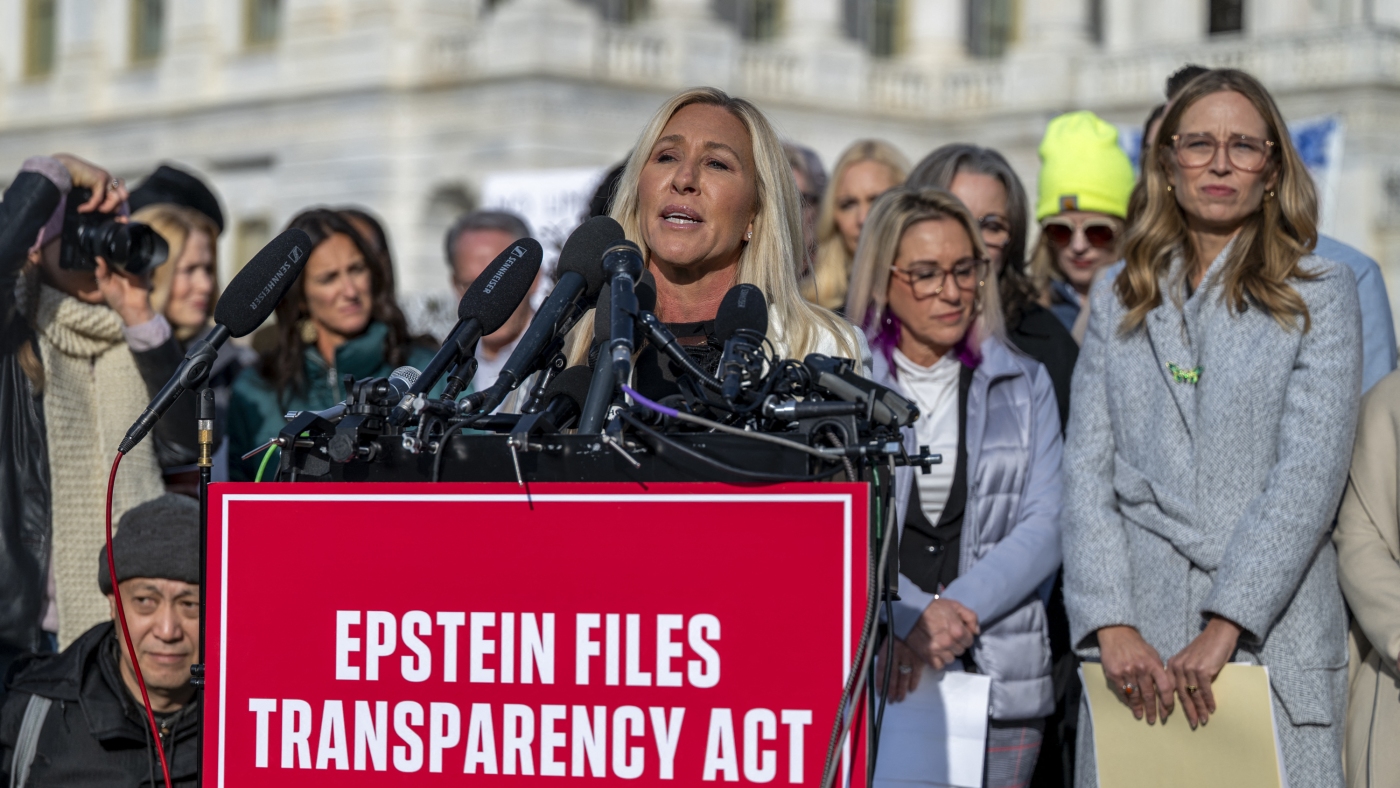

Rep. Marjorie Taylor Greene, R-Ga., speaks during a press conference on the “Epstein Files Transparency Act” at the U.S. Capitol in Washington, DC, November 18, 2025.
DANIEL HEUER/AFP
hide caption
toggle caption
DANIEL HEUER/AFP
Congresswoman Marjorie Taylor Greene has become a household name heading into the 2020 election. for his divisive rhetoric, political stunts and enthusiastic support for President Trump. But after growing disagreements with Trump during his second term, Greene announced she would leave Congress in January before her term ends.
Greene said it wouldn’t be fair to her northwest Georgia district, one of the most conservative in the country, to see them “endure a hurtful, hateful primary against me from the president we all fought for,” while noting that “Republicans will likely lose the midterm elections.”
The rift between Greene and Trump widened in recent weeks as she pushed for the release of documents relating to convicted sex offender Jeffrey Epstein.
For months, Greene had been publicly pressuring Trump and top congressional Republicans to release all records from two federal investigations into Epstein. She was among a small group of Republicans who helped force a vote in the House to release the records — a process that pushed Trump to reverse his position on the documents and led to near-unanimous support for the measure this week.

But before Trump changed course, he lashed out last week, calling her “Marjorie Traitor Greene” and telling reporters, “Something happened to her in the last month or two that caused her to change politically.”
In her message Friday evening, Greene defended her decision to fight for the release of these documents.
“Standing up for American women who were raped at age 14, trafficked and used by rich and powerful men, should not lead to me being called a traitor and threatened by the President of the United States, for whom I fought,” Greene wrote.
Greene’s defiant push against Trump
On a chilly morning this week, Greene stood outside the Capitol with some of the women who say they were abused by Epstein.
“I never owed him anything,” Greene said of the president Tuesday. “But I fought for him and for America First. And he called me a traitor for supporting these women.”
The cracks between Trump and Greene have widened over the last year, as Greene increasingly highlighted where she sees the president failing: she called the war in Gaza a genocide, criticized Trump’s decision to bomb Iranian nuclear facilitiesand insisted that expiring health subsidies be extended, citing the threat of skyrocketing premiums for residents in his district, including his own children.

And she did it not only on social networks or on right-wing media, but also on programs like ABC The view.
“What happened to Marjorie?”
“I thought if this was the first time I saw this person, this would look like a normal congressman from Schoolhouse Rock,” Nathan Price, a professor at the University of North Georgia, said after Greene’s appearance on the daytime talk show.
For some, this new persona may be difficult to reconcile with the Greene many Americans first knew: The congresswoman who embraced QAnon conspiracy theories liked a post calling for violence against former House Speaker Nancy Pelosi, D-Calif. and heckled school shooting survivor David Hogg in 2020 before becoming a prominent political activist.
Even Trump has publicly mused in recent weeks: “What happened to Marjorie?
Georgia Republican strategist Brian Robinson says it’s a good question.
“I’m open to the idea that she had a ‘road to Damascus’ moment, a conversion, that she sees the mistakes of toxicity and wants something better,” Robinson said in an interview with NPR earlier in the week.
On her own social media and with reporters, Greene has openly responded to claims by Trump and others that she has changed or abandoned the president. NPR has contacted Greene for further comment.
“Nothing has changed about me,” Greene told the hosts of The view. “I remain absolutely 100% loyal to the people who voted for me and loyal to my district.”
Robinson said the changes could be part of a natural evolution for Greene, a former CrossFit gym owner from suburban Atlanta.
“We like to elect outsiders to Congress,” Robinson said. “They go to Congress with very little idea of how this works. And if at some point you say, ‘I want to do substantive things that make America better, then I have to do this a little differently.’
Or, Robinson said, she may be trying to broaden her appeal to an important constituency as she considers a run for higher office. Trump said last week that he showed Greene a poll taken earlier this year suggesting she would fail in a race for Georgia governor or senator.
“Is she intentionally signaling to women, ‘The good old boys’ club is ignoring us and I understand your struggles?’ Robinson said.
Both Robinson and Price said Greene’s evolution was more about style than substance. She has disavowed some of his most controversial views, but not others, such as the unproven claim that widespread fraud upended the outcome of the 2020 election.
The anti-interventionist, anti-elite principles that propelled her to Congress also remain central to her identity. “What she’s responding to is believing that the president has changed on these issues,” Price said.
Some potential political opponents see opportunity in Greene’s break with Trump. Robinson, who worked for Greene’s opponent in her first primary race, says that in the past he has warned potential challengers not to underestimate her.
“You’re wasting your time,” Robinson said. “She’s going to beat you. And I would have said that endlessly until this week.”
How the Greene District responded to this change
But in the 14th Congressional District, it wasn’t clear this week that anything had changed. As chairman of the Paulding County Republican Party, Ricky Hess spends a lot of time talking to voters.
“The issues they want to talk about are high property taxes, high health care costs, whether or not their kids can buy a house when they graduate,” Hess said this week before Greene resigned..
Hess told NPR that he believes Greene’s “America First” worldview resonates in this rural, heavily working-class area of northwest Georgia.
“She has largely exploited what her constituents want, and I have to believe that most of her actions are in that direction,” Hess said.
Hess said voters view Trump and Greene as fighters on the same team. However, Martha Zoller, who hosts a political radio show broadcast across North Georgia, said in an interview Wednesday that she doesn’t believe everyone’s decisions are made up.
“People are a little shaken if you want to know the truth,” Zoller said. “We haven’t had a lot of listeners to discuss it because they’re waiting to see what happens.”
Georgia political observers noted that Greene was anything but a predictable politician — including her surprise resignation.
Trump has reach a truce with other politicians he is in rivalry with, in particular, the Republican governor of Georgia, Brian Kemp. And his future relationship with Greene could still evolve.
But Zoller said the conflict between Trump and Greene isn’t just about two big personalities arguing on the national stage.
“I think the big discussion we’re going to have as Republicans over the next few years is what is the Republican movement once it’s no longer Trump?”
Zoller said earlier this week that it seemed clear that Greene wanted to be part of that discussion. But with his resignation, the answer to that question may be less clear than before.
NPR’s Stephen Fowler contributed to this report.


