Apple was ready for the RAM crisis


Summary created by Smart Answers AI
In summary:
- Macworld reports that Apple launched the $599 MacBook Neo amid a global RAM crisis that has forced competitors to raise prices by hundreds of dollars.
- Apple’s M-series chips use unified memory and system-on-a-chip design, allowing 8GB to operate efficiently as competitors struggle with expensive and rare RAM components.
- The crisis forced Apple to abandon high-end Mac Studio models, but its integrated approach offers advantages over price increases from Microsoft and Meta.
Over the decades, the evolution of computers has been easy to follow: they have become more and more powerful to meet the needs of more advanced applications. We’ve seen computers with faster processors, more storage, and most importantly, more RAM. This trend has further accelerated recently with companies integrating AI capabilities built into their devices, and Apple is no exception.
However, the growing demand for RAM is having another effect on the market. Although once plentiful and affordable, RAM is more expensive than ever and is becoming increasingly difficult to obtain, even at exorbitant prices. But instead of confronting the constraints by raising prices, Apple is showing the industry how its years-long effort to control every component of its devices has given it a unique advantage over every other PC maker, as the recent launch of the MacBook Neo clearly demonstrates.
The importance of RAM in today’s world
First, let’s take a closer look at why RAM or memory is so important. Essentially, RAM is a type of short-term memory with ultra-fast speeds, much faster than SSDs. When you open an app on your phone or laptop, it is stored in RAM to ensure that the processor can handle it faster as you continue to use it.
That’s why, generally speaking, having more RAM means your devices can run faster, allowing more apps and tasks to run at the same time without slowing down.
As such, RAM has also become extremely important for artificial intelligence. Since RAM is much faster than internal storage, devices also store AI settings in RAM for faster access. In other words, the larger and faster the RAM, the more capable the device is of handling AI tasks locally.
This is why AI companies buy so much DDR5 RAM, the same used in Apple devices, as for their servers. It’s also why we’ve seen mainstream desktops and laptops gain more RAM in recent years, including Apple, which only recently increased the base RAM for Macs to 16GB and for the iPhone and iPad to 8GB.
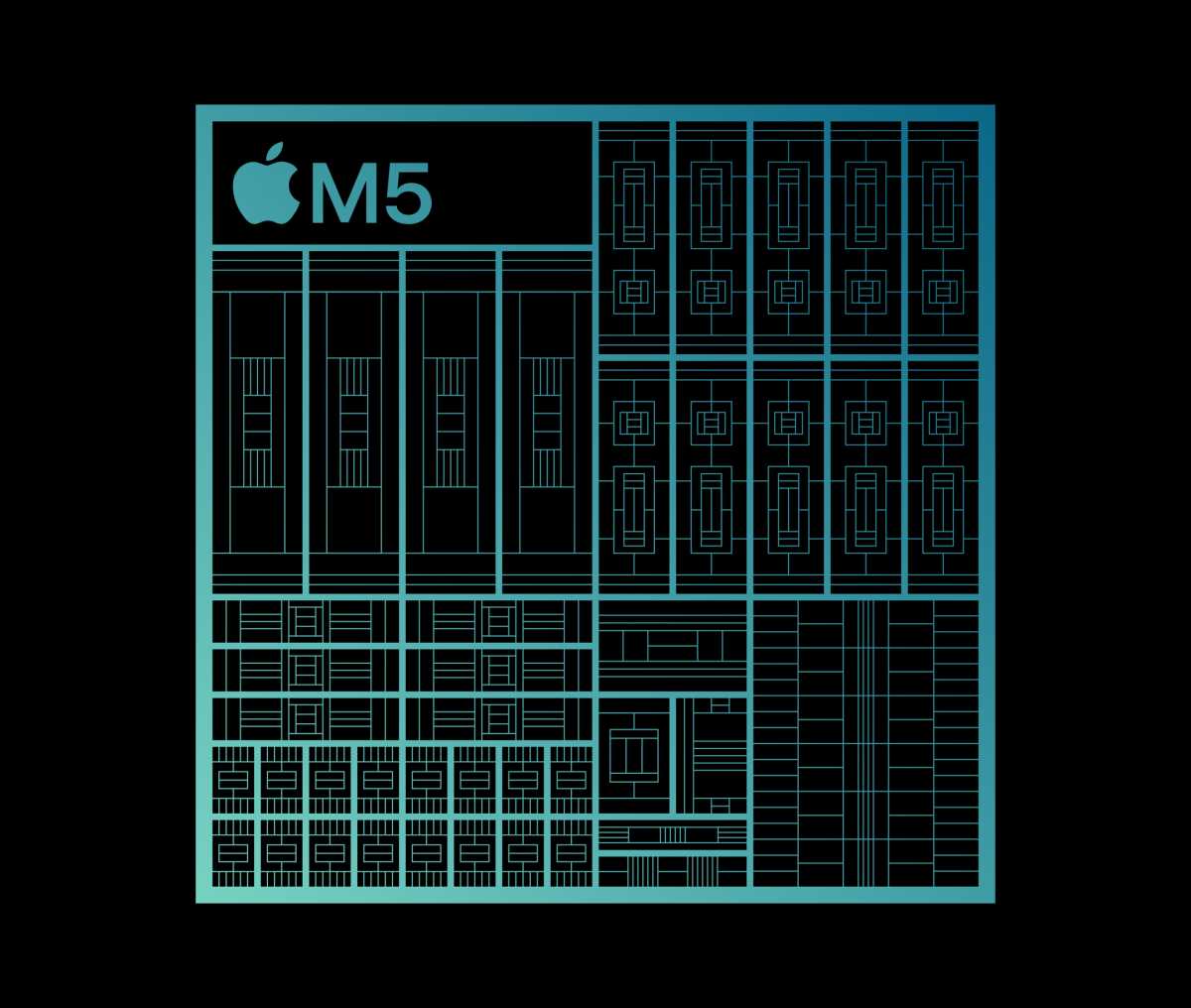
The AI boom has put more pressure on chips to increase RAM limits.
Apple
More RAM is no longer a viable option
For years, the strategy of adding more hardware resources to handle software demands was a simple solution to complexity. But as modern workloads have become increasingly memory-intensive in recent years, vendors have been unable to keep up with demand. As a result, RAM became much more expensive and PC manufacturers were forced to change their strategy.
The situation has become so dire that Apple has had to discontinue the highest-end Mac Studio with 512 GB of RAM, while other versions with higher amounts of RAM are also facing significant shortages. And it’s hard not to conclude that the timing of the Mac Pro’s discontinuation wasn’t also related to the RAM crisis. The RAM shortage has also affected the 16GB Mac mini, which is currently sold out on the Apple Store and unavailable on Amazon. Higher-end models with more memory are also heavily limited.
This situation would (and still has) put tech companies in a bind. They need better hardware to meet the growing demand for AI tasks, but there is simply no more RAM on the market. Fortunately for Apple, the solution had already been found years ago.
Apple chips were designed for a world where RAM is scarce
In theory, there is no way to simply replace RAM with something else. However, Apple has found the best solution: a way to optimize both its hardware and software to run smoothly, even on devices with the bare minimum of RAM.
When Apple introduced the first Mac with the M1 chip, it wasn’t just a simple swap from Intel to its own chips, but also a radical change in how its computers worked. This is because Apple silicon chips are classified as a system-on-a-chip, meaning that key components including the CPU, GPU, Neural Engine, SSD, and even RAM are all on the same pool and share the same resources. And that makes a big difference on a daily basis.
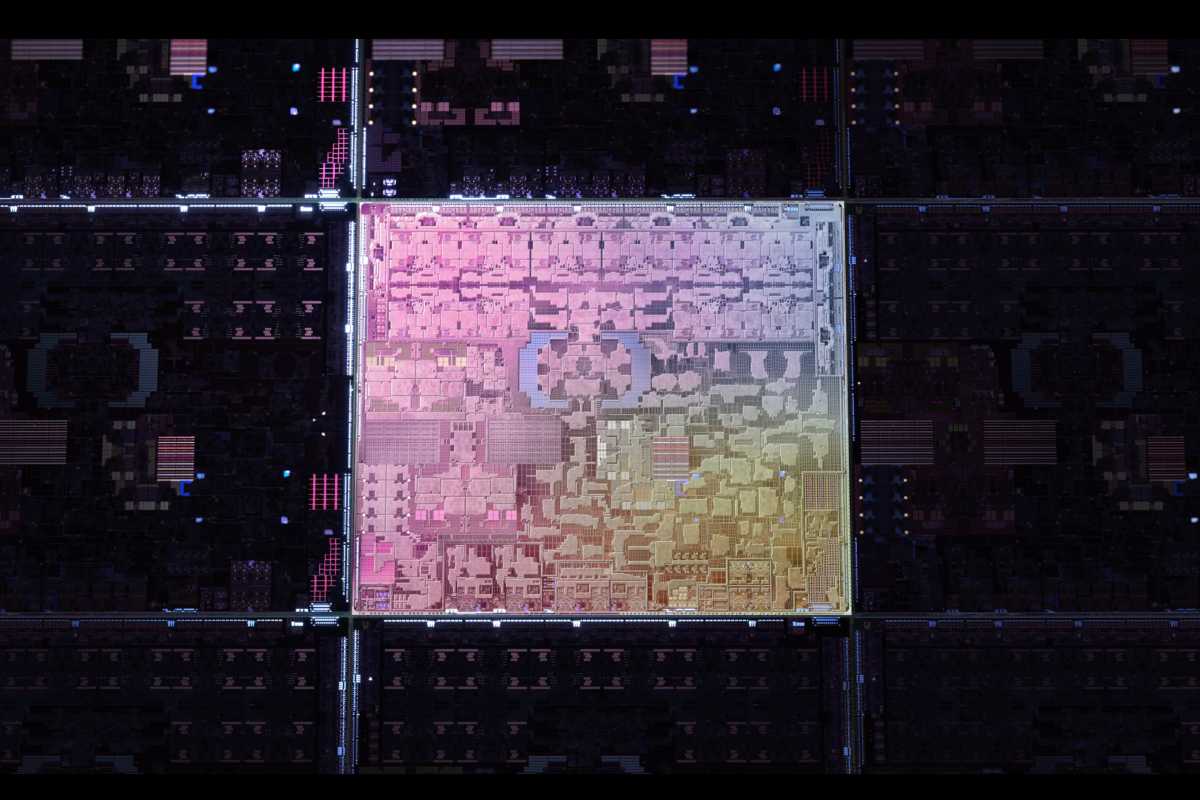
M-series chips feature a complete package right on the chip.
Apple
Thanks to the SoC’s unified memory, all components can quickly access the same data without having to copy it between different modules. This significantly reduces latency and improves performance when running resource-intensive tasks without needing a lot of additional memory. At the same time, Apple leverages its hardware and software integration to further optimize memory usage. For example, macOS has a very aggressive memory compression system that significantly reduces the amount of RAM used by idle applications running in the background.
Chips also use something called “memory swapping.” Granted, it’s not a term invented by Apple, but nowhere else is it used so transparently thanks to the way Apple silicon chips are designed. If your Mac is low on RAM, the system can temporarily store memory data directly on the SSD.
Since RAM and SSD are connected to the same SoC, data transfer is almost instantaneous, allowing the computer to run smoothly even when using all available RAM. When it comes to AI, the built-in Neural Engine also helps macOS process machine learning settings and tasks, freeing up RAM. Essentially, this makes a Mac with 8GB of RAM look like it has double that.
While business users will still need more, which Apple happily sells, the MacBook Neo proves once and for all that for everyday users, 8 GB of unified memory offers much more than the same 8 GB of RAM in a traditional laptop.
The “RAM tax” is already here
The timing couldn’t be better. In March, Apple introduced its most affordable laptop ever, the $599 MacBook Neo, while the rest of the industry struggled to stay afloat due to the RAM crisis.
Microsoft recently announced significant price increases for the Surface line, with some flagship models now costing $500 more than at launch due to rising costs for memory and other components. For example, the 13-inch Surface Laptop now starts at $1,149 with 256GB of storage and 16GB of RAM. That’s $50 more than the base model 13-inch MacBook Air with similar specs. Unlike the MacBook Neo, Microsoft doesn’t even offer an option with 8 GB of RAM.
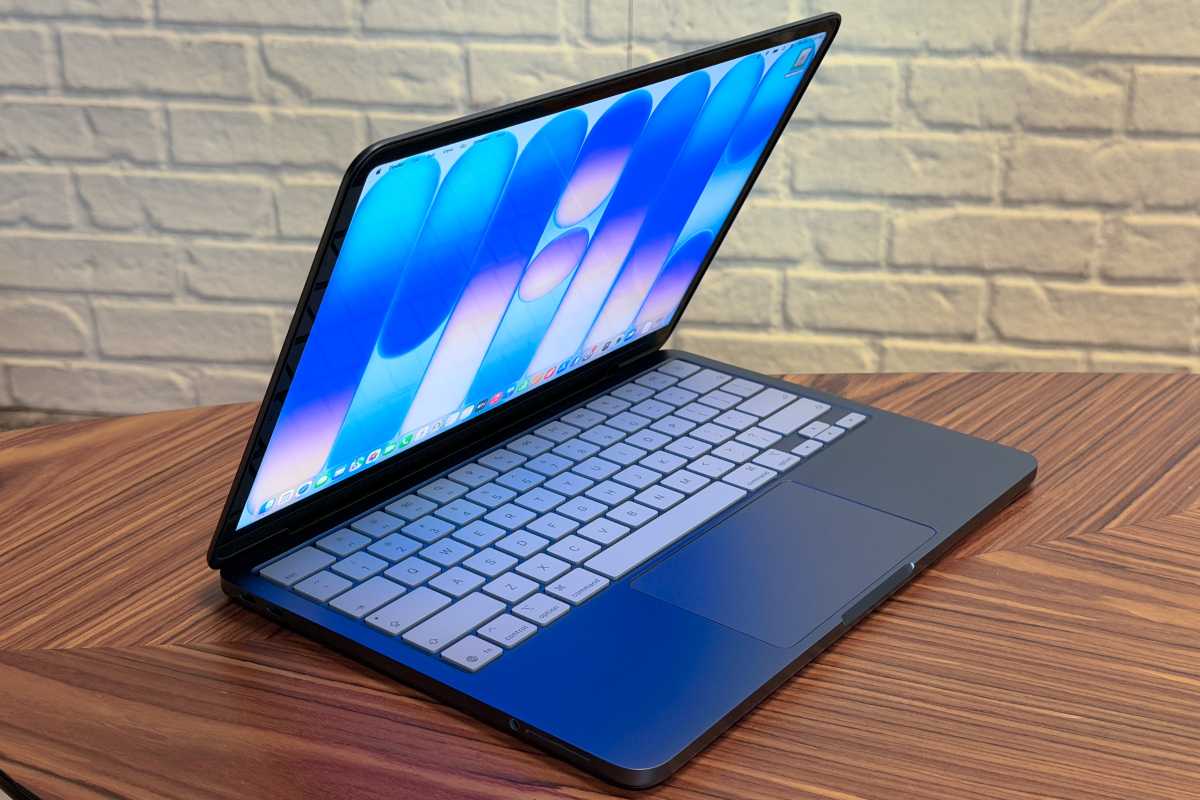
The MacBook Neo comes at a time when PC makers are raising prices.
Foundry
Meta also recently increased the prices of its Quest headsets by up to $100. The company also blamed the “global surge in prices of critical components.”
Apple is of course not immune to component price increases. The M5 MacBook Air, introduced last month, is actually more expensive than the M4 model, starting at $1,099 with 512GB of storage instead of $999 with 256GB of storage. Still, it’s unlikely that Apple will plan to change the MacBook Neo’s starting price of $599 anytime soon.
Of course, that’s because Apple has established that an entry-level Mac can run just fine with just 8GB of RAM thanks to its system-on-a-chip architecture. And even in high-end models, Apple silicon chips are so efficient that Apple is under less pressure to continue raising base RAM (and prices) as aggressively as its competitors.
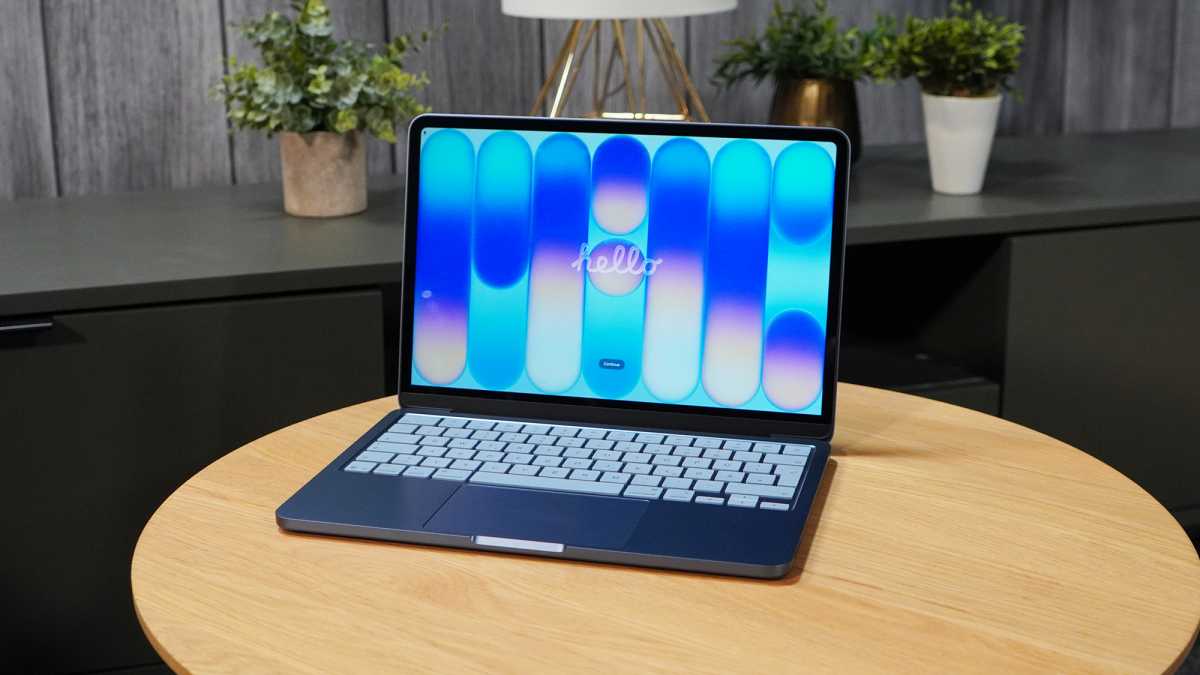
Even with just 8GB of RAM, the MacBook Neo outperforms PC laptops with twice the memory.
Eugene Wegmann
Efficiency will become a growing priority
As expected, Apple’s competitors finally seem to be gaining the upper hand. Last month, Microsoft committed to improving the quality of Windows with a series of improvements that will make Windows faster and more reliable by reducing AI and freeing up RAM for other parts of the system, which should certainly improve performance on less powerful devices. Whether coincidentally or not, the announcement came about a week after Apple revealed the MacBook Neo.
Apple is not reacting to this change. It’s already there. Not because Apple devices don’t benefit from more RAM, but because they rely less on memory specifications to deliver a consistent experience. It’s no longer just about how much RAM a device comes with, but how it uses each gigabyte.
Apple may not have designed the M1 chip with a RAM shortage in mind, but all that technology is now proving more useful than ever. This gives Apple a significant advantage over its competitors, who cannot achieve the same level of integration with parts.


