CAPTCHAgeddon signals a dangerous shift


NEWYou can now listen to Fox News articles!
What looks like a simple “are you human?” Check is now one of the most dangerous tips on the internet. False Captchas have evolved towards full -fledged malware launchers, thanks to a new sneaky method called Clickfix. He copies orders in your clipboard and encourages you to run them, without ever downloading files.
This change in attack tactics is so great that researchers call it “Cattchageddon”. It’s not just a new scam. It is a more convincing, stealthy and widespread viral software delivery system than before. Let’s decompose how this new wave of attacks works and what makes it so difficult to stop.
Register for my free cyberguy report
Get my best technological advice, my urgent safety alerts and my exclusive offers delivered directly in your reception box. In addition, you will have instant access to my survival guide at the ultimate – free swindle when you join my Cyberguy.com/Newsletter.
How the crooks use your data for retirement scams “pre-approved”
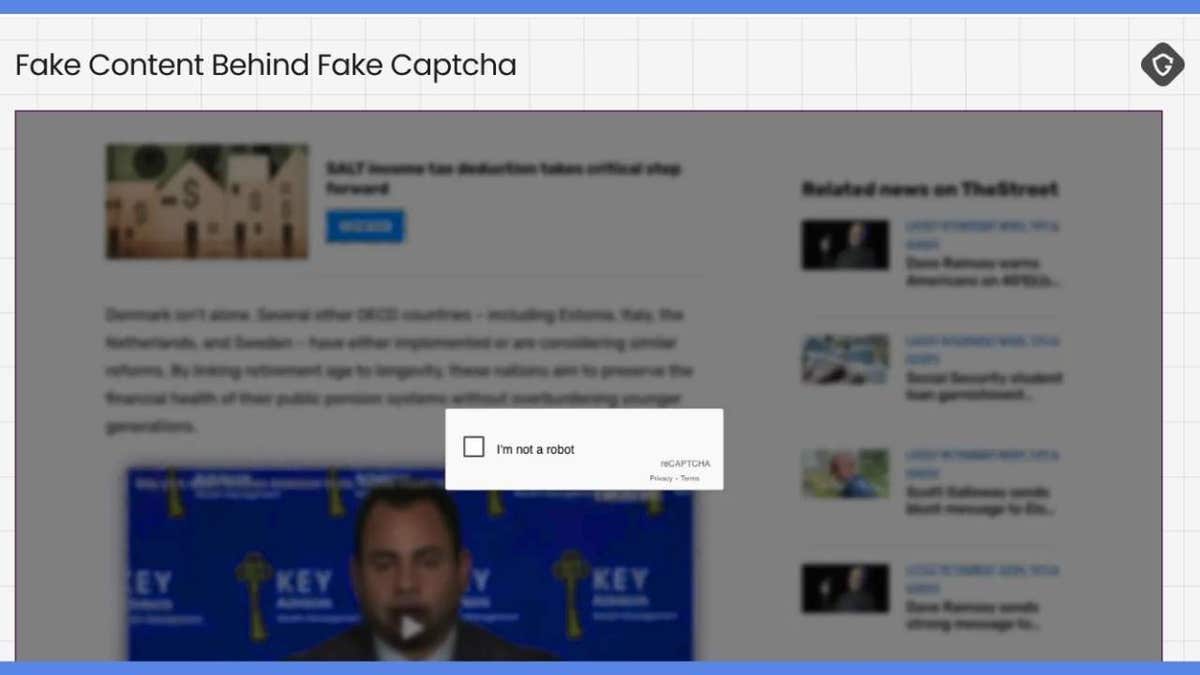
Illustration of false content behind the false Captcha. (Guardio)
How false captors took over
In 2024, security experts warned against the false browser update windows. The victims were invited to download files that have proven to be malware. But these tips are now exceeded. Enter Clickfix.
Instead of asking users to install something, Clickfix loads a false Captcha screen. He looks legitimate, just like Google Recaptcha or Cloudflare bot checks. But when you click on “Check”, it secretly copies a PowerShell or Shell script to your clipboard.
From there, you are only a paste of the installation of malware that steals your accounts, passwords and files. This new tip is more convincing than any old download prompt. And it spreads like forest fires.
5 steps to protect your finances against family scams
Pop-ups with large-scale CAPTCHA campaigns
False Captchas did not stay in summary advertising pop-ups for a long time. The attackers realized that they could hide these tips in places people already trust:
- Wordpress compromise blogs
- GitHub standards
- Reddit threads
- Blurred information sites
- Phishing Booking.com emails
Each attack blends into the site or the service it imitates. Some Captchas even display sites of sites, which gives the impression that the trick came from the page itself. It is no longer a spraying and food diagram. It is targeted with social engineering wrapped in an elegant design.
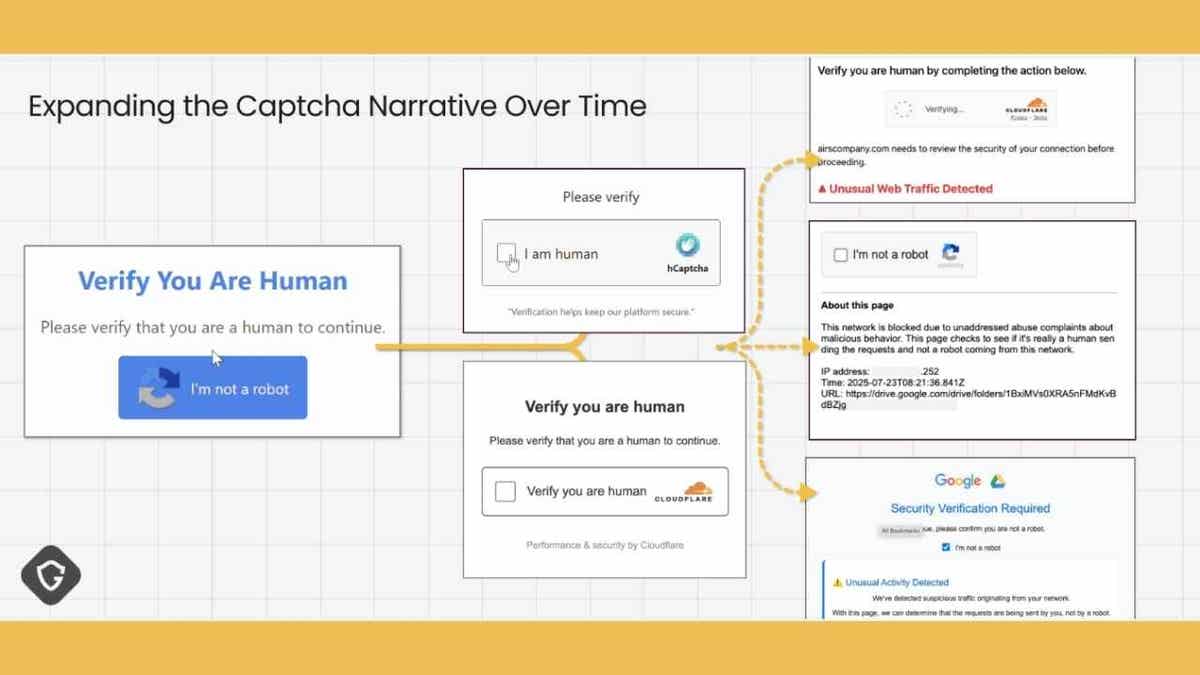
Illustration of the expansion of the story of the Captcha over time. (Guardio)
Technology behind the Captcha tip
These are not low -effort scams. The attackers constantly evolve their tactics to avoid detection. Here is what makes this software malware so stealthy:
- Diversion of clipboard: Instead of downloading a file, it sticks the attack directly in your clipboard.
- Dark code: PowerShell and Shell scripts are hidden with spelling mistakes, symbols and coding.
- Trusted hosts: Some useful charges come from Google scripts, which makes them sure.
- Multiplateform reward: They target Windows, MacOS and Linux users.
The attackers also serve useful loads through areas of appearance of trust and even legitimate JavaScript libraries.
What is artificial intelligence (AI)?
DNA monitoring of malware
Guardio security researchers did not just examine a single attack. They analyzed thousands. By bringing together the control structures, the areas and the payload models, they have identified several threatening players using similar tactics, each with a slightly different touch. Some groups use a strongly obscured code. Others opt for speed with clean and legible scripts. But all rely on the same basic tip: you are going to click on something that seems harmless.
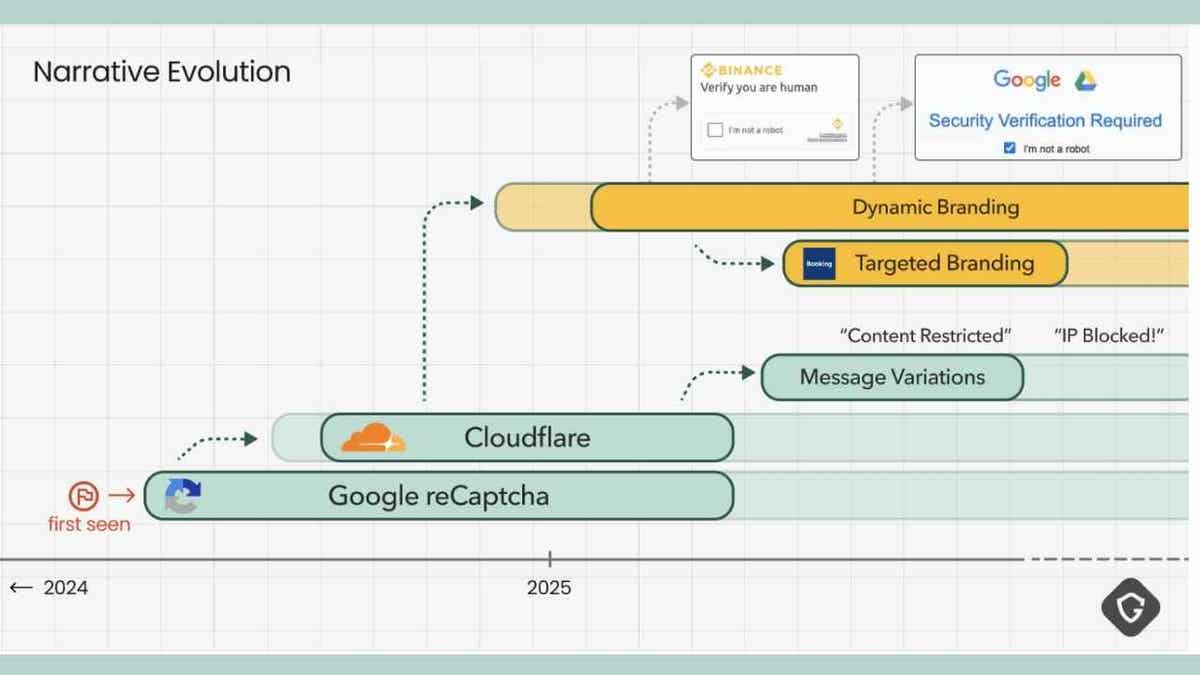
Illustration of the evolution of Captcha scams. (Guardio)
How to protect yourself from the false attacks of Captcha
These new clickfix scams are furtive, convincing and difficult to detect, but you can stay safe with good habits and good tools. Here is what to do immediately:
1) Keep your browser and antivirus software updated
Always run the latest version of your browser and your operating system. Update of the security holes of the patches that the attackers operate. Also use strong antivirus software and keep it up to date. The best way to protect yourself from malware that install malware, potentially accessing your private information, is to install solid antivirus software on all your devices. This protection can also alert you to phishing emails and ransomware scams, protecting your personal information and digital assets.
Get my choices for the best 2025 antivirus protection winners for your Windows, Mac, Android and iOS devices Cyberguy.com/lockupyourtech.
Get Fox Affairs on the move by clicking here
2) Avoid copying and paste controls from unknown sources
If a site asks you to stick an order in your terminal or the browser console, stop. This is the main delivery method for Clickfix Malware. Legitimate services will never ask you to do so.
3) Carefully check the links and areas
Phishing campaigns hide false captors in legitimate urls on Reddit, Github and even information sites. Always want the links before clicking and returning the field, especially if it is invited to “check that you are human”.
4) Use a personal data deletion service
These attacks often target users whose emails or personal details are already circulating online. These services can reduce your digital footprint by requesting the deletion of data broker sites. Although no service can guarantee the complete deletion of your Internet data, a data deletion service is really an intelligent choice. They are not cheap – and your privacy either. These services do all the work for you by actively and systematically erase your personal information from hundreds of websites. This is what gives me peace of mind and turned out to be the most effective way to erase your personal data on the Internet. By limiting the available information, you reduce the risk of crooked references from the crooks from violations with information they may find on the Dark Web, which makes them more difficult for them to target you.
Consult my best choices for data deletion services and get a free analysis to find out if your personal information is already on the web by visiting Cyberguy.com/delete
Get a free scan to find out if your personal information is already on the web: Cyberguy.com/freescan.
5) Use a browser with integrated phishing protection
Modern browsers like Brave, Chrome, Firefox, Safari and Opera offer real -time protection that blocks malicious websites, including false Captcha pages. Microsoft Edge also includes strong phishing defenses via his smart screen filter. Make sure that features such as improved safe navigation or the smart screen are activated. These tools detect threats before clicking, giving you a critical defense layer.
6) Use a password manager with phishing detection
Password managers not only store your connections; They can also alert you when a site seems suspicious. If your manager does not automatically go a password on a Captcha screen or a connection page, it’s a red flag. This generally means that the site is not recognized as legitimate. This little moment of hesitation can help you avoid falling in love with a scam.
Consult the best password managers evaluated by experts in 2025 in Cyberguy.com/passwords.
7) Report False Captcha sites
If you land on a shaded Captcha page, do not close the tab; report it. Most browsers have a “report a safety problem” option, or you can use Google Safe to navigate (safebrowsing.google.com). The reporting of malicious pages helps prevent the scam from spreading and protects others from the victim of the same victim.
8) Warn your friends and family of Captcha scams
Most people do not know these attacks based on the clipboard. Share this article and talk about it. Awareness can prevent the scam from spreading.
Click here to obtain the Fox News app
Kurt’s main dishes
Castchagedon marks a turning point. Malventy software is no longer hidden in shaded downloads. It is hidden on sight, on familiar websites, in trusted applications and inside the buttons, you click every day. This trend completely replaces the false browser update scam. It is smarter, faster and more difficult to detect. And unless we understand how he spreads, he will only grow. Security now means thinking twice on a daily basis. Even a Captcha.
Have you ever met a suspicious captha or a strange online prompt? What made you switch to you, or have you almost fallen in love? Let us know by writing to Cyberguy.com/Contact.
Register for my free cyberguy report
Get my best technological advice, my urgent safety alerts and my exclusive offers delivered directly in your reception box. In addition, you will have instant access to my survival guide at the ultimate – free swindle when you join my Cyberguy.com/Newsletter.
Copyright 2025 cyberguy.com. All rights reserved.


