Challenging the Silence Over Palestine in the American Historical Association


Institutional complicity in injustice.
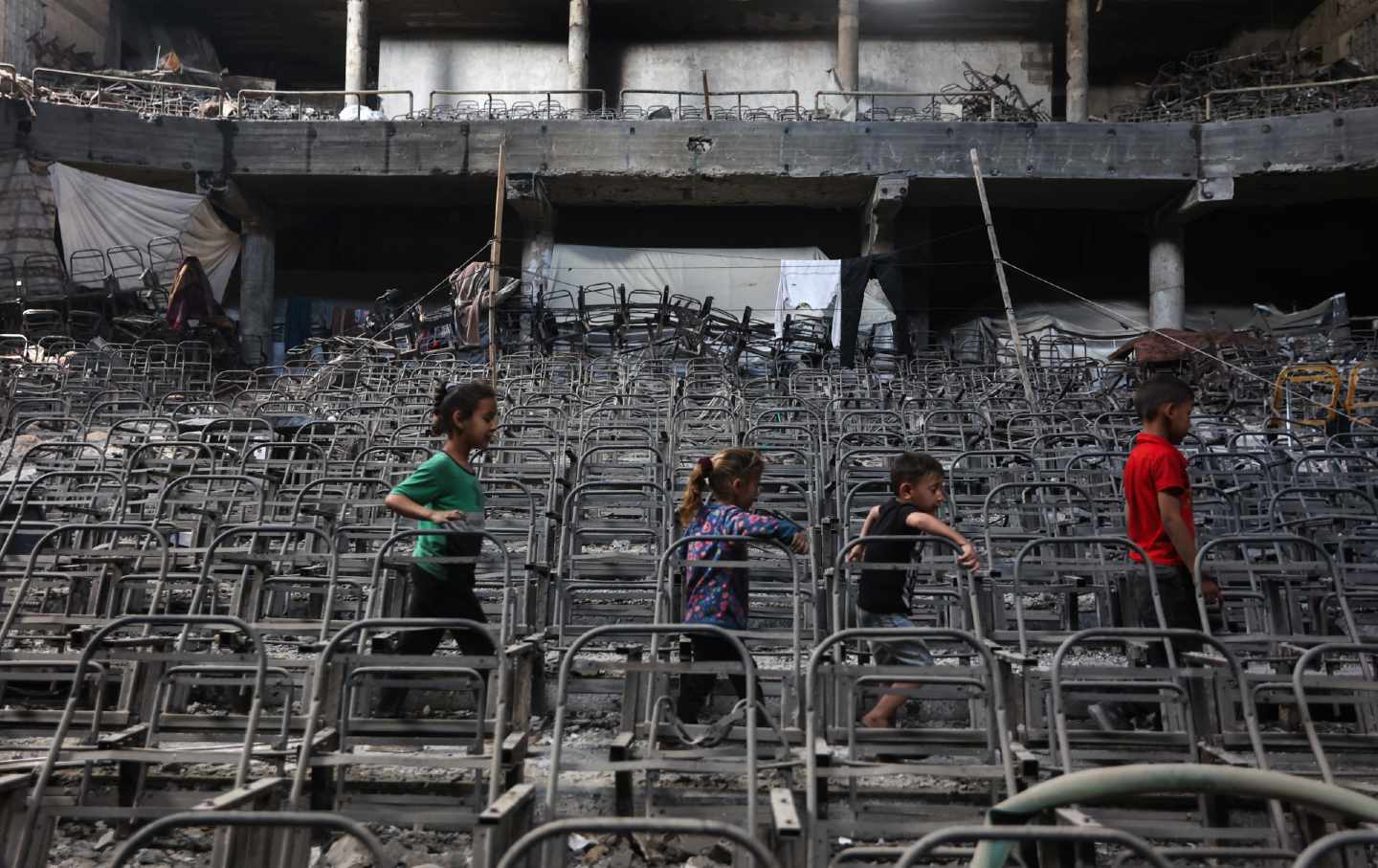
Earlier this year, in “The researchers will take a stand against scholastide in Gaza?”, I reported the fight in the most eminent society of the historical discipline, the American Historical Association (AHA). During the AHA annual meeting on January 5, the members closed the business meeting to approve, by a vote of 428 to 88 years, a “resolution to oppose the school in Gaza”, brought by the organization that I cochair with Margaret Power, historians for Peace and Democracy (HPAD). (The United Nations define the “scholastide” as the deliberate destruction of the educational and cultural institutions of a people.) On January 17, however, the AHA council is vetoing the resolution for the reasons it was gone from the mission of an academic organization to censor the murder of school colleagues and transforming universities into unleashing.
In March, by working with our allies, the group of Palestinian historians and the historians of Palestine, we sent a petition signed by 1,887 historians to the Council of the AHA, asking them to reconsider; They ignored it. Meanwhile, to put the veto of the AHA council in net relief, during the annual meeting of April 5 of the other large company of our profession, the organization of American historians (OAH), our resolution was easily adopted and then approved by their executive council. The OAH now sets up a committee to support the reconstruction of the universities of Gaza.
In response to the lack of democracy, our three groups decided to support the candidates at several AHA offices, in some cases by appointment by petition, as allowed by the statutes of the association. Everyone has undertaken to democratize the organization, including the Dartmouth professor, Annelise Orleck, arrested by the police during the Gaza Solidarity Camp last spring, a candidate for the presidency, and Sherene Seikaly, associate professor at the University of California – Santa Barbara and editor -in -chief of the Journal of Palestine Studiesfor the vice-president of the professional division.
These candidates aroused considerable opposition. A letter signed by 13 former presidents urged the members to vote for the candidates officially appointed without explaining who were our candidates (legally appointed) and why they were on the ballot, while using the Trump administration attacks against learned companies to go up the vote. The eminent gender historian, Joan W. Scott UNIVERSITY. The private missives of former civil servants suggested that if we elected to the Council, we would ignore our “fiduciary responsibilities” in favor of personal ideological agendas. A letter broadcast on the list of members of the association of the workforce and the history of the working class urged the members “to support the candidates on the official slate of the AHA, not on the insurgent slate. As much as we condemn the human rights violations of Israel in Gaza and in the West Bank, we cannot approve any insurgent slate (no matter if they are called “democratic” and “progressive”) as well as the Palestinians to live in peace and security “, a deeply unpleasant involvement. All because we oppose the preservation of silence on Palestine and the current genocide of Israel! And if you are disrupted by calling him, please read Omer Bartov’s test in July 15 New York Times“I am a genocide scholar. I know when I see it.”
In the end, many AHA members voted for greater democracy. Although teachers Orleck and Seikaly were not elected, four of us were, including myself as an advisor to the research division, Karen Miller as an advisor for the educational division, and current and former members of the HPAD, Prasannan Parthasarathi and Alexander Aviña committee at the Committee of Nominations. These victories mark a significant change compared to 1969, when a caucus of radical historians sought to put the association recorded against the Vietnam War and led Staughton Lynd (founder of the predecessor of HPAD, historians Against the War, in 2003) for the president; They were defeated, although the AHA now commemorates this controversial encounter as leading to lasting reforms.
For a historical perspective on the moment we live, let me evoke a parallel with another silence, another period of long-term institutional complicity with injustice. What would have happened around 1938, if a group of historians had challenged Jim Crow’s acceptance by the association? From 1903 to 1935, eight of the AHA annual meetings took place in the southern cities where black scholars were not allowed to enter the hotels, not to mention the rental rooms. Certainly, these “radicals” have been labeled disorders who try to use the association for their own ends, causing a division with serious financial consequences, and worse. It is a good thing that, in this case, we will be inside the tent, working in a productive way to advance the AHA mission to defend honest history, while pleading for greater democratic functioning. We will not be silent about Palestine.


