China intellectual property theft campaign threatens US national security


NEWYou can now listen to Fox News articles!
China’s systematic and orchestrated campaign of intellectual property theft and technological advancement poses an unprecedented threat to U.S. national security, requiring a comprehensive and urgent response. The United States, once unchallenged in its technological prowess, is now grappling with threats emanating from the Chinese Communist Party (CCP) agenda that are both insidious and far-reaching in terms of threats to our national security.
As the world enters an era defined by new forms of power, emerging technologies such as artificial intelligence (AI), quantum computing, and hypersonic weapons are at the forefront of competition between the United States and China. The National Security Commission on Artificial Intelligence warned as early as 2021 that “China has the power, talent and ambition to surpass the United States as the global leader in AI over the next decade,” underscoring the urgency of this technological race.
This danger arises not only from China’s relentless pursuit of American know-how and data – as evidenced by high-profile cases such as the indictment of Chinese nationals for cyberespionage against American companies – but also from the uncomfortable reality that America has, to a large extent, enabled this theft of intellectual property through insufficient investment and controls. The consequences of such actions cannot be overstated; they impact all facets of national security and economic competitiveness.
As the United States is enmeshed in protracted conflicts in the Middle East, the CCP has pursued a “whole-of-society” approach to national rejuvenation. The 2017 National Intelligence Law requires all Chinese organizations and citizens to support, assist, and cooperate with state intelligence work, raising concerns about the security of joint ventures and technology transfers.
CHINA’S MALIGNANT INFLUENCE AFFECTS EVERY ASPECT OF OUR LIVES. WE ALL MUST HELP TO STOP THEM
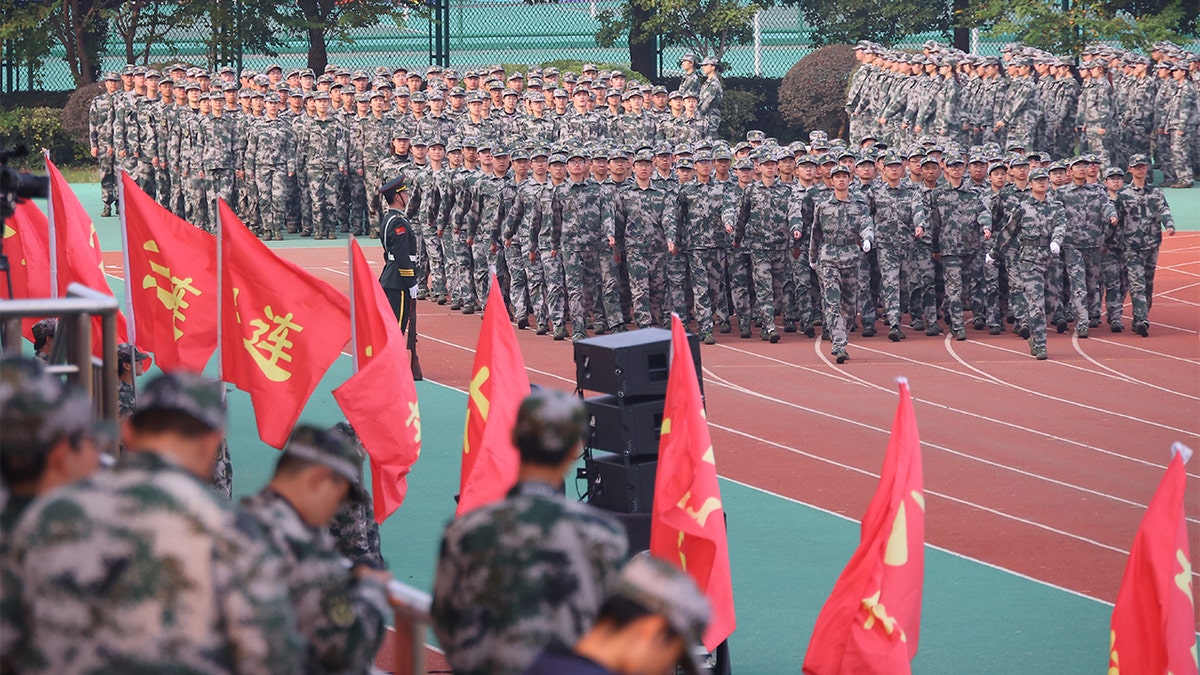
Freshmen participate in military training at Southeast University on October 22, 2021, in Nanjing, China’s Jiangsu province. (Yang Bo/China News Service via Getty Images)
China’s economic and military rise since joining the World Trade Organization in late 2001 is arguably unprecedented in history, in terms of speed, scale and material gain. This accession aimed to integrate China into the international economic order. China has abused its WTO membership for its own interests to the detriment of the global international order.
When Xi Jinping took the reins of the CCP in 2012, the overall plan to steal America’s commercial “crown jewels” accelerated. The Ministry of State Security (MSS) – China’s version of the FBI, CIA, NSA and Cybercommand – has doubled in size over the past decade. Just as envisioned by the CCP high command and made possible by the MSS, China would rise from an economic backwater to the economic superpower it is today.
For the PRC/CCP, every facet of American innovation is a target. From advanced aerospace engineering to breakthroughs in biotechnology, the scale of espionage is staggering. Intellectual property theft not only undermines American businesses, but also erodes the foundation of our future military and economic strength.
TREY GOWDY: China misjudges Trump on trade. HE COULD BE VERY SURPRISED SOON
In many ways, this is a unilateral economic war waged by China against the United States and the West in general. If the United States fails to recognize and address the scale of this threat, it risks ceding its leadership position in the technologies that will shape the coming century.
Beijing played on the naivety of leaders in Washington and Brussels, exploiting their strengths – a liberal, globalized economic order – judo-style, to its own advantage. Although a direct confrontation in a military sense is not inevitable, this trade war, fought largely through unconventional means, will determine the outcome of any future military confrontation between the United States and China.
The challenge for the United States in confronting this threat is that its traditionally structured intelligence, security, and judicial apparatuses are largely inadequate to combat this unique and modern threat.
THE RACE FOR AI TECHNOLOGY IS A NEW “COLD WAR” BETWEEN THE US AND CHINA THAT COULD HAVE DEVASTATING CONSEQUENCES: REPORT
The CIA and FBI were largely designed to access secrets held by the government or to counter a Chinese or Russian intelligence officer attempting to recruit a government official. How do U.S. intelligence and security services approach a Chinese company in part by leveraging its commercial access to steal proprietary secrets? What do U.S. federal prosecutors need to charge and convict those who engage in commercial espionage?
America stands at a crossroads. Traditional strategies – anchored in Cold War paradigms and focused on conventional espionage – are no longer sufficient in the face of this asymmetric economic warfare. The United States must modernize its strategies and not only improve its intelligence capabilities, but also forge stronger alliances with innovative companies and academic institutions. Defensive measures must now extend beyond government agencies and reach the very heart of America’s entrepreneurial and academic fabric.
CLICK HERE FOR MORE FOX NEWS REVIEWS
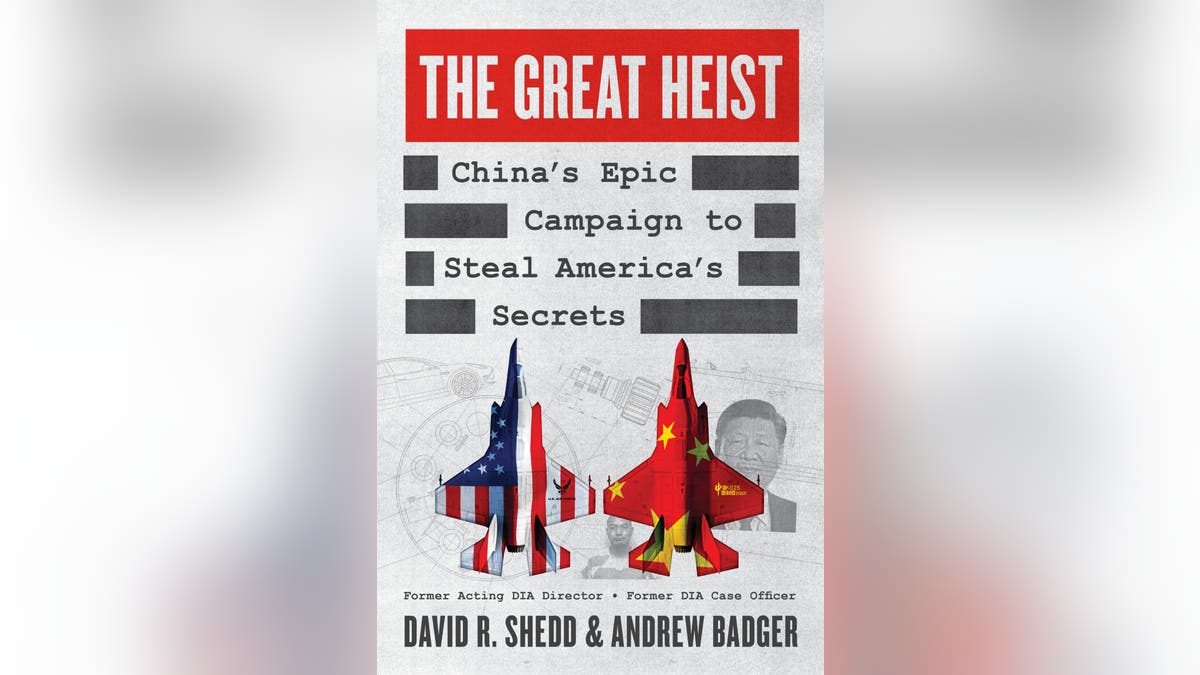
David R. Shedd’s new book, “The Great Heist: China’s Epic Campaign to Steal America’s Secrets,” warns America about China’s theft of intellectual property.
The United States must strengthen its defenses against intellectual property theft, as recommended by the Justice Department’s China Initiative, which has led to dozens of prosecutions for trade secret theft and economic espionage. Additionally, the National Science Foundation has called for increased investment in research and development and the creation of secure research environments to protect sensitive innovations.
U.S. legal and regulatory frameworks are also lacking or insufficiently enforced, often making it difficult to prosecute commercial flight cases, even when the evidence is overwhelming. As for the U.S. private sector, Secretary of State Marco Rubio summed up the problem succinctly when he said that U.S. companies were, in effect, committing “corporate suicide” by failing to fully consider the long-term consequences of China’s growing economic superiority.
CLICK HERE TO DOWNLOAD THE FOX NEWS APP
What is needed is a renewed sense of urgency, alongside a “whole of society” anti-heist response to China’s relentless economic predatory actions. The United States must defend its intellectual capital with the same tenacity it applies to its physical security. An integrated approach – combining updated legislation, rigorous enforcement, international cooperation and a reinvigorated commitment to research leadership – offers the best way forward.
Finally, economic security must be elevated within the administration to be on par with traditional national security, dating back to the Cold War era, when we faced the Soviet Union as the world’s primary adversary. Only then can America hope to secure its place at the top of the global technological hierarchy and safeguard its national security against a PRC/CCP intent on undermining American strength through subterfuge and theft.