China’s economic slowdown deepens in August with retail sales, industrial output missing expectations


China’s economic slowdown has deepened in August with a series of key indicators lacking expectations, while low domestic demand persisted and the Beijing campaign against industrial overcapacity has slowed production.
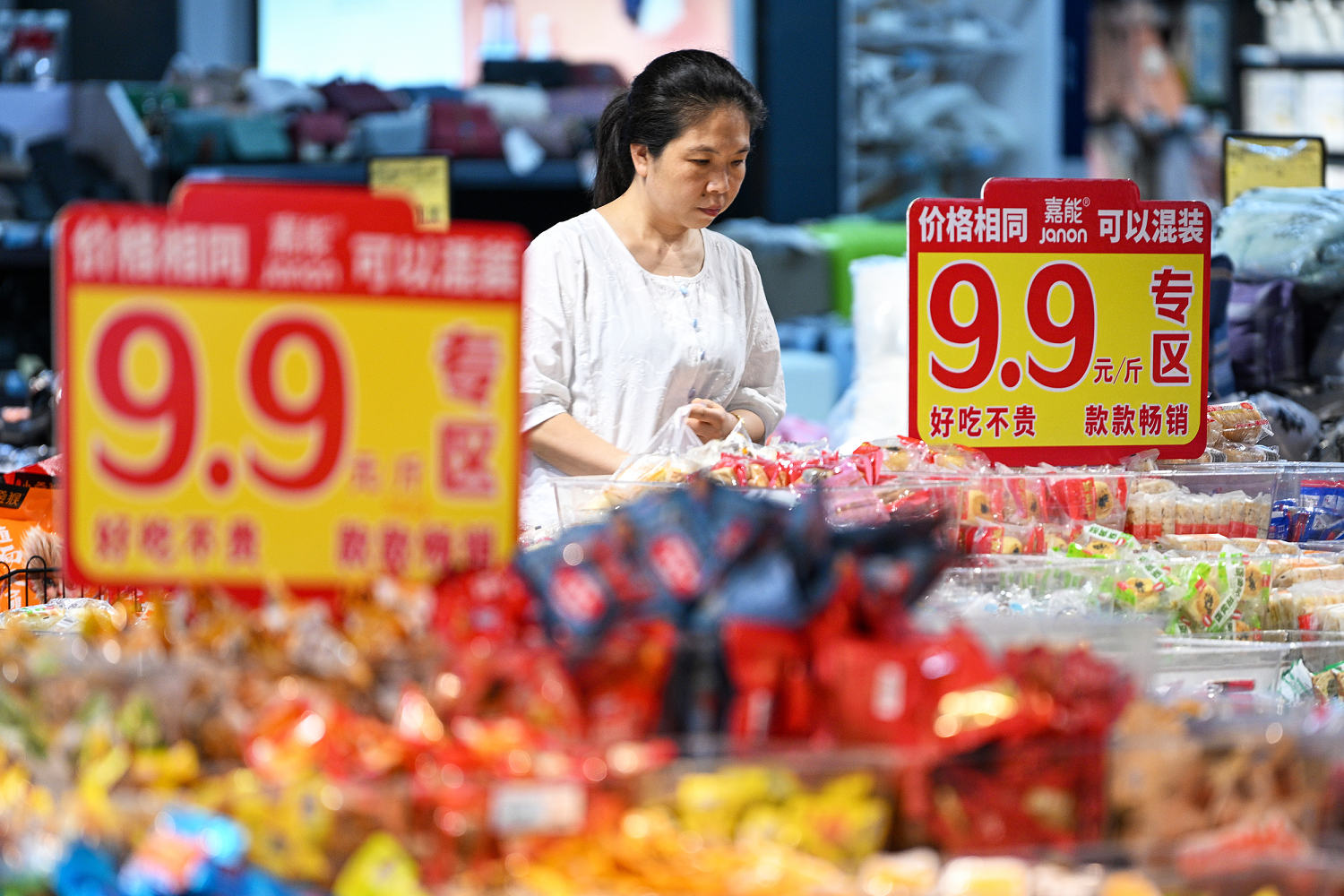
Last month, retail sales increased by 3.4% compared to the previous year, data from the National Statistics Office showed on Monday, the estimates of missing analysts for growth of 3.9% in a reuters survey and slowing compared to the growth of 3.7% of July.
The growth in industrial production slowed down 5.2% in August, compared to the leap of 5.7% in July, marking its lowest level since August 2024, according to LSEG data. Economists expected the data to be unchanged from the previous month.
Investment with fixed networks, said one year to date, extended to only 0.5%, a net slowdown compared to the expansion of 1.6%during the period from January to July and underlying the forecasts of economists for growth of 1.4%.
In this segment, the contraction of real estate investment has worsened, falling in 12.9% in the first eight months, according to government data. Investment in the manufacturing and public services sector – including electricity, fuel and water supplies – increased by 5.1% and 18.8% compared to the previous year, respectively.
Investments with fixed networks have been largely supported by public enterprises, private sector investments have been contracting for a year earlier, said Yuhan Zhang, principal economist to the reflection group at the China Center in the Conference Board.
Investments in the whole manufacturing have experienced “modest and unequal growth”, added Zhang, mainly supported by state -based state -based state investment, high -tech and industrial upgrading, while real estate activity remains low.
The urban unemployment rate based on the survey in China in August reached 5.3%, which is more than 5.2% the previous month. The Statistics Office allocated the increase in the unemployment rate to the graduation season.
“We must be aware that there are many unstable and uncertain factors in (the external environment, and national economic development is still faced with multiple risks and challenges,” the statistics office said in an English press release.
“We must fully implement macro politicians, focus on employment maintenance, businesses, the market … stable expectations, deepen reform and openness and innovation, in order to promote stable and healthy economic development.”
Retail sales, excluding car consumption, increased by 3.7% in August compared to the previous year. Consumption growth in rural areas has exceeded this in urban centers, increasing 4.6% in August compared to a year ago.
NBS spokesperson Fu Linghui said at a press conference after the statement that it was difficult to say if consumers’ inflation had reached a inflection point, while expecting consumer prices to remain volatile.
The Chinese consumer price index fell more than expected last month, plunging 0.4% compared to the previous year, while producing prices have persisted for a third year.
FU has recognized uncertainty about “imported inflation” – where the prices of imported goods can increase for reasons such as the weakening of the Yuan, the increase in world prices for raw materials and higher rate rates. He also underlined the support of “anti-involution” policies targeting excessive competition and the price wars of manufacturers who would eventually manage at consumer prices.
Among the categories that have experienced the greatest growth, sales of gold, silver and jewelry increased by 16.8% in August compared to the previous year, while that of sporting and entertainment products increased by 16.9%, and sales of furniture increased by 18.6% compared to a year ago.
The greatest delays in consumption were oil, as well as products related to tobacco and alcohol.
The consumption of services has grown, led by travel, leisure and transport, reporting a progressive change in expenses to the services, said Zhang.
The slowdown in retail sales growth was mainly due to the lower demand for household appliances and electronics, as the boost of Beijing consumer goods trade subsidies began to fade, said Chinese economist at Goldman Sachs on Monday.
Wang was expecting consumption growth to slow down “more significantly” from September due to “unfavorable basic effects”, stressing that an “incrementally and targeted softening” is necessary in the coming quarters.
The CSI 300 index on the continent has advanced almost 1% after the publication of China’s economic data.
“The slowdown is not a surprise for the markets”, because investors were already expecting growth in the third quarter, said Zhiwei Zhang, president and chief economist at Pinpoint Asset Management, after the boost of exports and the budgetary support of Beijing has disappeared.
Beijing’s fiscal policy can become “more favorable to the margin”, but a significant recovery package is unlikely, unless Beijing sees that the economy may miss its growth objective of 5%, added Zhang.


