Comet SWAN R2: Space rock hiding behind the sun could be visible without binoculars this October


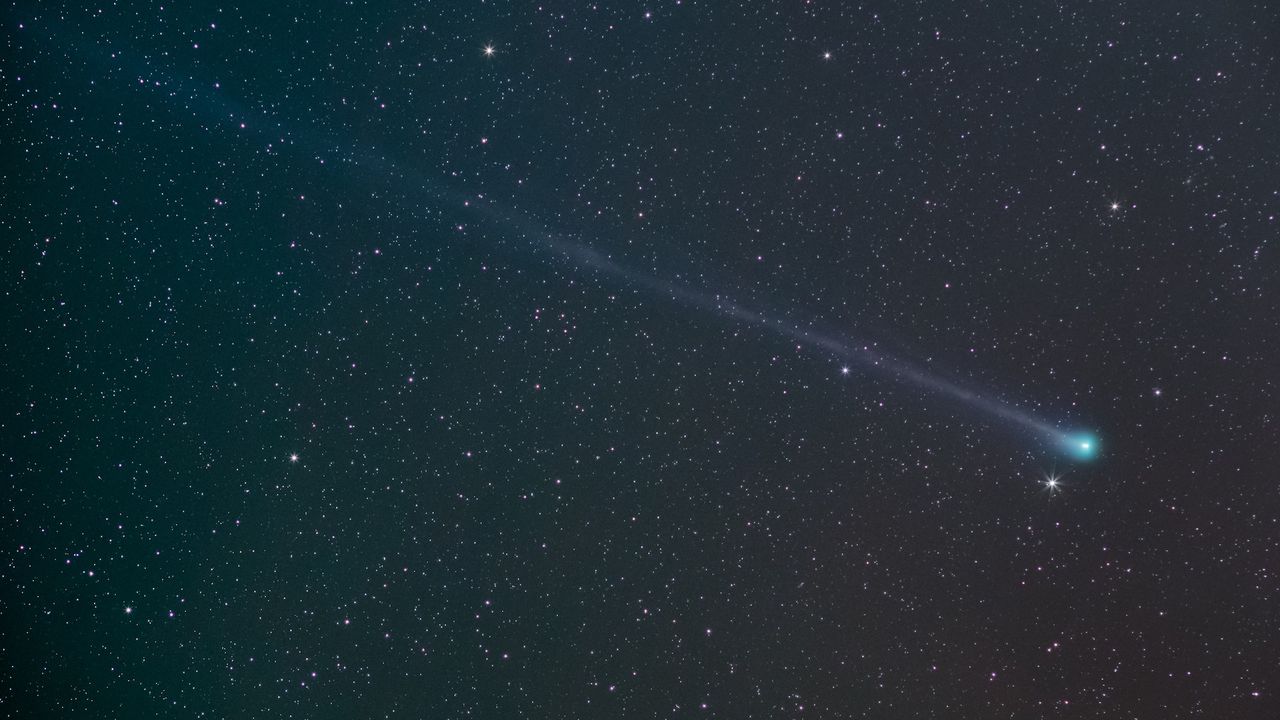
A long -tail comet was spotted near the sun, and some astronomers predict that it could be seen in the naked eye in mid -October – just like any other comet is planned to do the same. This could mean that two shiny comets will be visible in the night sky at the same time, the peak night of a meteor shower.
The C / 2025 R2 comet (Swan), or Cygne R2 to be short, was discovered on September 12 by the NASA orbit Observatory in NASA, including the Anisotropy Sun Wind (SWAN) instrument is used to find comets near the sun. The previously unknown comet was found in Swan’s images by Vladimir Bezugly, a Ukrainian amateur astronomer, according to Universe todayAnd he was initially called Swan25B. Three days later, the minor planet center of the international astronomical union classified The object as a comet and renamed it c / 2025 R2 (swan).
Although the R2 swan is still very close to the sun – passing near Mars just after twilight, and better seen from the southern hemisphere, for the moment – which should change on October 21, when Swan R2 is only 0.27 astronomical units (to) of the earth, according to the swan The lively sky. It is about a quarter of the distance from the earth to the sun.
At that time, the comet could become as brilliant as magnitude 4, which makes it visible to the naked eye in the dark sky, even in the northern hemisphere. The earth can even go through the comet debris around October 4 to 6, which could potentially cause a unique meteor shower. Even if he would not have suffered enough to be seen with the eye without help, the comet must be easily visible through a pair of Star binocular or a good backyard telescope.
This comet turned out to be just when another comet clears up. Discovered in January by the Mount Lemmon Survey in Arizona, the comet C / 2025 A6 (Lemmon) will come closest to the earth on October 21 – the same day as the closest approach to Swan R2. The comet Lemmon will be about 0.60 AA from the earth and will be visible in the morning and in the evening. According to Space.com, Lemmon could also become as brilliant as magnitude 4Which would allow you to see with the naked eye in a dark sky.
The best nights to see the two comets – if they survive their increasingly narrower approaches to the sun, which are not guaranteed, and they have fun as planned – will be from October 20 to 23, when they are closest to the earth. October 21 is the date of the new moon, when the night sky is free from moonlight. October 20 to 21 is also the peak of the meteor oronid shower, when about 20 “shooting stars” per hour are expected. You will not want to miss the prospect of two brilliant comets and meteors in a dark sky.
The last brilliant comet which was visible to the naked eye was the C / 2020 F3 (Neowise), in the summer of 2020, although in October 2024, Comet C / 2023 A3 (Tsuchinshan-Atlas) has become visible through twins during a narrow approach to the earth.


