Tiny Particles Reveal Asteroid Bennu’s Origin Story at the Beginning of the Solar System


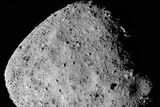
Small pieces of the asteroid of 4.5 billion Bennu say a lot about the history of the solar system. Like the first asteroid samples to return to the United States for research, Bennu’s particles began to paint a radical table of circumstances surrounding the formation of the asteroid while our solar system was still taking shape.
A trio of studies, published in Natural astronomy And Nature geoscience,, On the samples of Bennu, the samples have revealed new details on the asteroid, telling its past full of action full of collisions and chemical reactions. Each of the three studies is based on a different facet of Bennu’s history: where and how it has formed, why it is so rich in water and what caused its beaten surface.
Bring Bennu’s samples back to earth
The Bennu asteroid, more officially known as 101955 Bennu, is an almost terrestrial asteroid which has just the perfect conditions for the collection of samples. According to NASA, three factors have made Bennu the ideal target: proximity to the earth, the right size and the rate of rotation and a composition rich in carbon.
NASA has undertaken to recover samples of Bennu – which constitutes a close approach to the earth every six years – with its Osiris -Rex mission, launched in 2016. After its arrival on Bennu in 2018 and managed to collect a sample in 2020, the spaceship delivered the sample on Earth in 2023. Since then, scientists have been hard at work to discover the particles of Bennu.
Learn more: NASA finally gets its Bennu pieces
Splating from a parent asteroid
The first of the three new studies has an answer to explain where Bennu came from. Bennu is actually made up of fragments that have separated from a larger “parent” asteroid after his collision with another asteroid, probably in the asteroid belt between the orbits of Mars and Jupiter. The parent asteroid itself was a patchwork of materials from all over space: some came from the sun, while others came from distant stars.
“The parent’s asteroid of Bennu may have been trained in the external parts of the solar system, perhaps beyond the giant planets, Jupiter and Saturn,” said the main author Jessica Barnes, professor at the Lunar and Planetary Laboratory of the University of Arizona, in a press release. “We believe that this parent body was struck by an incoming and broken asteroid. Then the fragments are sought and that could have repeated several times.”
The researchers identified various materials by analyzing the isotopes of the samples. This allowed them to find an abundance of stardust, a material prior to the solar system. The materials also suggest that Bennu may have emerged in the same area of space as Ryugu, a similar asteroid which has also been the subject of sample return missions.
Constant chemical reactions and collisions
The second study, published in Nature geosciencedetermined that minerals of the Bennu parent asteroid have been largely affected by the interactions with water.
Parent asteroid may have gathered a lot of frozen materials in the external solar system, which has finally melted. The minerals of the silicate would then have reacted with water, a process drawn by heat which came from the initial formation of the asteroid or a combination of subsequent collisions and the decrease of the radioactive elements inside.
“Now you have a liquid in contact with a solid and heat – everything you need to start making chemistry,” said the main author Tom Zega, director of the Kuiper -Arizona laboratory in U of A, in the press release. “The water reacted with minerals and has formed what we see today: samples in which 80% of minerals contain water inside, created billions of years ago when the solar system was still formed.”
The third study, also published in Nature geoscienceconcluded that Bennu faced a sustained session of space alteration.
The researchers observed microscopic craters and signs of rock formerly tight on the surfaces of the Bennu particles, which suggests that the asteroid has undergone numerous micro -metering impacts while also being reduced by the solar wind. And unfortunately for Bennu, the absence of a protective atmosphere leaves him defenseless against the bad weather of space.
The three studies show that Bennu offers a window on the early solar system, helping scientists to go back billions of years in the past.
Learn more: The basic elements of life found on asteroids bennu
Article Sources
Our Discovermagazine.com writers use studies evaluated by high -quality peers and sources for our articles, and our publishers examine scientific precision and editorial standards. Review the sources used below for this article:


