Neptune Is the Furthest Planet From the Sun, But It Still Experiences Auroras


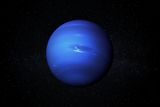
Key takeaways about the furthest planet from the Sun
- Neptune is the furthest planet from the sun in our solar system. Even when Pluto was still designated a planet, its orbit is elliptical, putting it closer to the sun than Neptune for periods of 20 years.
- Neptune is 2.793 billion kilometers from the sun. This is 30 times further from the sun than Earth.
- Although Neptune is the furthest planet from the sun, new studies have shown that the ice giant still experiences auroras.
Pluto may be considered the furthest planet from the sun in our solar system, but in 2006 the International Astronomical Union downgraded it to a “dwarf planet.” Indeed, for long periods, of the order of 20 years, it is closer to the sun than Neptune; this is due to Pluto’s elliptical orbit.
Therefore, Neptune is the furthest planet from the sun in our solar system, orbiting it at a staggering distance of 2.793 billion miles (4.5 billion kilometers). This makes it 30 times farther from the sun than Earth, and it is the only planet in our solar system that cannot be seen with the naked eye.
Learn more: Why are Uranus and Neptune so different from each other?
Neptune: the planet farthest from the Sun
Compared to other planets in our solar system, relatively little is known about Neptune. Alongside Uranus, much of our knowledge of the planet comes from NASA’s Voyager 2 space probe when it flew by the distant planet on August 25, 1989, says Henrik Melin, an associate professor at Northumbria University. “So we don’t know much about Neptune.”
The eighth planet in our solar system, Neptune, is known as an ice giant with an atmosphere composed of hydrogen, helium and methane. It is the presence of methane that gives the planet its blue color. In a nod to the many unknowns about Neptune, some scientists are questioning this ice giant claim, according to a study published in Icarus. Some researchers, according to Cornell University, have even said it may be made up of more rocks than previously thought.
If a space traveler spent a day on Neptune, it would only last 16 hours. This would not be a comfortable time, as Neptune is known to be ravaged by intense storms with winds reaching nearly 1,367 miles per hour (2,200 kilometers per hour), according to the National History Museum, and temperatures as low as minus 417 degrees Fahrenheit (minus 214 degrees Celsius), according to University College London.
The recorded wind speeds and temperatures are among the lowest ever recorded in our solar system. A massive storm system known as the “Great Black Spot,” spotted during the 1989 flyby, was so large that the entire Earth could have fit into it, according to NASA.
How many moons does Neptune have?
A giant planet, Neptune is 30,775 miles (49,528 kilometers) in diameter and also has 16 moons. Triton is the largest of these and unlike the other moons around Neptune, it orbits in the opposite direction to the planet’s rotation.
“It’s a strange Moon, because it’s not really a moon in the traditional sense,” Melin explains. Indeed, Triton originated in the Kuiper Belt in the outer solar system and was likely captured by the planet’s orbit.
Why should we study Neptune
Melin says our knowledge of Neptune is slowly increasing thanks to observations made by NASA’s Hubble and James Webb Space Telescope (JWST). The exact reason we should study this planet is that its size is similar to many other planets observed outside our solar system.
“By observing Neptune, we can somehow understand how these planets work and transfer that knowledge to these thousands of planets discovered elsewhere in our galaxy,” he says.
Learn more: The mysterious world of Uranus, the ice giant
Neptune is furthest from the Sun, but still sees auroras
Melin participated in a recent important discovery on Neptune, published in Natural astronomy. His research focuses on aurora activity. That the planet has such activity was only recently discovered thanks to JWST observations, according to a report from Northumbria University. Auroral activity has been observed on other planets, including Jupiter, Saturn and Uranus. It was through images and the discovery of trihydrogen cation emissions from Neptune, which can be created by auroral activity, that they made this discovery, according to NASA.
Melin and his team also observed a strange change in the planet’s atmosphere, noting that Neptune’s upper atmosphere has cooled by several hundred degrees since the last observations in 1989.
“The temperature in 2023 was slightly more than half of that in 1989,” he says, adding that the exact reason for this remains unclear.
One theory regarding Neptune’s auroral activity is that Triton is an “active moon” with geothermal activity. Another possibility is that Neptune’s northern lights are triggered by interactions with solar winds, similar to the spectacular events we observe on Earth.
If the former turns out to be the case, he says, it’s an exciting possibility because it could make the Moon a candidate for discovering life beyond our planet.
“Active moons are basically where you want to look for life in the outer solar system,” says Melin, citing the example of Enceladus, a moon of Saturn, which is geologically active and contains water; thus, it is considered one of the “leading contenders” for the presence of life beyond Earth, according to a report from the University of Oxford.
“Triton is the number one suspect if there are geologically active moons around Neptune.”
Uranus: left in the dark for 42 years
Neptune takes 165 Earth years to orbit the sun. But its orbital trajectory is not the most fascinating among the large planets in our solar system. That title belongs to its ice giant sister Uranus, according to the National History Museum.
As Uranus orbits the sun, one half is exposed to light, while the other remains shrouded in darkness for 42 years. This is due to its extreme tilt as it moves around the sun, giving it the nickname “sideways planet,” according to an EBSCO report.
Two theories exist as to how this happened: either a massive collision early in the planet’s formation that toppled it, or the gravitational pull of Jupiter or Saturn.
Learn more: Uranus’ outer moons have accumulated dust, darkening their front faces
Article sources
Our Discovermagazine.com editors use peer-reviewed research and high-quality sources for our articles, and our editors review the articles for scientific accuracy and editorial standards. See the sources used below for this article:


