Curfew lifted in Tanzania’s main city after election unrest

Tanzanian police have lifted the nighttime curfew imposed since last Wednesday in the main city of Dar es Salaam, following deadly election protests, as life slowly returns to normal across the country.
Following the unrest, the internet was cut across the country and most stores in Dar es Salaam closed their doors due to a severe shortage of essential goods and soaring prices. Schools closed and public transportation was disrupted.
On Tuesday, some stores reopened and traffic resumed, but with queues persisting at some gas stations in Dar es Salaam.
Families continue to search for or bury their loved ones killed in clashes between security forces and opposition supporters who denounced the vote as a sham.
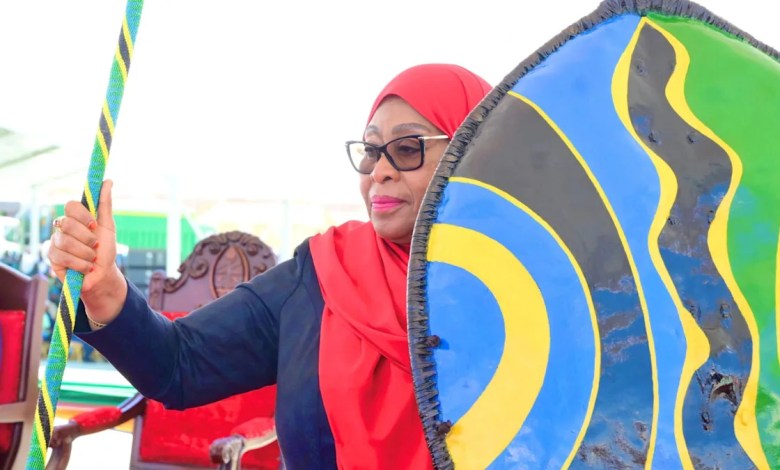
President Samia Suluhu Hassan was sworn in on Monday after being declared the winner of last Wednesday’s elections with 98% of the vote.
Observers from the Southern African Development Community (Sadc) – a regional bloc that includes Tanzania – said in a preliminary report that the elections had failed to meet democratic standards.
The two main opposition leaders were unable to participate in the vote: Tundu Lissu is in detention for treason, which he denies, while Luhaga Mpina’s candidacy was rejected for technical reasons.
Lissu’s Chadema party told the AFP news agency it had recorded “no fewer than 800” deaths on Saturday, while a diplomatic source in Tanzania told the BBC there was credible evidence that at least 500 people had died.
The Office of the United Nations High Commissioner for Human Rights earlier said there were credible reports of at least 10 deaths in three cities.
The government has not given casualty figures.
On Tuesday, a doctor at Dar es Salaam’s Muhimbili Hospital told the BBC that vehicles marked “Municipal Funeral Services” were collecting the bodies.
“[They] “They enter the morgue at night to collect the bodies of people who allegedly died during the protests, they come out and take them to an unknown destination,” said the doctor, who asked not to be identified for security reasons.
“Relatives are not receiving the bodies and survivors are being taken from emergency services to an unknown destination by the police… some even before they are recovered,” he added.

Tanzania had the reputation of being a stable country [AFP via Getty Images]
Earlier, a Tanzanian woman who asked to be identified as Mama Kassim told the BBC that she had not seen her two sons since polling day and had been unable to contact one of them.
“I don’t know where he is, I don’t know if he’s been arrested, I don’t know if he’s injured, I don’t know if he’s hospitalized, I don’t know if he’s dead. Oh my God, protect my son. He’s only 21,” she said.
A Kenyan family said they had asked the government to help repatriate the body of a relative, John Okoth Ogutu, a 33-year-old teacher who lived in Dar es Salaam.
A teacher at Sky School, he was reportedly shot dead by police while on his way to buy food at the town’s Gaba center.
His older sister, Celestine Ogutu, told the BBC that he was a loving, hard-working man who hated arguments and shied away from confrontation.
“He loved family. The last time I spoke to him was on September 22, when he wished me on my birthday, the only family member who remembered my birthday,” she said.
Campaign group Human Rights Watch (HRW) said authorities responded to widespread protests following the election “with deadly force and other abuses.”
He urged the government “to respect rights and ensure that all those responsible for violence are properly investigated and prosecuted.”
Amnesty International said it was alarmed by the excessive use of force to quell the protests, which resulted in death and injuries among demonstrators.
The government has sought to downplay the scale of the violence and blamed foreign nationals for stoking it.
During her inauguration ceremony, President Samia acknowledged “the loss of life and destruction of public property” but added that it was “not surprising” that some of those arrested were foreign nationals.
Samia first took office in 2021 as Tanzania’s first female president following the death of President John Magufuli.
She was initially praised for easing political repression under her predecessor, but political space has since shrunk.
You might also be interested in:
Go to BBCAfrica.com for more news from the African continent.
Follow us on Twitter @BBCAfricaon Facebook at BBC Africa or on Instagram at bbcafrique

BBC Africa Podcasts


