Rapidly intensifying Hurricane Erin becomes historic storm due to strengthening


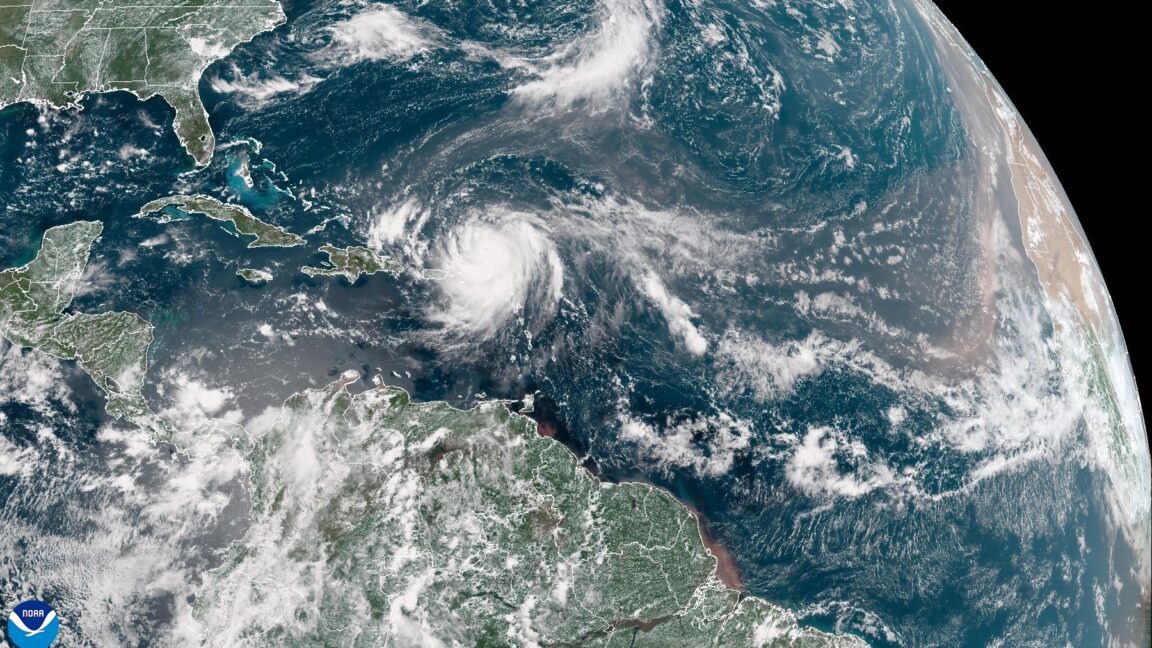
Erin’s central pressure was in the 90s this time yesterday, and it was now in the heads of the 920s for adolescents.
This will make Erin the fastest Atlantic Hurricane before September 1. Beating Emily 2005, by many.
[image or embed]– Sam Lillo (@ samlillo.bsky.social) August 16, 2025 at 9:29 am
With a central pressure of 917 MB on Saturday, Erin ranks like the second most intense Atlantic in the last 50 years before today’s date, behind only Hurricane Allen in 1980.
Rapid intensification becomes more common
Storms like Erin should become more common due to climate change, according to scientists. A study in 2019 revealed that, for the 50% stronger of the Atlantic hurricanes, the 24 -hour intensification rates increased by approximately 3 to 4 MPH by decade from 1982 to 2009. “Our results suggest a detectable increase in the Atlantic intensification rates with a positive contribution from anthropogenic forcing”, “study authors, in the context of the study The study, within the framework of the study, within the framework of the study, within the framework of the study, within the framework of the study, in the part, in the part of the study, in the part in the study, in the study, in forcing, in the study, in the study, in study, in the study, in the study, in the study, in the study, in the study, in the study, in the study, in the study, Nature communicationswrote.
Hurricane scientists generally agree that, although the overall number of tropical storms and hurricanes may not increase in a warmer world, such substantive conditions are likely to produce more intense storms like Erin.
According to the website of the US Government Climate.gov, this increase in the intensity of tropical cyclones (TCS) occurs due to the climate change caused by humans.
“The proportion of severe TC (categories 4 and 5) has increased, perhaps due to anthropist climate change,” wrote a coalition of authors. “This proportion of intense TC should increase further, resulting in a greater proportion of storms with more detrimental wind speeds, higher overvoltages and more extreme precipitation rates. Most studies on climate models project a corresponding reduction in the proportion of low -intensity cyclones, therefore the total number of TC each year should decrease or remain approximately.”
To date this year, the Tropical Atlantic has experienced a lower global activity than usual. But with the longevity and intensity of Erin, this season should soon reach and exceed the normal energy levels of the accumulated cyclone, a measure of the total activity of a season. The Atlantic season generally culminates at the beginning of September, the majority of storms forming between early August and early October.
The forecast models indicate the probable development of more hurricanes in the next two weeks, but there is no clear consensus on the question of whether they will have an impact on the land.


