Diesel soars past $5 a gallon


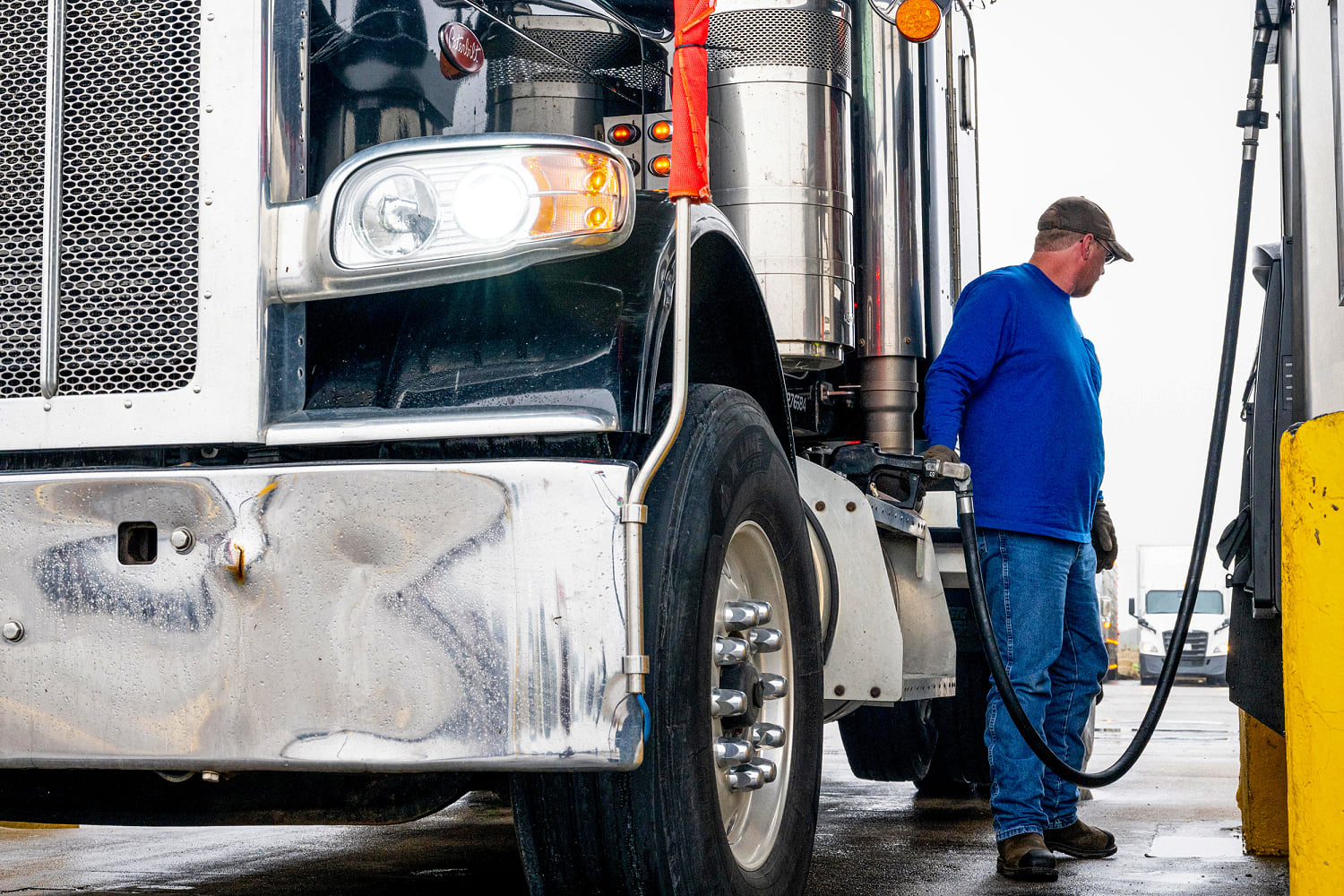
The average price of diesel fuel hit $5.04 a gallon nationwide on Tuesday, the latest fallout from soaring crude oil prices caused by Iran’s blockade of the Strait of Hormuz, a key oil transit route.
Diesel fuel is the refined product of crude oil and biomass materials, and it is used worldwide to power vehicles such as freight and delivery trucks, mass transit, ships, and agricultural and construction equipment. According to AAA, the last time diesel prices crossed the $5 mark was in December 2022.
Although the average American probably doesn’t drive a diesel-powered vehicle, the heavier gasoline is crucial to powering the global supply chain.
“Diesel is what moves the real economy. It moves the food, packages, building materials and inventory that sits on store shelves,” said Paul Dietrich, chief investment strategist at Wedbush Securities.
“If the war in Iran keeps diesel prices high, it will have a direct impact on consumer prices. Food becomes more expensive, delivery costs rise and household budgets tighten,” he said.
The latest diesel prices are particularly shocking because of how quickly they have risen. Just a month ago, the average cost of a gallon of diesel was about $3.65, according to AAA daily fuel price data.
Farmers were among the first Americans to feel the shock of soaring diesel prices.
John Boyd Jr. is a fourth generation farmer in Virginia growing soybeans, corn and wheat. Like thousands of other family farms across the country, Boyd’s business is under increased financial pressure this year due to price hikes triggered by events halfway around the world.
Boyd told NBC News his tractor needed 100 gallons of diesel fuel to fill it. Based on the current national average, that means Boyd would pay about $500 for a tank of gas, which “doesn’t last long.”
“That means a lot of money to me,” Boyd said.
In addition to rising fuel costs, fertilizer prices are also being pushed up by the war in Iran. About a third of the world’s fertilizer ingredients, particularly reserves of urea, sulfur and ammonia, pass through the Strait of Hormuz on their way to global markets.
However, most Americans do not purchase fertilizer or diesel at levels comparable to those of Boyd and other farmers.
Instead, they are absorbing the direct cost of the war in Iran in the form of rising unleaded gasoline prices. On Tuesday, the average price per gallon nationwide reached $3.79, according to AAA, up from just $2.92 a month ago.
The blow to family budgets from soaring gasoline prices comes at a time when American consumers are already battling fatigue from years of inflation that have driven up the price of groceries and other everyday essentials.
“Higher fuel costs act like a tax,” Dietrich said. “Households don’t get more value for that extra money. They simply have less left over for dining, travel, entertainment and discretionary purchases.”
Now, experts say rising energy prices due to the U.S.-Israeli war with Iran risk placing an even greater economic burden on Americans.
“Consumers may focus on regular gasoline prices, but diesel affects many other bills: deliveries, air freight, package shipping, commuter transportation services and goods that require a lot of transportation,” Dietrich said.
UPS and FedEx have already increased their prices by adding extra fees for shipping to and from certain Middle Eastern countries. Commercial airlines are also increasing their fares and fuel surcharges as the cost of jet fuel soars.
Initially, the impact of rising diesel prices on food products will likely be minimal and concentrated on “the types of foods that are tractor and/or truck-intensive, perishable, refrigerated and/or grown far from demand centers,” said Michael Adjemian, a professor in the University of Georgia’s department of agricultural and applied economics.
But in the end, everyone will feel the pain.
“Diesel inflation is usually not dramatic at first. It is gradual, but difficult to reduce. Consumers may not notice it in a day, but after a few weeks it shows up everywhere in grocery receipts, delivery costs, travel costs and lower purchasing power,” Dietrich said.
At present, it is difficult to assess the impact of rising diesel prices on container shipping costs.
As the conflict with Iran continues, oil tankers and crude-carrying vessels face a range of disruptions across the world that have upended the industry’s traditional pricing model.
It is also unclear how quickly maritime traffic of non-oil goods will return to normal, if and when the fighting will subside, and whether transit routes will be relatively safe again.
The Trump administration insists that rising oil prices and all associated costs will decline very quickly as soon as the United States and Israel cease their attacks on Iran.
“I can tell you that when this is over, oil prices are going to go down very, very quickly. So is inflation. So is everything else,” President Donald Trump said at the White House on Monday. “But frankly, what is far more important than oil prices in the short or even long term,” he said, is that Iran is denied the ability to build a nuclear weapon.
For Boyd, the Virginia farmer, this is little comfort.
“I keep watching the news and the president says, ‘Oh, these things are temporary,'” he told NBC News. “They are not temporary for me.”


