Digital scans unveil new love notes and sketches on ancient Pompeii wall

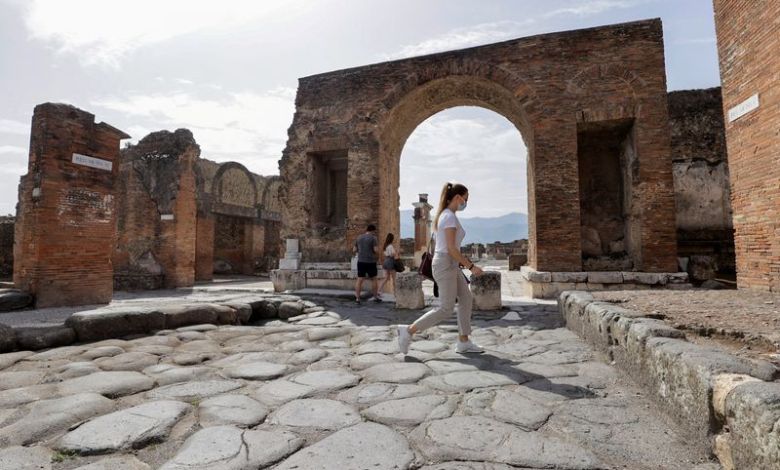
POMPEII, Italy, Jan 19 (Reuters) – A message of love, a scene of gladiatorial combat, a deluge of daily insults and confessions have emerged on a wall in Pompeii, thanks to new imaging technology that has revealed nearly 80 never-before-seen inscriptions.
The once-thriving town of Pompeii, near Naples, was buried by the eruption of Mount Vesuvius in AD 79, preserving buildings, artifacts and graffiti beneath meters of ash.
Rediscovered in the 18th century, it is today one of the most important archaeological sites in the world.
The latest discoveries were found carved into the plaster of a long corridor connecting Pompeii’s theaters to the city’s busy Via Stabiana, which “was first discovered more than 230 years ago”.
The researchers used a computational photography method known as reflectance transform imaging (RTI) that captures an object from multiple lighting angles to expose faint scratches invisible to the naked eye after centuries of erosion.
Archaeologists did not expect new discoveries on a surface considered to be very documented, but their work made it possible to identify around 300 inscriptions, including 79 new ones.
The so-called “corridor whispers” project was developed by researchers Louis Autin and Eloïse Letellier-Taillefer of the Sorbonne University in Paris and Marie-Adeline Le Guennec of the University of Quebec, in collaboration with the Pompeii authorities.
“This technology is the key that opens new rooms of the ancient world,” said Gabriel Zuchtriegel, director of the vast archaeological site, adding that the more than 10,000 known inscriptions from Pompeii constitute a “huge heritage” of the ancient world.
The team is developing a 3D platform that will combine photogrammetry, RTI data and epigraphic metadata to enable comprehensive visualization and annotation of graffiti.
Examples of well-known texts include a hasty farewell to a lover — “I am in a hurry. Farewell, my Sava, make sure you love me!”. Another inscription records the devotion of Methe, a slave of Atella, to her beloved Cresto, with a plea for the favor of Venus, the Roman goddess of love.
Among the new discoveries were a faint sketch of two gladiator fights and the beginning of a declaration of love – “Erato loves…”
(Reporting by Crispian Balmer, editing by Gareth Jones)


