Trump voters assess state of the country : NPR

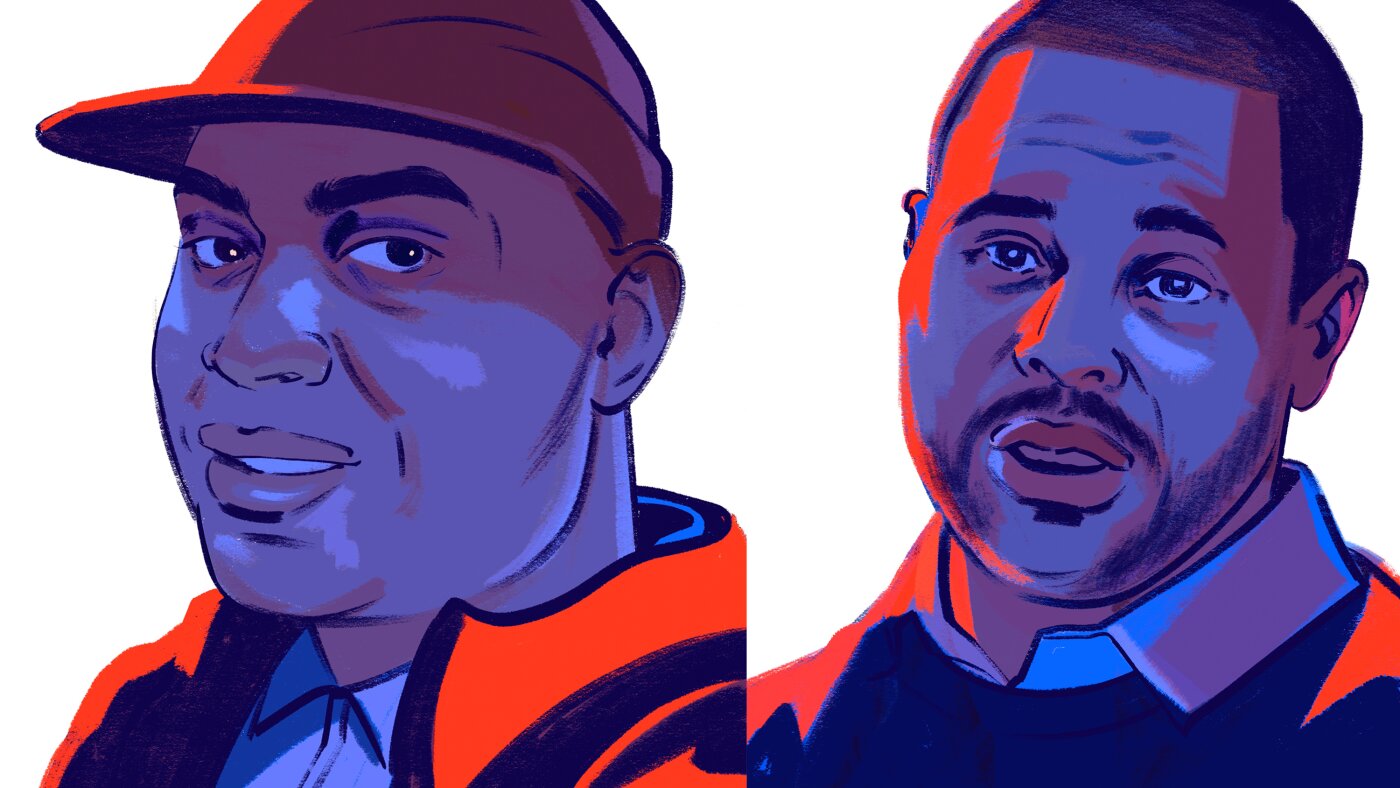

Wally and Gerald are two black men who voted for Trump but have different views on Trump’s performance.
Illustrations by Tara Anand
hide caption
toggle caption
Illustrations by Tara Anand
Gerald and Wally are black men living in the suburbs of Atlanta. Both grew up voting for Democrats and voted for President Joe Biden in 2020. Then, in 2024, they voted for President Trump.
Gérald, 51, is very happy with the president.

“Look, I’m so pro-Trump, people don’t even understand,” Gerald said, sitting at the kitchen table he and his wife share with their blended family after a long day of work as a truck driver. “This guy is amazing because he doesn’t follow the script.”
He gives Trump an A++ for his job performance. When asked the same question, Wally, 44, gave Trump an F.
‘Like, what do we have that we can hang our hat on right now?’” Wally asked rhetorically. “We have higher gas prices.”
Gerald and Wally are among a dozen swing voters in swing states who have agreed to speak regularly with NPR over the next three years as part of a project we call Swing Shift. We agreed not to use their full names and commissioned an artist to illustrate portraits to allow them to speak more freely about politics, without worrying about personal or professional repercussions.
In political journalism, polls provide a snapshot in time. Focus groups and restaurant interviews are usually one-offs, and we can’t delve into what a voter thinks. Swing Shift is an ongoing conversation with a group of voters who could play a crucial role in both this year’s midterm elections and the 2028 presidential election.
Participants live in swing states and do not always vote for the same party. Most of them voted for Biden in 2020, then for Trump in 2024. A few swung the other way. At some point in the last decade, they all voted for Trump.
“The way they vote is the way America will vote,” said pollster Frank Luntz.
In a polarized country, these are the people who help decide elections. The goal is to truly know these voters and understand how the issues that dominate the national political debate manifest in their daily lives. Their stories are those of an essential part of the electorate.
“That 7 percent of America who swings back and forth and not just between Republicans and Democrats – they’ll vote for an independent candidate and they might not even vote. And it’s the margin of success in states and districts that matters,” Luntz added.
So how do these voters feel? We will check in with them regularly, asking a basic set of questions, including how they rate the president’s performance (and that of Republicans and Democrats in Congress as well). We also asked them for a word or phrase to describe the current state of the country.
Gerald and Wally were the first Swing Shift voters we visited at home. Their reasons for supporting Trump and their opinions on his performance couldn’t be more different.
Wally can’t think of one positive thing about the Trump presidency.
“I think with Trump, we’re just trying to get over this guy,” Wally said. “We can’t get to 2029 fast enough. The problem is what shape we’ll be in once we get there.”
Wally was sitting in his backyard by a fire pit, near the swing that he said his kids were outgrowing. His family is financially secure, he has a good job in the tech industry, but he wants a better country for his children. And he just can’t see it.
“Everyone’s drowning, and like we just need to get some air,” Wally said. “No one really tries to swim to shore. We just try to get our heads or noses out of the water.”
Is he surprised? Not really. He didn’t have high expectations for a second Trump term, but he was tired of the incremental changes Democrats were proposing. Trump has enjoyed more support from black voters than any Republican presidential candidate since the election of Ronald Reagan in 1980, according to the Roper Center for Public Opinion Research at Cornell University.
In February 2025, 36% of Black voters approved of the job Trump was doing as president. Today, that figure has fallen to 26%. Wally’s view of the American political system is bleak. He believes that the country must hit rock bottom and therefore voted for maximum chaos. “I think if people get angry enough, they will force change,” Wally said. “They will force it one way or another.”
Wally said his wife did not agree with his political change or his nihilistic view of the country’s needs. Gerald’s wife has been supportive of his shift and is by his side, he said. And Gerald’s vote in 2024 brought hope. He turned to Trump after doing research and showing more critical thinking.

“And to me, critical thinking means: What if I’m wrong about what I’ve been told?” » asked Gerald.
Gerald also credits his children for helping him question his opinions, especially as he has learned more about history. Now, he said, he will never return to the Democratic side, even though he has lost friends because of his pro-Trump social media posts.
He is a big fan of the use of AI and gets his news from YouTube, TikTok and ABC’s World News with David Muir. For him, changing bands was like changing phones.
“I was a [Samsung] Galaxy phone user,” he said.
And he was all about the Galaxy until he got an iPhone. He pointed to the phone on the table in front of him.
“This thing is incredible. You know, when I find out the truth, you won’t represent it any better than me. That’s the way I am,” Gerald said.
Gas prices are a pain in the butt right now. His personal vehicle is a large double pickup truck running on diesel. But diesel is even more expensive than regular unleaded gasoline, so he tries to use his wife’s car to get around when he can, to save money on fuel. Gerald nevertheless has confidence in Trump and believes that the current economic difficulties will be worth it if the Iranian threat is resolved.
“I’m just trying to cut expenses, survive, until we can get through this,” Gerald said. “It’s like anything else. It’s a season.”
He uses apps to find discounts on gas and noted that there are other ways to cut back on spending, like not eating out all the time. Or even eat less.
“Cook. Quickly. I mean, my wife and I have been fasting, and there are many benefits, one of which is saving money on groceries,” Gerald said.
The latest NPR/PBS News/Marist poll finds that 8 in 10 Americans say high gas prices are causing them economic hardship. Nearly two-thirds of respondents blame Trump for the price rise.
But these are sacrifices Gerald is willing to make. This did not alter his opinion of the president.
NPR Lexie Schapitl And Bria Suggs contributed to this story.


