Dinosaur ‘mummies’ prove some dinos had hooves


For the first time, paleontologists have succeeded in reconstructing the profiles of two massive duck-billed dinosaurs, down to their pebbled skin and unexpected hooves. Based in part on remains found decades ago in the Wyoming badlands, both Edmontosaurus appendix the specimens were only preserved through an extremely rare and delicate “mummification” process.
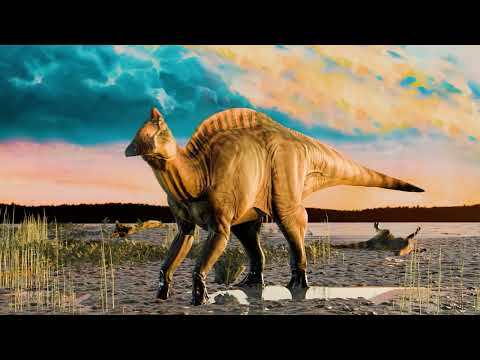
Meet the Duckbills
Measuring approximately 39 feet long and weighing approximately 6.2 tons, E. annexes was one of the largest and most common dinosaurs in present-day North America during the Late Cretaceous Period. It was also literally one of the last of its kind. Fossil records dating back 68 to 66 million years indicate E. annexes probably existed until the Cretaceous-Paleogene extinction that eventually killed off all non-avian dinosaurs.
Edmontosaurs were probably quite striking to look at with a long, low skull and one of the most prominent duck-billed snouts of any hadrosaur. Although paleontologists had already discovered various sections of the skeleton and more than 20 partial or complete skulls, they were not entirely sure of its overall anatomy.
How a dinosaur becomes a “mom”
To better understand the creature, a University of Chicago team led by anatomist Paul Sereno traced the historical locations of previous dinosaur discoveries in east-central Wyoming. Specifically, they identified a small area known for its “mummies,” including two new E. annexes specimens discovered by Sereno’s group: a late juvenile and a young adult.
“The Wyoming badlands where the discoveries were made constitute a unique ‘mummy zone,'” Sereno said in a statement.
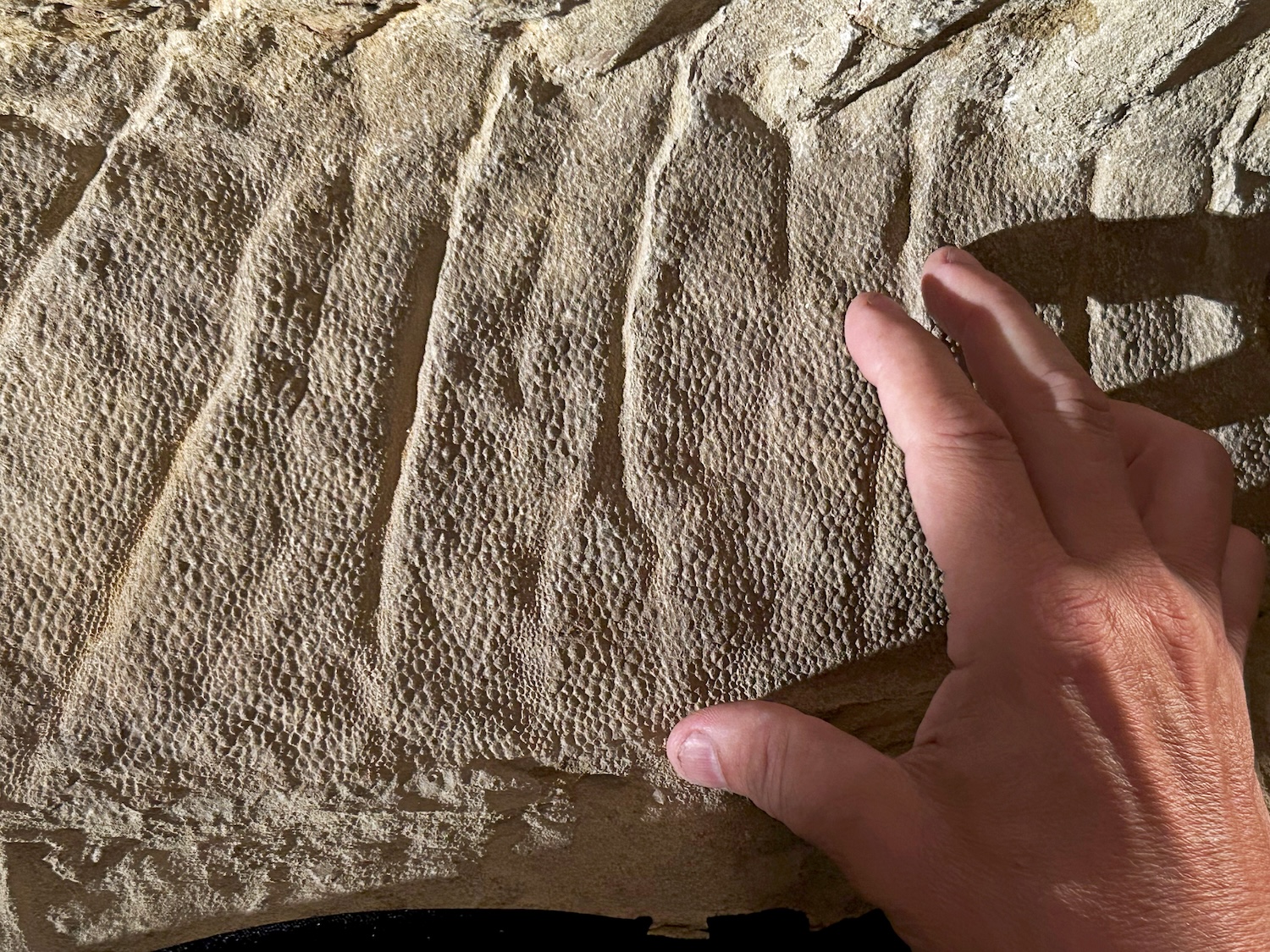
They are not mummies in the traditional sense. There are no organic remains, but dinosaur anatomy like skin, hooves and spikes preserved in a submillimeter clay film in a process called clay modeling. Making one of these mummies requires what Sereno calls a “fortuitous preservation event” that occurs shortly after a dinosaur dies and is buried.
“It’s a mask, a model, a layer of clay so thin that you could remove it,” he explained.
Sereno’s team used several imaging techniques such as micro-CT scans and X-ray spectroscopy to closely analyze how this process might occur. They believe the most likely scenario begins when a flash flood covers a sun-dried dinosaur carcass. As the waters rush over the body, a biofilm on the animal’s skin electrostatically attracts clay from surrounding sediments to form a delicate “model layer.” This layer then preserved the surface below in three dimensions as the dinosaur’s organic matter continued to decompose before its skeleton fossilized.
Although the dinosaur model is often unprecedented in its detail, it is also extremely delicate: experts at UChicago’s Fossil Lab spent hours cleaning the clay boundary. Other members of the team continued to take surface images and CT images of the skeleton and studied the fossilized footprints. The final results described in a study published October 23 in Science offer new looks at the pair of dinosaurs.
“The two specimens complemented each other wonderfully. For the first time we could see the whole profile rather than scattered patches,” Sereno said.
Simple spikes, polygonal scales and hooves
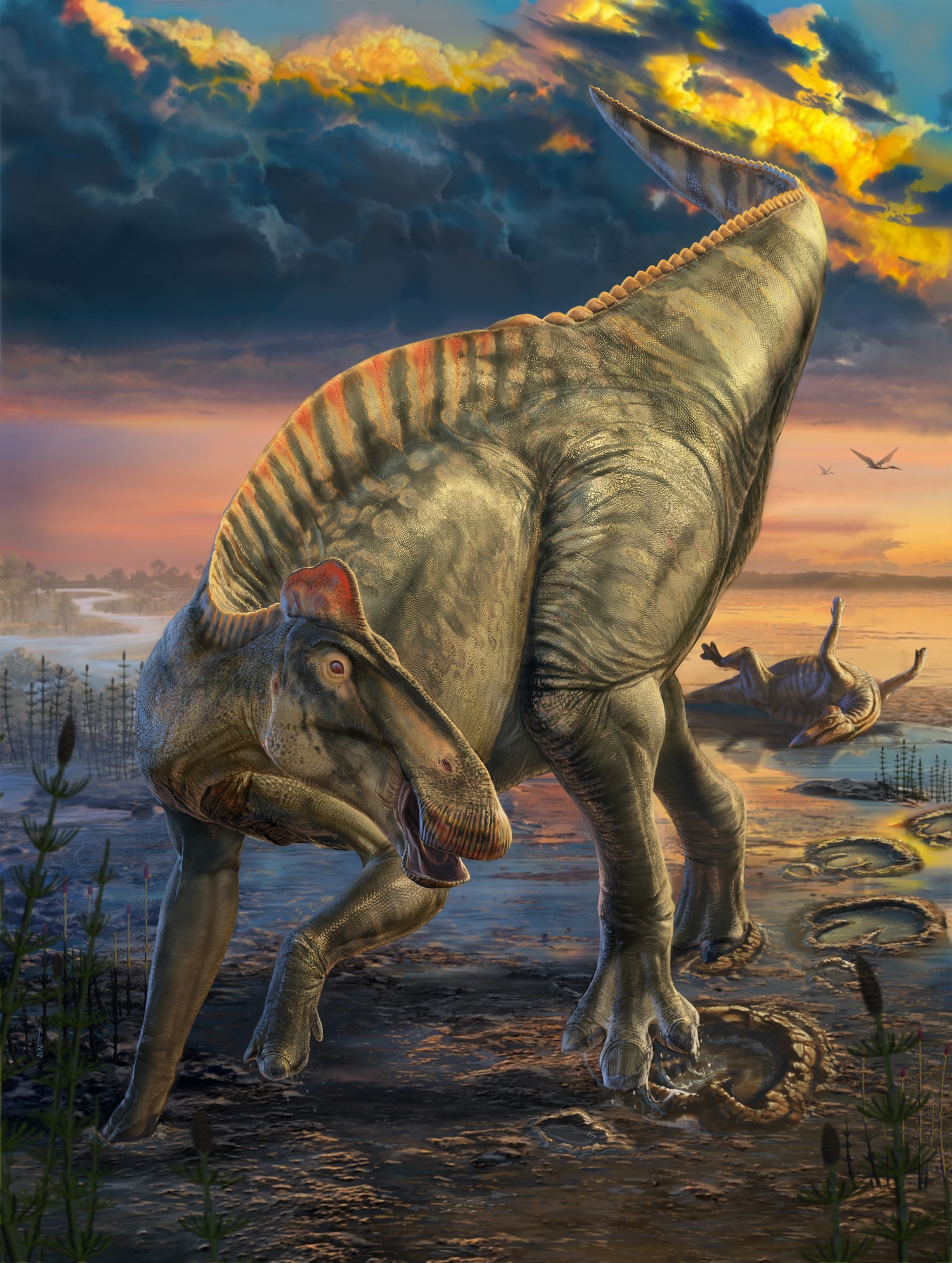
Paleontologists were able to identify a continuous anatomical detail of the midline on E. annexes it started as a ridge along his neck and trunk, before growing into a single row of spikes on his hips and down his tail. Each spike grew directly on and fit a single corresponding vertebra. The dinosaur’s lower body and tail skin had larger polygonal scales, although most of them were the size of small pebbles. Usually dinosaurs as large as E. annexes presented larger scales. The preserved wrinkles on his ribcage also indicate thin skin.
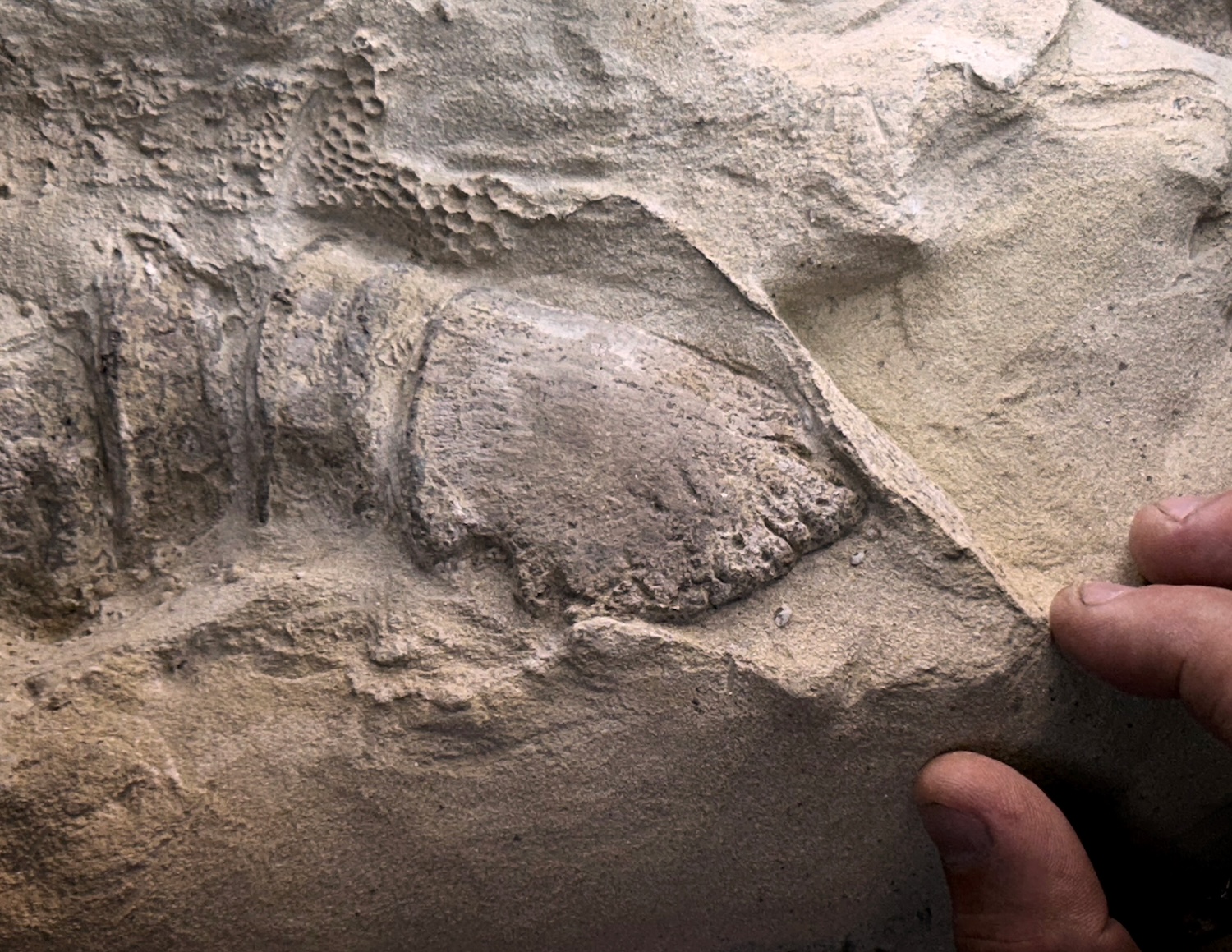
However, the most unexpected discovery is at the level of the hind legs of the largest mummy. Each included three toes covered in a flat-bottomed, wedge-shaped hoof similar to that of a horse. In combination with additional examinations of fossilized duckbill prints from the same era, the team reconstructed the overall appearance. It now appears that E. annexes walked with its front feet touching the ground with only hooves, while its hind feet also featured a fleshy heel for support.
“There are so many amazing ‘firsts’ preserved in these duck-billed mummies,” Sereno said. “The first documented hooves in a terrestrial vertebrate, the first confirmed hoofed reptile and the first four-legged animal with hooves with different forelimb and hindlimb posture.”
The study authors hope that other researchers can now apply the methods described in their study to other dinosaur mummies. In the meantime, they plan to conduct research in Wyoming to find similar examples for their own work.

House of the Future Prize 2025