‘Extremely rare’ and ‘highly unusual’ Roman-era tomb in Germany is completely empty


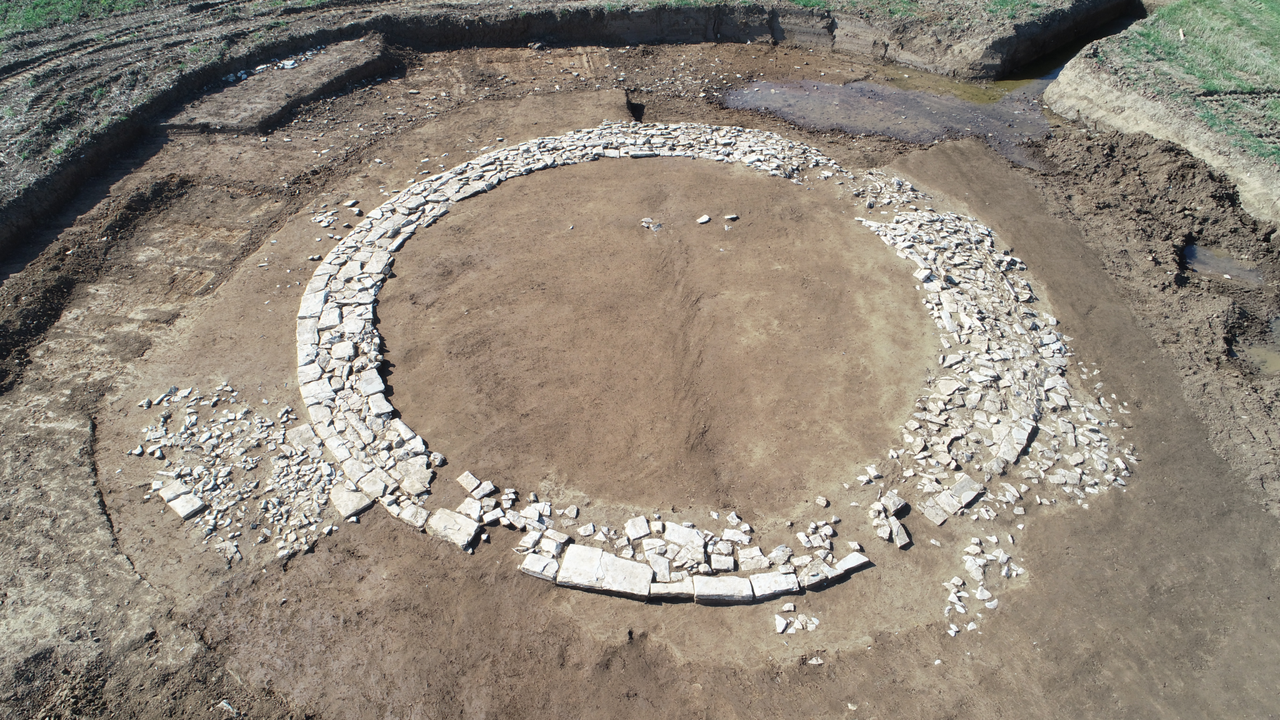
Archaeologists have discovered an unusual circular stone tomb in southern Germany. Meeting with the Roman Empirethe large tomb was completely empty – and it may have been erected as a monument to someone buried elsewhere.
“The tomb was both a place of memory and an expression of social status”, Mathias Pfeilgeneral curator of the Bavarian State Office for Monument Preservation, said in a translated version statement. “We did not expect to find a funerary monument of this age and size here.”
According to the Bavarian Office for Monument Preservation, the circular tomb was built next to a Roman road. The shape and arrangement of the carved stones also suggest that the mound dates from Roman times, when the area was part of the province of Reetie.
But while similar Roman burial mounds have been discovered in Central Europe and Italy, this discovery is “very unusual” and “extremely rare” for Germany, the Bavarian State Office for Monument Preservation noted in the statement. The mounds discovered in this area generally date from a much earlier date.
Additionally, the Wolkertshofen grave is unusual because no bones or grave goods were found there. Coupled with the tomb’s proximity to a Roman road and a Roman estate, this may mean that the mound was a cenotaph – a symbolic grave that commemorated someone who was buried elsewhere.
“The tumulus [burial mound] was located directly on an important Roman thoroughfare and thus the family created a widely visible memorial to the deceased,” Pfeil said.
Further research into the tomb and its surroundings will help experts better understand Roman life in Bavaria, according to the release.


