Bye-bye blur: Nvidia’s G-Sync Pulsar monitors aim to perfect motion clarity


Nvidia hasn’t revealed any new graphics cards at CES 2026, but the company isn’t coming to the show empty-handed. Not only did Team Green reveal DLSS 4.5, an advanced new form of its cutting-edge graphics scaling and frame generation technology, but it also introduced a new generation of esports-focused gaming monitors. Meet G-Sync Pulsar.
G-Sync Pulsar brings a standardized set of features to esports monitors. Pulsar-certified panels will need to measure 27 inches, with 1440p resolution and stunning 360Hz refresh rates; reached 1000 Hz+ “perceived motion clarity with VRR; » and include Nvidia’s G-Sync Variable Overdrive and new Ambient Adaptive technology features.
Basically, they’re almost guaranteed to melt your socks and make blurry visuals in fast-paced games a thing of the past. These might be the ultimate in motion clarity.
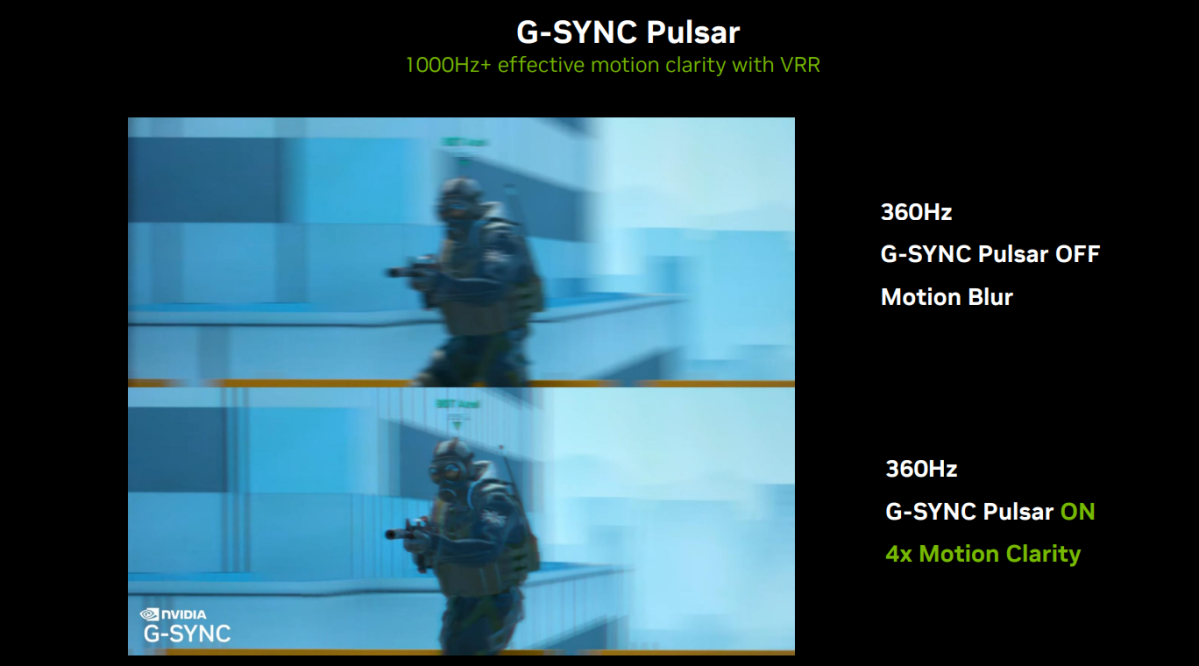
Nvidia’s G-Sync Pulsar technology is reminiscent of the company’s impressive “Ultra Low Motion Blur” feature in G-Sync monitors, but for visuals instead of just text. If Nvidia’s marketing image above is to be believed, this is a definite increase in movement clarity – and I’ll jump straight into it for my own esports projects if the claims are indeed true. I have a demo session planned with Nvidia later this week where I will hopefully be able to check it out!
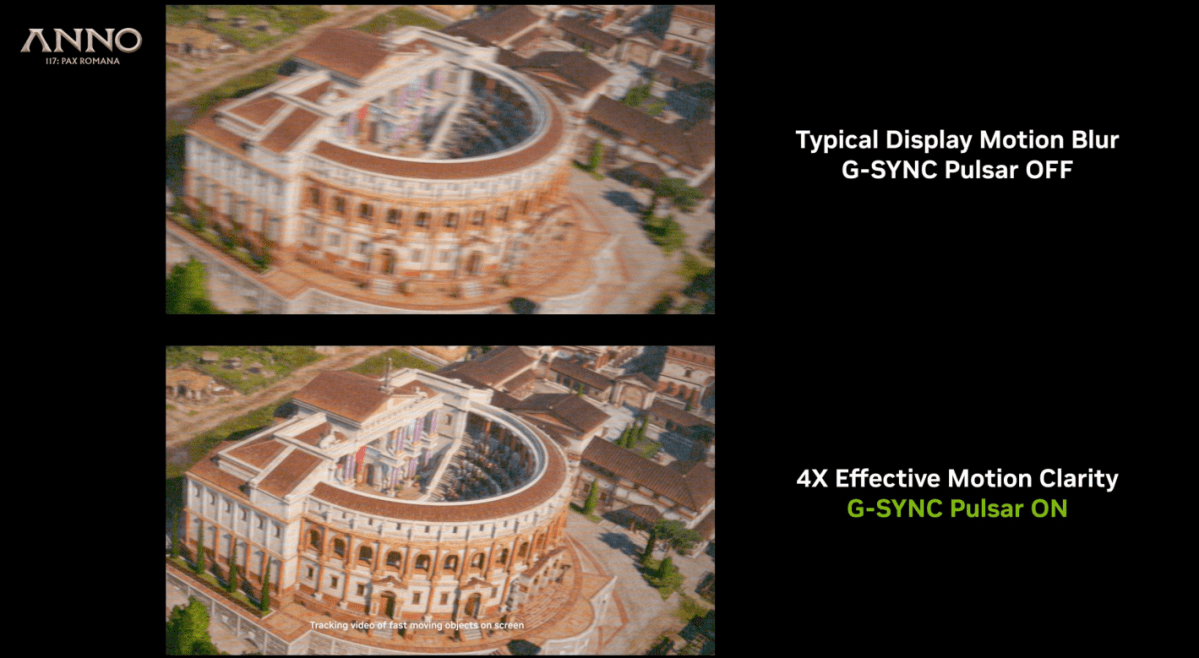
I wasn’t able to get an in-depth technical tutorial on how Pulsar works, but here’s a comparison provided by Nvidia of how Pulsar works versus a more traditional display. The VRR rolling backlight strobe down is the secret sauce for the huge improvements in motion clarity, giving pixels time to stabilize before being backlit.


This is what a G-Sync Pulsar looks like Year 117: Pax Romana.
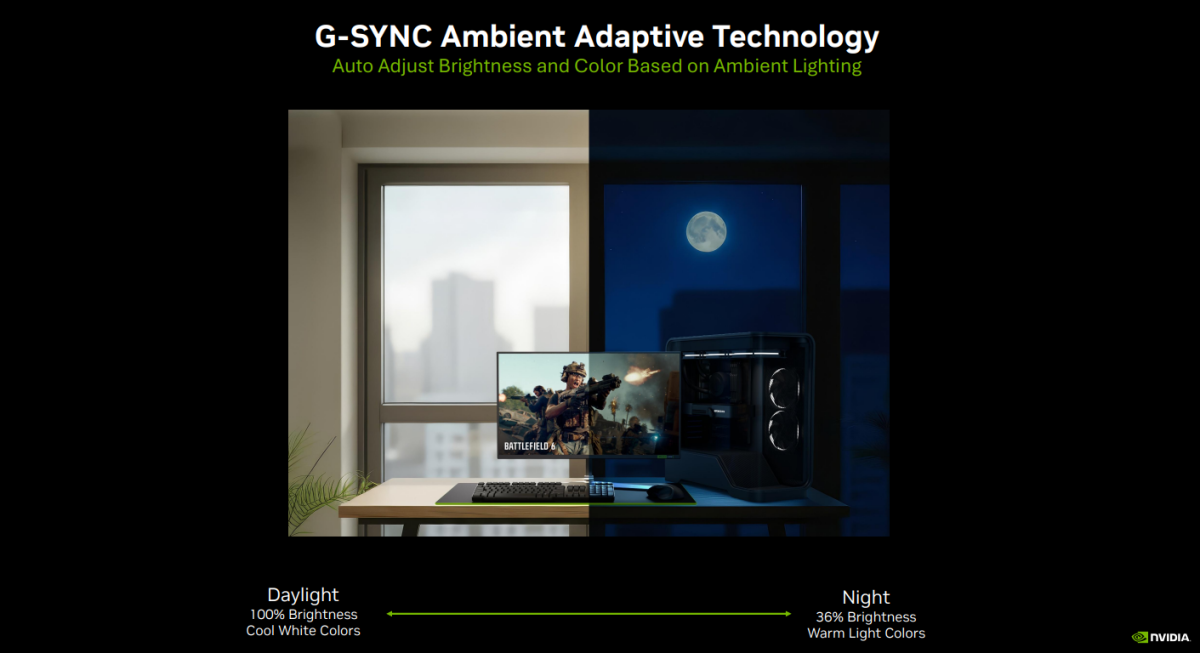
G-Sync Pulsar monitors will also feature Nvidia’s new Ambient Adaptive technology, which automatically adjusts the color and brightness of your panel based on the ambient conditions in your room. I guess this means they must include some sort of environmental sensor?
Better yet, these displays are expected to launch soon. Nvidia says availability will begin right away in the middle of CES, with models from Asus, AOC, Acer and MSI.


