Dr. Oz wants AI avatars to replace rural health workers. Critics are wary : NPR


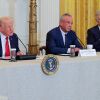
Centers for Medicare and Medicaid Services Administrator Mehmet Oz speaks at an Action for Progress event on plans to transform behavioral health, February 2, 2026, in Washington, DC
Heather Diehl/Getty Images
hide caption
toggle caption
Heather Diehl/Getty Images
Dr. Mehmet Oz proposes a controversial solution to America’s rural health care crisis: artificial intelligence.
“There’s no question — whether you like it or not — the best way to help some of these communities is going to be through AI-based avatars,” Oz, director of the Centers for Medicare and Medicaid Services, said recently at an event focused on substance abuse and mental health hosted by Action for Progress, a coalition aimed at improving behavioral health care. He said AI could increase doctors’ reach fivefold — or more — without burning them out.
The AI proposal is part of the Trump administration’s $50 billion plan to modernize health care in rural communities. This includes deploying tools such as digital avatars to conduct basic medical interviews, robotic systems for remote diagnostics, and drones to deliver medications where pharmacies do not exist.
Oz even suggested replacing in-person obstetric care with AI-guided devices.
“We can use robots to perform ultrasound scans on pregnant women,” Oz said. “You take a wand, you don’t even see the picture. You just get digitized information that tells you if the child is OK. And frankly, I don’t need to see the picture. I just need to know if the picture is good enough to tell me that the child doesn’t have a problem.”
In a statement to NPR, the Centers for Medicare and Medicaid Services said Oz emphasizes the need to “responsibly explore tools” that can expand the reach of licensed clinicians, not replace them altogether. He also said CMS supports the use of AI-based tools when they are evidence-based, patient-centered, and used appropriately under clinical oversight.
What rural America is already facing
Oz’s comments come as rural hospitals face steep cuts under the One Big Beautiful Bill Act that President Trump signed last year, a reconciliation law that cuts federal Medicaid spending by about $1 trillion over 10 years, significantly impacting rural hospitals.
These hospitals were already facing financial pressures. According to the nonpartisan research organization KFF, more than 190 rural hospitals closed between 2005 and early 2024 – about 10% of all rural hospitals nationwide – due to budget shortfalls and associated challenges. Some communities lost their only hospital, forcing residents to travel long distances for basic and emergency medical care – or even ignore it.
In the United States, people living in rural counties are more likely to die prematurely from five leading causes — heart disease, cancer, chronic lower respiratory diseases, stroke and unintentional injuries — than those in urban areas, according to a report released by the Centers for Disease Control and Prevention in 2024. Many of these deaths could be prevented with timely, quality care, according to the report.
The CDC study identified several culprits: limited access to providers, longer travel times, fewer emergency services, higher poverty rates and lower insurance coverage.
A health system with fewer people?
Carrie Henning-Smith, an associate professor at the University of Minnesota and co-director of its Rural Health Research Center, says using AI avatars would remove something essential: human connection.

“Health care has always been about humanity and relationships,” she said. “If your first and only supplier is an avatar, we remove trust, comfort and continuity.”
Henning-Smith also raised concerns about testing unproven technologies on already underserved populations.
“I don’t like the idea of rural people being treated like guinea pigs,” she said. “If this is where we test AI in healthcare, a lot could go wrong.”
She also highlighted logistical issues such as unreliable broadband, low levels of health literacy and fragile transport systems. If AI systems can’t work without stable digital infrastructure, she said, they could widen existing gaps.
Supporters say AI could help expand access
But some health technology leaders say AI tools could help rural communities, not by replacing doctors, but by taking on the administrative burdens that keep clinicians from seeing patients.
Matt Faustman is the co-founder and CEO of Honey Health, a company that develops AI tools designed to automate provider tasks, including managing fax inboxes, processing prior authorizations, and retrieving patient records.
Many providers are overwhelmed with paperwork, Faustman said, and the burden is particularly heavy in rural areas where clinics don’t have large administrative teams.
“Thirty to forty percent of the physician or provider’s time can really be absorbed by administrative work,” he said.
Faustman said automating these tasks could allow clinicians to focus more on patient care and allow smaller hospitals and clinics to expand more quickly without hiring more back-office staff.
He also said AI could play a role on the patient side, especially in areas where the right provider is not immediately available.
“This can serve as an initial triage or even an early access opportunity so that these patients are then redirected to the right providers,” he said.
Can AI really replicate a human clinician?
Henning-Smith argues that while AI tools can handle basic tasks, they cannot replicate the bulk of healthcare needs.
“AI cannot read facial expressions, tone of voice or body language,” she said. “And those things matter. That’s where the relationship between a patient and a provider is built – in the nuance.”
Even when AI tools are accurate, she says, they can’t provide the assurance or cultural sensitivity that a trusted clinician provides. And in communities where trust in the medical system is already fragile, this loss could be particularly damaging.
Henning-Smith also expressed concerns about the economic consequences of replacing local jobs with AI technology.

“When a nurse or doctor works in a rural town, their salary stays there,” she said. “But when you replace that work with an AI tool built in Silicon Valley, that money disappears.”
Public reaction
Online reaction to Oz’s comments was swift.
“You think rural communities want AI doctors? They’re still trying to get reliable internet access,” one user wrote on X.
Another added: “Dr Oz: ‘We replaced your nurse with a cartoon. You’re welcome.'”
However, a few voices defended the idea, emphasizing that care is better than no care at all.
“It’s not ideal,” one message read, “but it’s better than nothing.”
Oz has not offered a comprehensive implementation plan and CMS has not confirmed whether AI avatars will become a formal part of the agency’s rural health strategy.
But Henning-Smith hopes the conversation doesn’t end with cost savings.
“I would be curious to know if Dr. Oz would want an avatar to treat his own family,” she said. “It seems like a two-tier system: one for those who have resources and another for those who don’t. And I don’t think we should agree with that.”


