The Alienware 15 is a fine gaming laptop priced into irrelevance


Summary created by Smart Answers AI
In summary:
- PCWorld reviews the new Alienware 15 gaming laptop, which starts at $1,299 with an RTX 4050 graphics card and offers Intel or AMD processor options.
- The laptop features a 15.3-inch 165Hz display, 16GB of DDR5 RAM, user-upgradeable components, and comprehensive connectivity including USB-C and HDMI ports.
- Despite decent specs and handy features like stealth mode, its high starting price makes it less competitive than alternatives in the gaming laptop market.
How much should a gaming laptop cost? The answer is – depressing and unhelpful as always – “it depends”. If you insist that there be an Alienware logo on the top and you visit the Dell store today, the answer starts at $1,299. This gives you a relatively recent CPU… and an RTX 4050 graphics card from 2023.
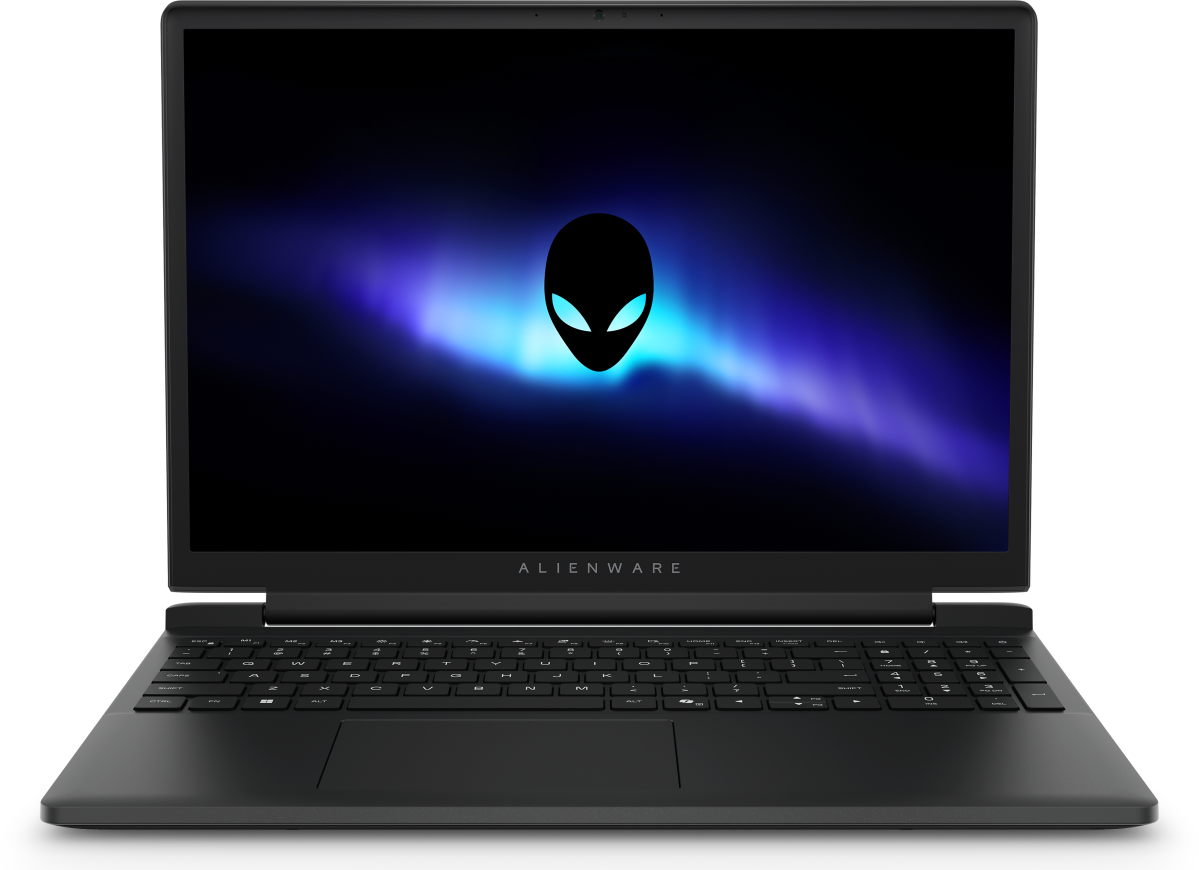
The Alienware 15 is apparently what replaces the Dell G series of affordable gaming laptops. This is a step down from the most expensive model in the current lineup, the Aurora 16, which has a starting list price of $1,690. The Alienware 15 forgoes LED logo lights in favor of a trading card-style color finish. Other grand touches go without, opting for a black polycarbonate body (that’s “plastic” for those not in the marketing department) and white-only backlighting on the keyboard. It measures 0.9 inches thick and weighs 4.96 pounds, which isn’t particularly remarkable for a 15-inch gaming laptop.
Dell
Surprisingly, you have options for Intel (Core 5 210H or Core 7 240H) and AMD (Ryzen 5 220 or Ryzen 7 260) CPUs, but Nvidia is the only graphics card in town. In the United States and some other territories, the base model will come with a GeForce RTX 4050; a few slots will start on the practically old RTX 3050 as early as 2021. Upgrade options to the RTX 5050 and 5060 are available, but anything more powerful will require a transition to another Alienware laptop.
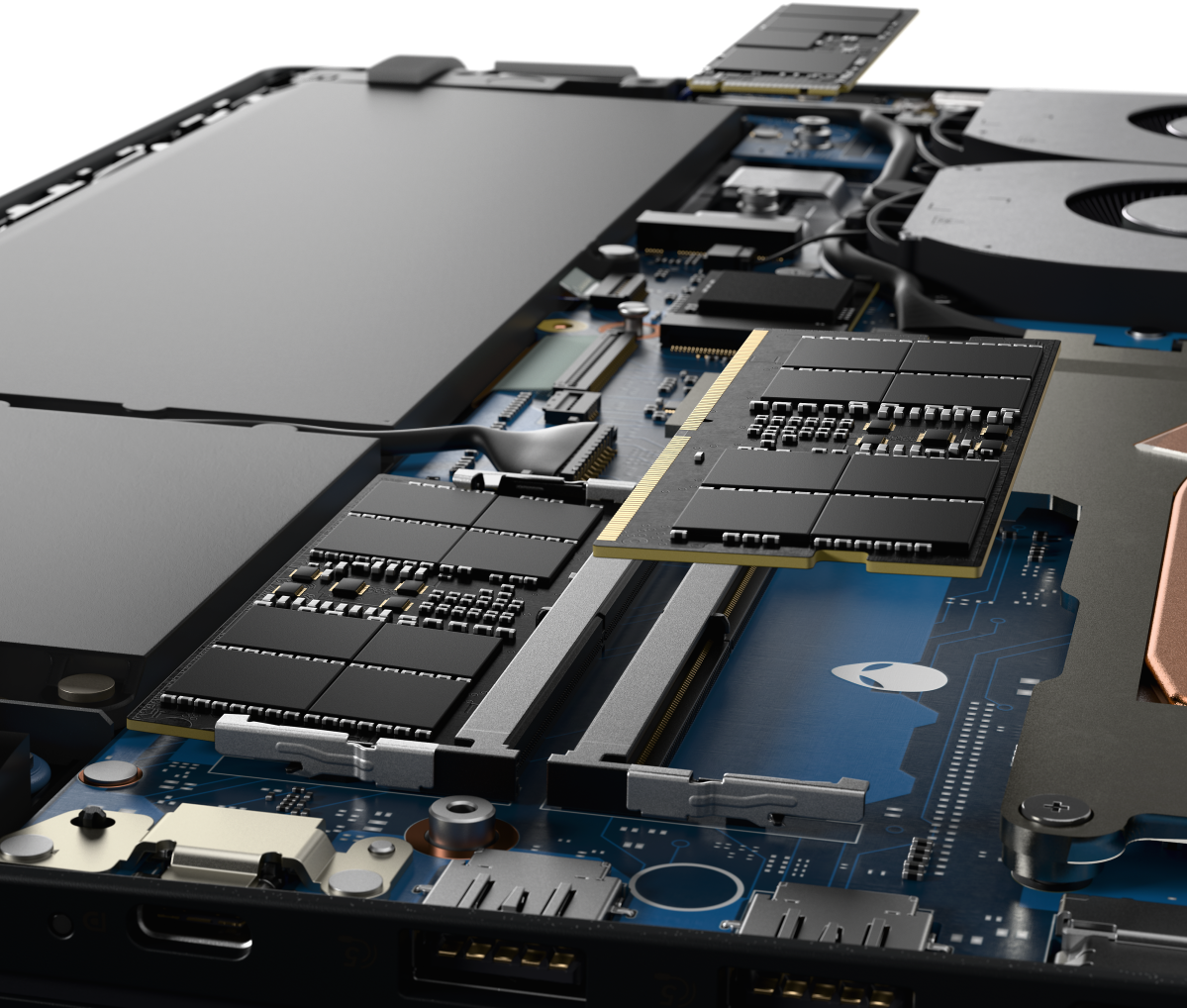
Memory and storage are probably the most important elements driving prices up in these uncertain times. We’re told the US model will start with 16GB of DDR5 and, like most gaming laptops in this weight class, it’s user-replaceable for both SO-DIMMs. (Some territories get another downgrade to 8GB.) It’s also available on a single 16GB stick, so if you can find a second 16GB stick, you can upgrade it yourself. The laptop starts with 512GB of user-accessible Gen 4 storage – which will run out quickly if your Steam library is anything like mine – and tops out at 1TB.
Dell
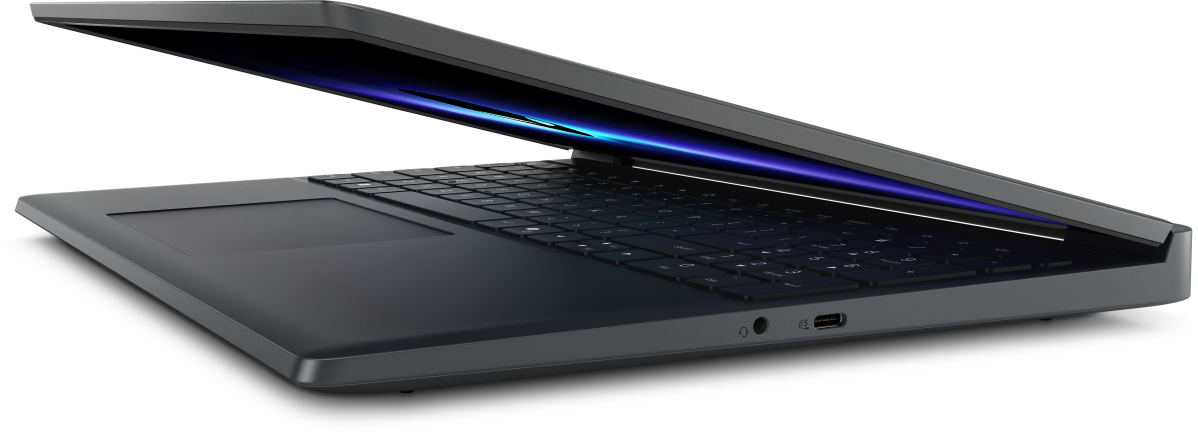
What will things look like on this hardware? Pretty good, at least in the context of an entry-level gaming machine. The 15.3-inch screen won’t wow anyone with a conventional LCD panel at 1920×1200, but with 165Hz refresh and AMD FreeSync to minimize screen tearing, it’s decent. The port selection is also quite good, with two USB-C, two USB-A, HDMI, Ethernet, and a proprietary barrel charger.
You can Charge via USB at up to 100 watts, even though there’s only one on the side: The USB-C port on the right of the laptop is not certified for power delivery. I would have liked to see this port on the other side just to give you more flexible options, but I appreciate that Dell was quite limited in the design of this thing. The batteries come in 54 watt-hour and 70 watt-hour varieties, both with ExpressCharge.
Dell
I’d love to say more about the laptop, but I only had a few minutes to test a very early pre-production model. This is a budget gaming laptop, but the definition of “budget” is obviously a moving target at the moment. When I saw this laptop back in March, Dell reps seemed genuinely terrified to even talk about price.
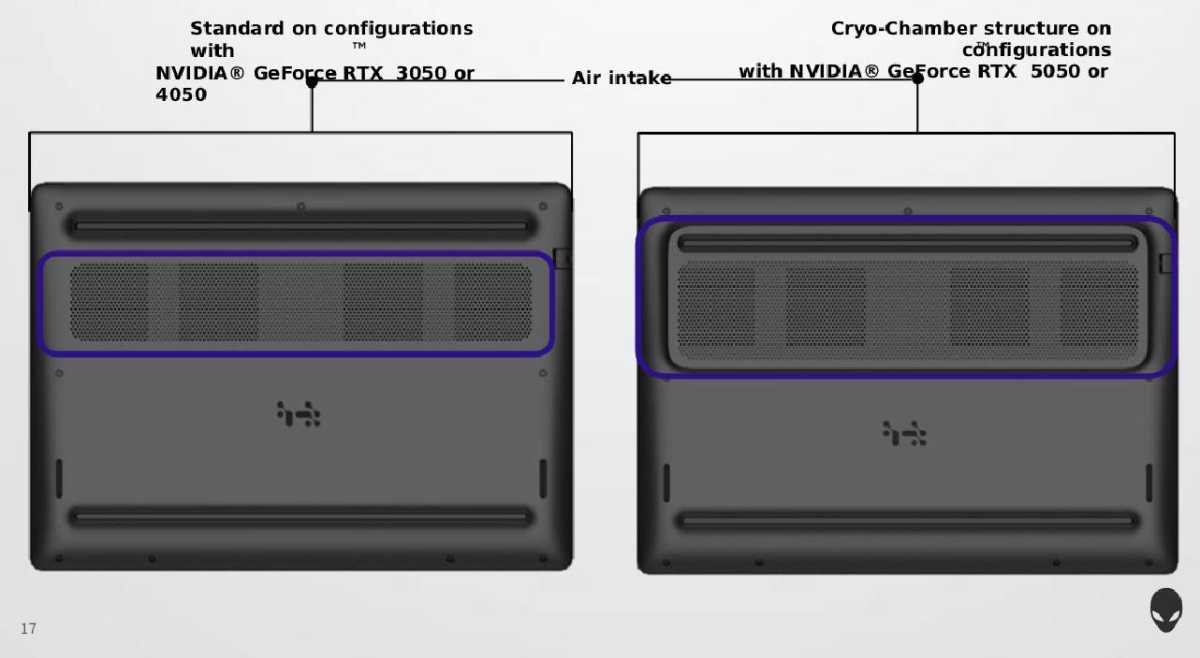
The “Cryo-Tech” cooling setup, which incorporates a semi-sealed area around the laptop’s feet for more efficient air intake, looks interesting. (Though these only apply to the 5050 model and up, according to press materials. The base model has a semi-standard jack on the bottom of the laptop.) The 180-degree hinge for the display is… fine, I guess? I’m sure some college students who like to play games while folded into a pretzel on a dorm bed will enjoy it. The “Stealth Mode” button on the keyboard, signified by a small B2 bomber logo, is a nice touch. I imagine these same students will appreciate it during class.
Dell
But the price is a failure. If you have $1,300 to spend on a gaming laptop, you probably have around $1,500 to get one that’s considerably more powerful. And if you don’t, you’ll probably settle for the same RTX 4050 graphics card and older CPU, which can be had for around $800 from other manufacturers. Alienware has never been a cheap brand, but the RAM crisis makes its attempt at creating an entry-level laptop superfluous at best, instantly irrelevant at worst.
Hell, with $1,300 to spend, one of those cheaper RTX 4050 options and a $350 Alienware OLED monitor is a more attractive proposition.
The Alienware 15 is available to order on Dell’s website today, with the base AMD model starting at $1,299 and the Intel version starting at $1,349. The top-end configuration, with an Intel Core 7, 32GB RAM, 1TB SSD, and RTX 5060, costs a whopping $2,299.


