Elephants are smart. So are their whiskers.


An elephant’s trunk is a marvel of evolution. Gentle, but dexterous, it can pick up solid objects, help them communicate, and be a useful showering tool. Inside, 1,000 whiskers give large animals a highly developed sense of touch to compensate for poor eyesight and thick skin. They also look more like cat whiskers and have a design that engineers consider “intelligent,” according to a study published today in the journal Science.
To examine how elephant trunk whiskers work, engineers from the Max Planck Institute for Intelligent Systems, neuroscientists from Humboldt University in Berlin, and materials scientists from the University of Stuttgart in Germany joined forces. They hoped to understand how the whiskers are shaped (or their geometry), how porous they are (porosity), and how soft they are (material stiffness). Initially, the team expected the whiskers to look more like the tapered whiskers of mice and rats. These rodent whiskers have a circular cross-section, are entirely solid, and have approximately uniform stiffness.
They used a micro-CT scanner to measure the 3D shape of several whiskers and discovered that elephant whiskers are actually very different from rat whiskers and more closely resemble those found on domestic cats. Elephant trunk whiskers are thicker and blade-shaped, have a flattened cross section, a hollow base, and several long internal canals that more closely resemble the structure of sheep horns and horse hooves. Having a more porous structure reduces whisker mass and provides impact resistance, which helps them eat hundreds of pounds of food without damaging their whiskers. It is vital not to damage these whiskers as they do not grow back.

Elephant Whiskers Feature Hardware Intelligence for Touch Sensing
Additionally, the whiskers on the faces of domestic cats and inside the trunks of elephants have rigid bases that transition into soft, rubber-like tips that function differently from the uniformly rigid whiskers seen in mice and rats. The stiff to soft transition in the whiskers is called a functional gradient. This keeps them intact and helps the elephant determine what it is feeling. The team believes that the unusual stiffness gradient of elephants’ whiskers helps them know precisely where an object makes contact along each of their 1,000 trunk whiskers.
In other words, the stiffness gradient helps explain how they can pick up a fragile tortilla chip without breaking it or precisely pick up a peanut. The team also compared the whiskers on the trunk to the hairs on the elephant’s body.
“The hairs on the head, body and tail of Asian elephants are stiff from base to tip, which is what we expected when we discovered the surprising stiffness gradient of elephant trunk whiskers,” Andrew K. Schulz, study co-author and postdoctoral researcher at the Max Planck Institute for Intelligent Systems, said in a statement.
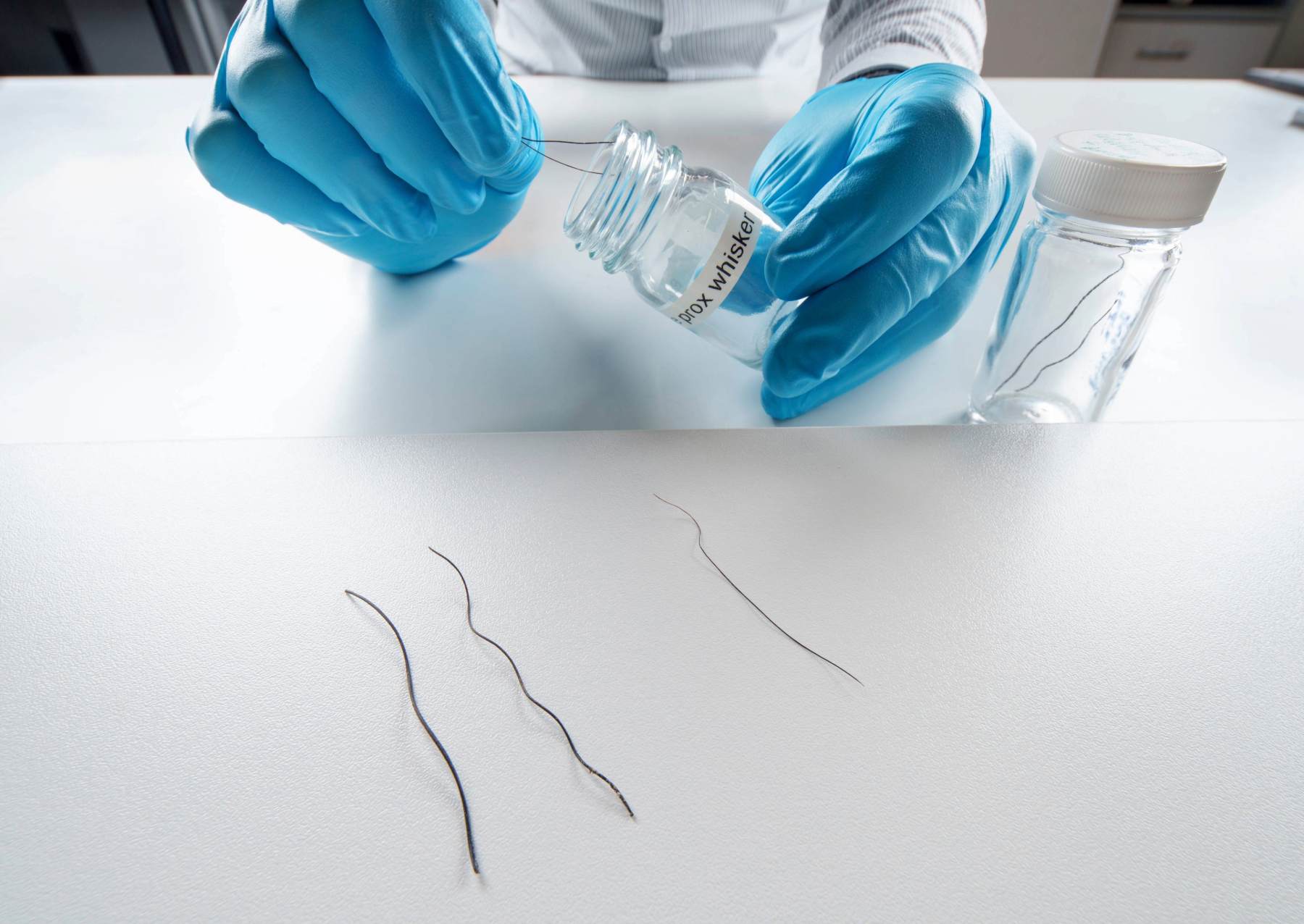
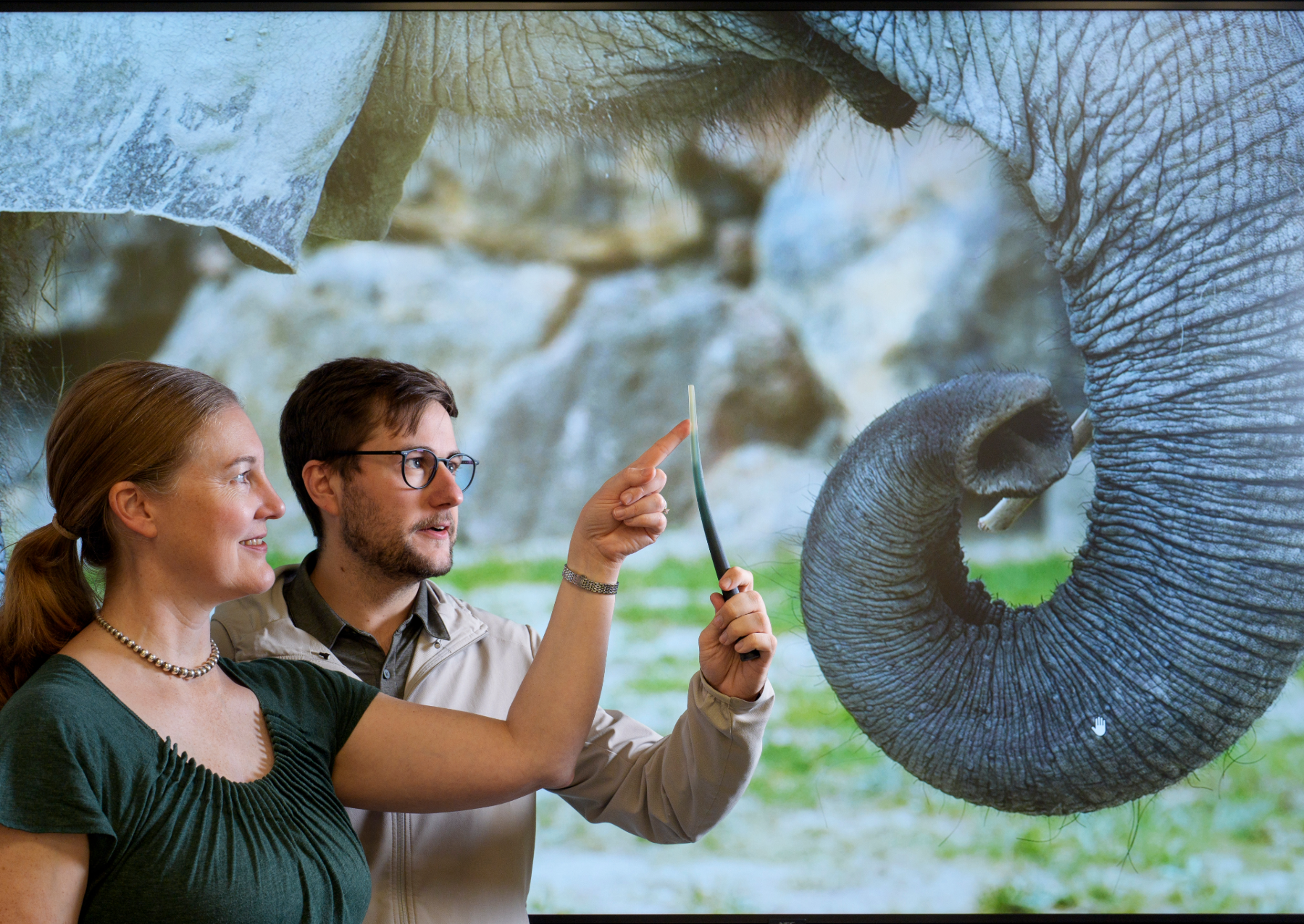
To better understand how changing stiffness along an elephant’s whisker would affect tactile sensing, they created a physical “whisker wand” with a 3D printer. The wand had a stiff, dark base and a soft, transparent tip and helped researchers get a sense of what an elephant’s trunk feels like through its whiskers.
Study co-author and engineer Katherine J. Kuchenbecker carried the whisker wand with her as she walked through the hallways, gently tapping the columns and railings.
“I noticed that tapping the railing with different parts of the whisker wand was distinct: soft and gentle at the tip, and sharp and strong at the base,” Kuchenbecker recounted. “I didn’t have to look to know where the contact was happening; I could just feel it.”
After testing the whisker wand, they used computer modeling to evaluate how the unique gradients of geometry, porosity, and stiffness they had measured affect how an elephant’s whisker reacts when it comes into contact with an object. They found that transitioning from a stiff base to a soft tip makes it easier to feel where something touches along the whisker, allowing the elephant to respond appropriately and carefully handle delicate objects.
“It’s pretty amazing! The stiffness gradient provides a map for the elephants to detect where contact occurs along each whisker,” Schulz said. “This property helps them know how close or how close their trunk is to an object…all of this is built into the geometry, porosity, and stiffness of the whisker. Engineers call this natural phenomenon embodied intelligence.”
The team hopes this knowledge can be applied to robotics and other intelligence systems. A sensor with an artificial stiffness gradient similar to that of an elephant could help provide a future robot with more precise information thanks to its simple but clever design.

The best new PopSci 2025 releases


