Cost of Obamacare expected to soar as subsidies expire and insurers hike premiums


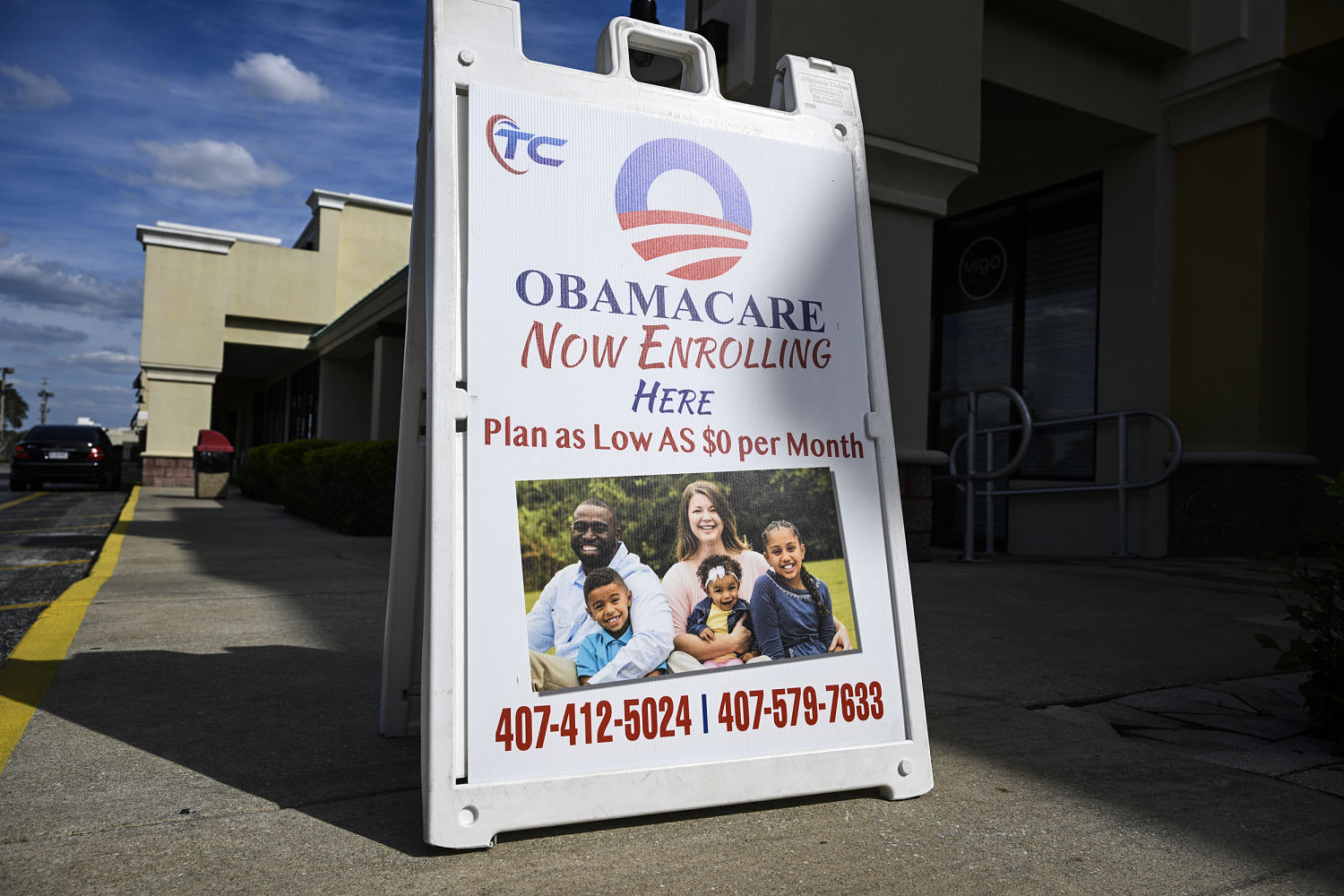
People who obtain health insurance through the affordable care law could soon see their monthly premiums increase sharply as subsidies expire and insurers offer a major premium hike for 2026.
Insurers who offer plans through the ACA provide an average increase in premiums of 15% for 2026 – the highest increase of seven years, according to an analysis published on Friday of KFF, a research group on health policies. The analysis is based on deposits of more than 100 insurers in 19 states and Washington, DC
The increase will probably be in addition to the loss of improved subsidies that have helped people pay the ACA health plans by caving costs to a certain proportion of their income.
The finalized plans – including the number of additional people should pay each month – are generally published around August.
Improved subsidies came out of the 2021 American rescue plan and have widened the number of eligible people, many of whom in the middle class. The law on the reduction of inflation, adopted in 2022, extended the subsidies until 2025.
The bill on internal policy that President Donald Trump signed earlier this month, however, has not yet extended them. (The subsidies with very low income people who have been implemented when the ACA has been promulgated will always be available.) The bill has also added more obstacles for people who obtain their health insurance through ACA, such as the addition of new paperwork requirements to renew the coverage each year.
Nearly 4 million people were to lose their coverage next year if the subsidies have not been extended, according to an analysis in 2024 of the Congressional Budget Office, a non -partisan agency which provides budgetary and economic information in the congress.
A loss of coverage would also have implications for the cost of insurance.
With fewer people registered, insurers should distribute costs among a smaller group of people, pushing higher bonuses, said Edwin Park, research professor at the Georgetown University McCourt School of Public Policy.
An earlier analysis of KFF, published this month, revealed that more than 22 million people could see a sharp increase in premiums from January 1.
“It is not a repeal [of the ACA]But it is certainly an attempt to move in this direction, “said Park.” It will be much more expensive, so it means that it will be less affordable for you to buy a plan or renew your cover. “”
Chris Meekins, research analyst on health policies of the investment company Raymond James who served in the first Trump administration, said the chances that the congress extended subsidies for next year, because Trump and other Republicans have reported that they do not support them.
Higher direct costs
Registration at ACA has reached a record last year, totaling more than 24 million people, according to the centers for Medicare & Medicaid Services. A large part of this growth came from prolonged subsidies, said the agency. The average monthly premium was $ 113, compared to $ 162 in 2020.
According to the latest KFF analysis, most ACA insurers offer bonuses increases from 10% to 20% for 2026. More than one quarter, the group said, offer increases in bonuses by 20% or more.
What people end up paying their pockets for their monthly premiums could increase, on average, by more than 75%, Larry Levitt, executive vice-president of health policy in KFF, said during a call to journalists last week.
A family of three winners $ 110,000 per year and registered with an ACA Silver Plan – which is generally accompanied by moderate monthly bonuses – could see their monthly cost from $ 779 this year to $ 1,446 in 2026 when the improved subsidies expire, according to KFF. If insurers increase bonuses by 15%, the monthly bill could climb even more, to $ 1,662.
Some people may be able to maintain their coverage by paying more premiums each month or going down to so -called high plans, which have lower monthly bonuses but require people to pay more pocket before the coverage is triggered, Cynthia Cox, director of the ACA program, said the same call.
In addition to the other changes in the bill on domestic policy, “this is equivalent to what is actually a partial repeal of the ACA, erasing a large part of its gain in health coverage,” said Levitt.
The subsidies on the right track to expire, however, are not the only factors that insurers take into account in their premium proposals, according to KFF’s analysis.
They are also concerned about the potential impact of prices on certain drugs, medical equipment and supplies.
Earlier this month, Trump threatened to impose up to 200% of prices “very soon” on imported pharmaceuticals in the United States, the majority of prescription drugs that people take in the United States are produced abroad.
Insurers have also cited the expected growth in the cost of health services, according to KFF. They also mentioned the cost of GLP-1 drugs, a class of drugs that include successful drugs Ozempic and Wegovy. Medicines can cost more than $ 1,000 for a monthly offer.
On Thursday, a group of democratic prosecutors brought legal action to block a separate rule of the Trump administration which also makes changes to the ACA.


