Elon Musk says SpaceX will prioritize establishing a city on the moon instead of building a Mars colony


February 9, 2026
2 min reading
 Add us on GoogleAdd SciAm
Elon Musk says SpaceX will prioritize a city on the Moon over a colony on Mars
SpaceX’s decision to focus on creating a lunar city before building a colony on Mars represents a significant shift in Elon Musk’s space exploration ambitions.
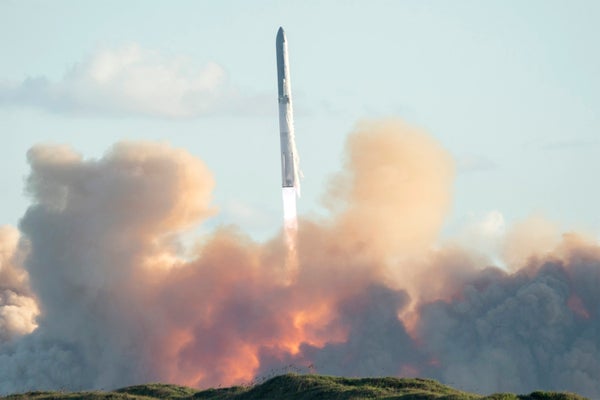
Gabriel V. Cardenas/AFP via Getty Images
Elon Musk said Sunday that SpaceX is prioritizing establishing a “self-growing city” on the Moon, beyond its long-held ambition to colonize Mars.
In a post on his social media platform X, Musk wrote that a lunar city could be built within the next decade. “SpaceX’s mission remains the same: to extend consciousness and life as we know it to the stars,” Musk wrote.
The pivot marks a shift in focus for SpaceX, which Musk said would help establish human civilization on Mars using the company’s still-in-development megarocket spacecraft. This is far from the first time Elon Musk has changed SpaceX’s timeline for a Mars mission: in 2016, for example, he suggested a landing could be achieved by 2018, and he later pushed back a potential landing to 2022.
On supporting science journalism
If you enjoy this article, please consider supporting our award-winning journalism by subscription. By purchasing a subscription, you are helping to ensure the future of impactful stories about the discoveries and ideas shaping our world today.
Then Musk changed the timeline again, saying in 2025 the company aimed to launch five uncrewed spacecraft to Mars this year and that they would be loaded with robots made by his automaker Tesla. It is important to note that 2026 was considered optimal, as the position of Earth and Mars in their respective orbits would reduce the travel time to around six months. Such ideal alignments occur like clockwork every two years, establishing a natural cadence for new missions to Mars.
But development of Starship has proven more difficult than Musk anticipated, with the rocket experiencing catastrophic failures during several test flights in recent years. Additionally, SpaceX is set to perform a spacecraft-based crewed lunar landing as the linchpin of the NASA project. Artemis III mission, which is believed to be the first human foray to the Moon since 1972. Starship’s ongoing woes are now a key factor in launch delays Artemis III, which NASA recently announced would be postponed to 2028 at the earliest.
Other factors potentially driving SpaceX’s move are its merger with Elon Musk’s artificial intelligence startup xAI and plans to launch a million orbital data centers. In a February 2 blog post, Musk wrote that this latest project, combined with Starship, could eventually lead to the manufacturing and launch of satellites from the lunar surface.
In his X article on Sunday, Musk said SpaceX would resume work towards Mars in the next five to seven years. But he stressed that establishing a base on the Moon would be more effective.
“The top priority is to ensure the future of civilization and the Moon is faster,” he wrote.
It’s time to defend science
If you enjoyed this article, I would like to ask for your support. Scientific American has been defending science and industry for 180 years, and we are currently experiencing perhaps the most critical moment in these two centuries of history.
I was a Scientific American subscriber since the age of 12, and it helped shape the way I see the world. SciAm always educates and delights me, and inspires a sense of respect for our vast and beautiful universe. I hope this is the case for you too.
If you subscribe to Scientific Americanyou help ensure our coverage centers on meaningful research and discoveries; that we have the resources to account for decisions that threaten laboratories across the United States; and that we support budding and working scientists at a time when the value of science itself too often goes unrecognized.
In exchange, you receive essential information, captivating podcasts, brilliant infographics, newsletters not to be missed, unmissable videos, stimulating games and the best writings and reports from the scientific world. You can even offer a subscription to someone.
There has never been a more important time for us to stand up and show why science matters. I hope you will support us in this mission.


