Endurance athletes that carry Neanderthal genes could be held back from reaching their peak


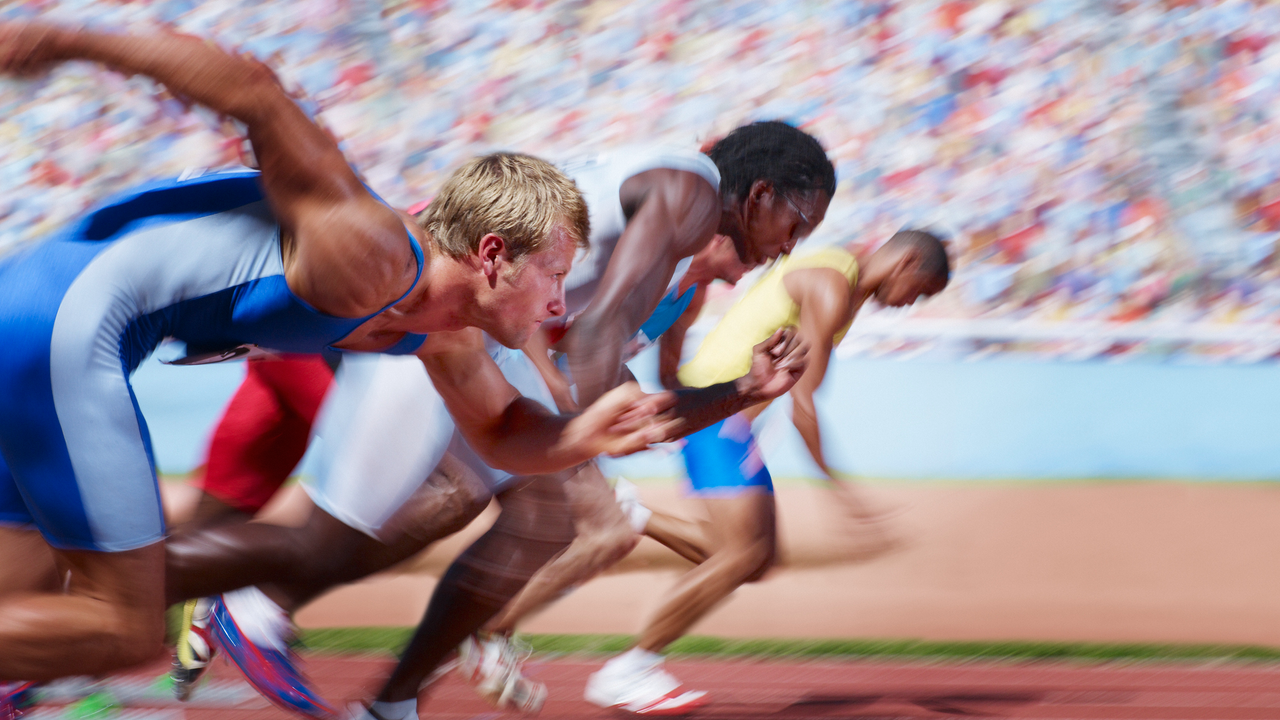
Scientists have discovered a genetic variant, inherited from Neanderthals, which can limit sports performance.
It is believed that the mutation affects around 8% of modern Europeans and influences the activity of a key enzyme in energy production in skeletal muscle.
In a study published on July 10 in the journal Nature communicationsThe researchers analyzed more than 2,700 people, which revealed that those who wore the variant of the Neanderthal gene were also half likely to become high -level athletes as those without variant.
The variant was found in up to 8% of current Europeans, 3% of Amerindians and 2% of South Asians, while it was absent from Africans, East Asians and African-Americans. “From modern humans mixed with Neanderthals about 50,000 years ago, in particular in Western Europe and Asia, non-African populations are now carrying around 1 to 2% of Neanderthal DNA,” the first author of the study and doctoral student at Live Science told Dominik Macak in an email.
Although the Neanderthal variant is not linked to major health problems, its impact on the body’s ability to produce energy during an intense exercise could lead to a reduction in sports performance of endurance and power sports, according to researchers.
During the exercise, the cells gain energy by breaking down a molecule called adenosine triphosphate (ATP), often described as “batteries” of our body. A way in which our body creates ATP, especially during the intense exercise, is to transform two molecules of adenosine diphosphate (ADP) into a molecule of ATP and one of adenosine monophosphate (AMP).
The ATP produced by this reaction is used to feed the energy processes in our cells, while the amp by-product is eliminated by an enzyme called AMPD1. It is this enzyme that is altered in people with the variant of the Neanderthal gene, according to researchers.
To test the impacts of this variant of genes, scientists have recreated the Neanderthal version of the AMPD1 enzyme in the laboratory. They found that it was 25% less active than the enzyme produced in humans with other variants of the gene. Then, they genetically designed mice to express the altered AMPD1 and found that the enzyme was up to 80% less active than the non -zero variant.
The researchers then analyzed the prevalence of the gene among elite athletes and non-athletes. They found that 4% to 14% of athletes carried this genetic variant, while 9% to 19% of non-athletes had the variant. The transport of a single copy of the Neanderthal gene (on the two copies inherited from the parents) led to a probability of 50% lower to reach elite sports status, suggested the data.
Those who carry the Neanderthal gene can fight with a more extreme exercise because the altered enzyme will allow the amp to accumulate in their muscles, which makes it more difficult for them to produce the ATP as quickly than their cells. However, it is unlikely to have the variant of the Neanderthal gene that affects the daily activities of most people, where energy is obtained by other means. It is only during endurance sports or in exercises that require muscle power that carriers could be slightly disadvantaged, the researchers said.
But how could this variant have had an impact on the Neanderthals themselves? “It is very unlikely that this unique genetic variant played a role in the extinction of Neanderthals,” said Macak. “We find it in early and subsequent Neanderthal individuals, which suggests that it was stable over thousands of years. In addition, some modern humans are now carrying mutations that disrupt the AMPD1 protein, often, often without any health problems.