EngineAI PM01 humanoid robot shows advanced balance control


NEWYou can now listen to Fox News articles!
Humanoid robotics companies have already shown that their machines can run at 35 km/h, perform backflips and even perform front flips. So the new testing ground is not raw speed or acrobatics. It’s control when something unexpected happens. This is where the EngineAI PM01 humanoid robot comes in.
In newly released footage, the compact humanoid continues to dance after being deliberately thrown off balance. It performs a controlled forward slide, absorbs disturbances and smoothly returns to rhythm in seconds. The movement feels fluid and surprisingly natural.
Then he performs another front flip, this time as part of a larger demonstration of balance and recovery.
Sign up for my FREE CyberGuy Report
Get my best tech tips, urgent security alerts and exclusive offers straight to your inbox. Plus, you’ll get instant access to my Ultimate Scam Survival Guide – free when you join my CYBERGUY.COM bulletin.
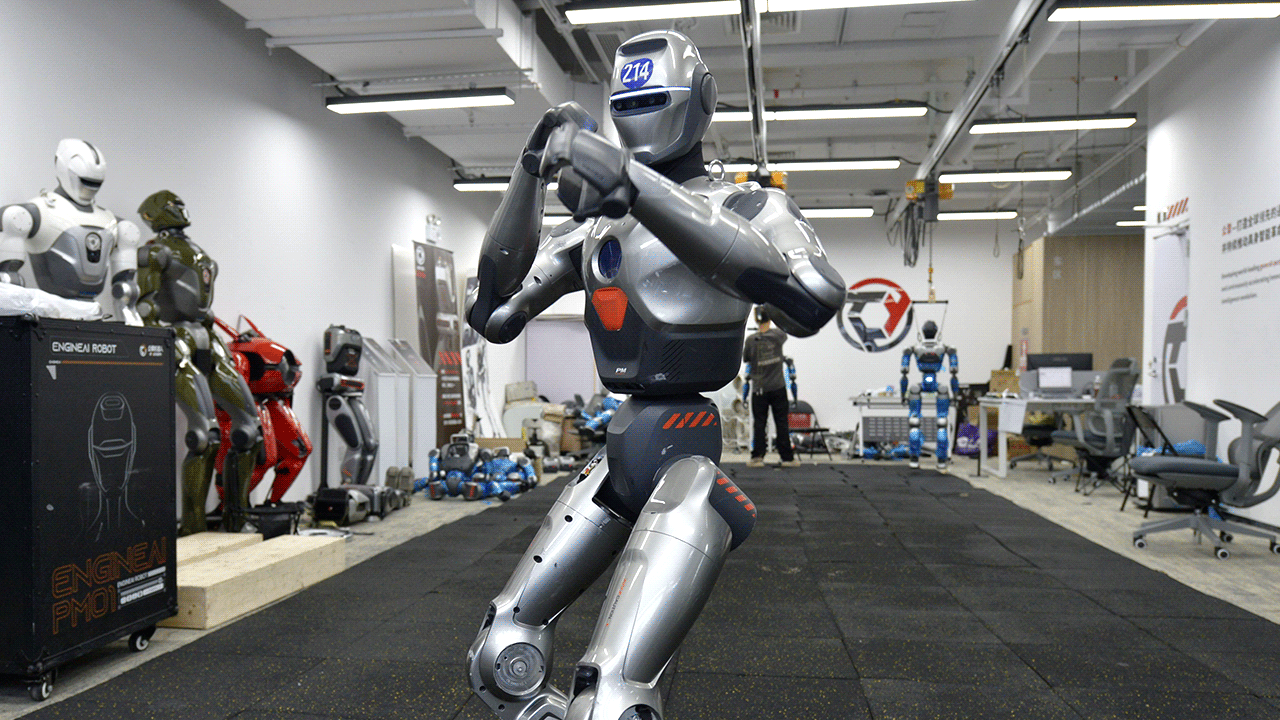
EngineAI pushes back against CGI skepticism as its PM01 humanoid robot demonstrates controlled recovery and dynamic movement. (Liu Lihang/Xinhua via Getty Images)
EngineAI PM01 humanoid robot features advanced balance control
Speed attracts attention. Recovery earns trust. When someone pushes the PM01, it does not freeze. It recalculates its center of mass, adjusts joint torque and corrects posture in real time. This level of control depends on close coordination between sensors, actuators and AI algorithms. The front flip adds another challenge.
Front flips are generally more difficult than backflips. Forward rotation shifts body weight forward of the base of support. This makes landings less forgiving. The EngineAI PM01 humanoid robot executes the movement with coordinated arm swing, core stabilization, and precise landing mechanics. This isn’t about flashy stuff. It is a dynamic movement controlled under constraint.
Why the Compact Size of the EngineAI PM01 Matters
PM01 stands just under 4 feet tall. This smaller build works to its advantage. A lower center of mass reduces the risk of tipping and requires less rotational force during flips. Its lighter structure also distributes impact forces more effectively during landing.
For comparison, EngineAI’s largest SE01 stands around 4 feet 6 inches tall and weighs 88 pounds. The PM01 is about 10.5 inches shorter and about 17.6 pounds lighter. This difference in size makes it more agile in research and development contexts.
Normal-sized humanoids face greater mechanical stress during high-impact maneuvers. They need stronger actuators, reinforced joints, and heavier structural support to remain stable. Compact robots like the EngineAI PM01 can perform advanced movements with less overall stress.
CHINESE ROBOTICS GIANT PUTS 200 ROBOTS TO TESTS
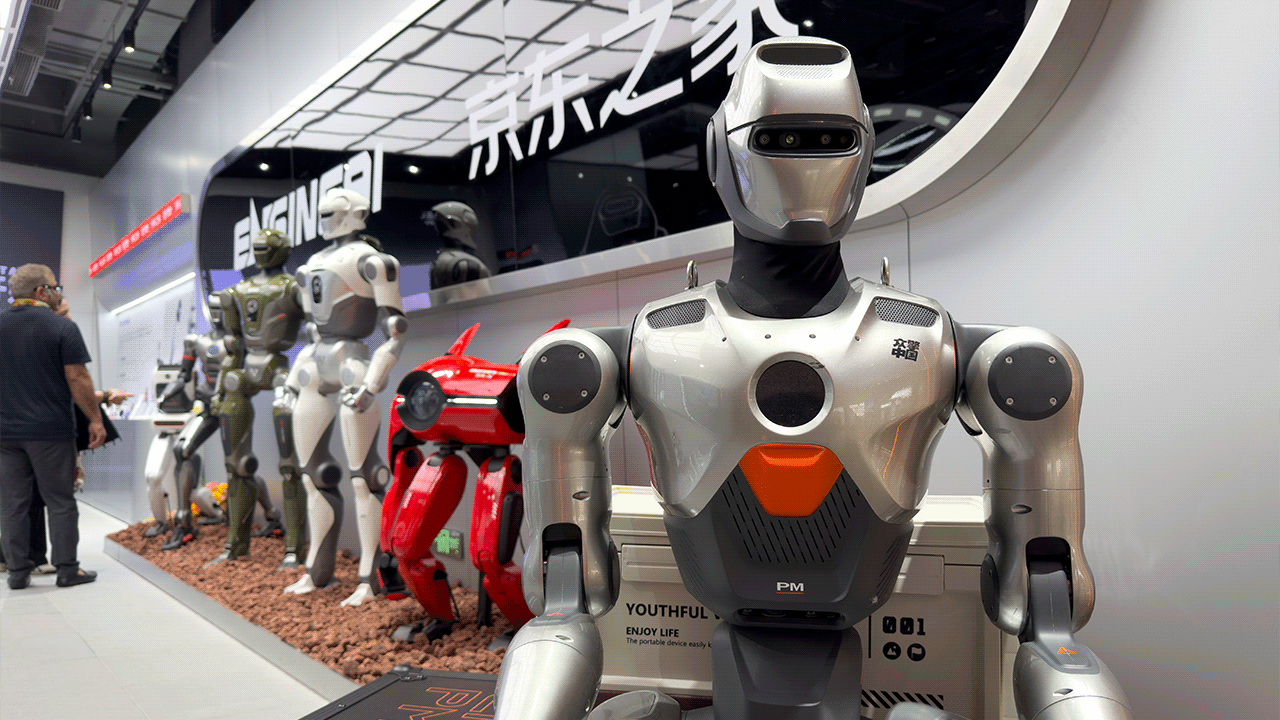
The PM01 robot is on display at the EngineAI robot flagship store in Shenzhen, China’s Guangdong province. Newly released images show the humanoid PM01 absorbing a thrust and recalculating its center of mass within seconds. (VCG/VCG via Getty Images)
AI hardware powering the EngineAI PM01 humanoid robot
Under the hood, the EngineAI PM01 humanoid robot combines advanced perception with significant computing power. It uses an Intel RealSense depth camera for visual awareness and spatial mapping. A dual-chip configuration integrates Nvidia Jetson Orin with an Intel N97 processor. This architecture supports real-time AI workloads and rapid balance correction when the robot is pushed or slides.
The robot has 24 degrees of freedom, including 12 articulated motors. This design allows for coordinated, fluid movement between its limbs and torso. In the small humanoid segment, the PM01 competes with models like the Unitree G1 and the Booster T1. It walks up to about 4.5 miles per hour, faster than the T1, but still below some larger high-speed humanoid platforms designed for sprint performance.
EngineAI seems less focused on headline-grabbing speed and more on refined stability and controlled movement.
EngineAI pushes back against CGI claims
As humanoid videos go viral, skepticism ensues. EngineAI recently responded to CGI accusations by releasing footage of its T800 humanoid physically interacting with its CEO. The company clearly wants to demonstrate that its robots work in the real world.
This credibility moves things forward. In a crowded robotics market, bold claims are common. Physical demonstrations help separate technical advances from digital effects.
A WARM-SKINNED AI ROBOT WITH CAMERA EYES IS SERIOUSLY SCARY
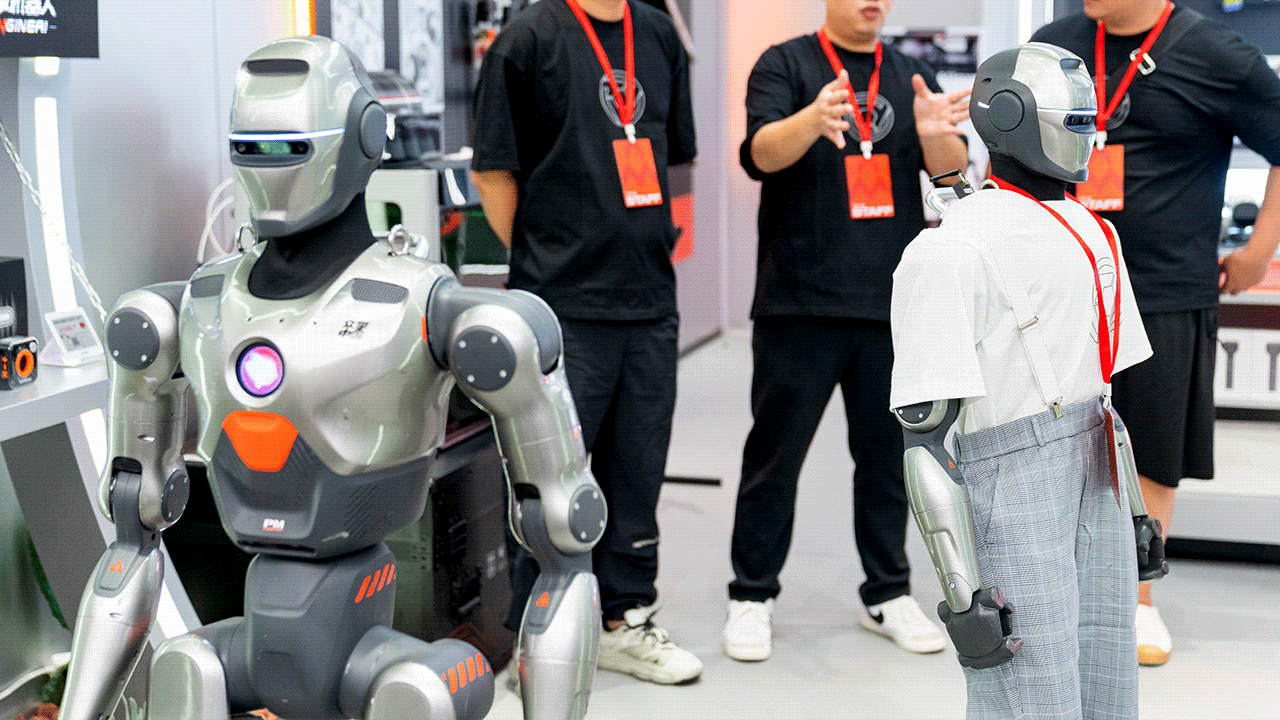
The EngineAI PM01, measuring nearly 4 feet tall, uses AI-powered sensors and articulated motors to recover from slips and keep moving. (VCG/VCG via Getty Images)
What does this mean for you
At the moment it looks like a polished demo. However, balance and recovery are essential for real-world use. If humanoid robots are to work in warehouses, hospitals or in our homes, they must handle bumps, slips and unexpected touches without causing damage. A machine that can brace itself, fall safely, and get back up is much more practical than a machine that performs a single choreographed stunt. As humanoids move closer to everyday environments, resilience becomes just as important as athletic performance. The more stable they are, the more comfortable people will feel sharing space with them.
Take my quiz: How safe is your online security?
Do you think your devices and data are truly protected? Take this quick quiz to see where your digital habits stand. From passwords to Wi-Fi settings, you’ll get personalized analysis of what you’re doing right and what needs improvement. Take my quiz here: Cyberguy.com.
Kurt’s Key Takeaways
Humanoid robots can already run fast, turn around, and move with serious athletic abilities. What companies are now striving to perfect is something more practical: balance when things go wrong. The EngineAI PM01 humanoid robot shows how a compact design and real-time correction can help a machine stay upright, recover quickly, and keep moving without chaos. This type of control is much more important in a crowded warehouse, hospital hallway, or public space than in a perfectly staged stunt. We’re starting to see a shift from viral demo moments to bots designed for everyday reliability. The real breakthrough is not the reversal. This is what happens after the push.
When humanoid robots can absorb a push, turn around, and get back to work without missing a beat, are we close to seeing them in your neighborhood? Let us know by writing to us at Cyberguy.com.
CLICK HERE TO DOWNLOAD THE FOX NEWS APP
Sign up for my FREE CyberGuy Report
Get my best tech tips, urgent security alerts and exclusive offers straight to your inbox. Plus, you’ll get instant access to my Ultimate Scam Survival Guide – free when you join my CYBERGUY.COM bulletin.
Copyright 2026 CyberGuy.com. All rights reserved.
Related article