Is it cheaper to pay for medical care without health insurance?


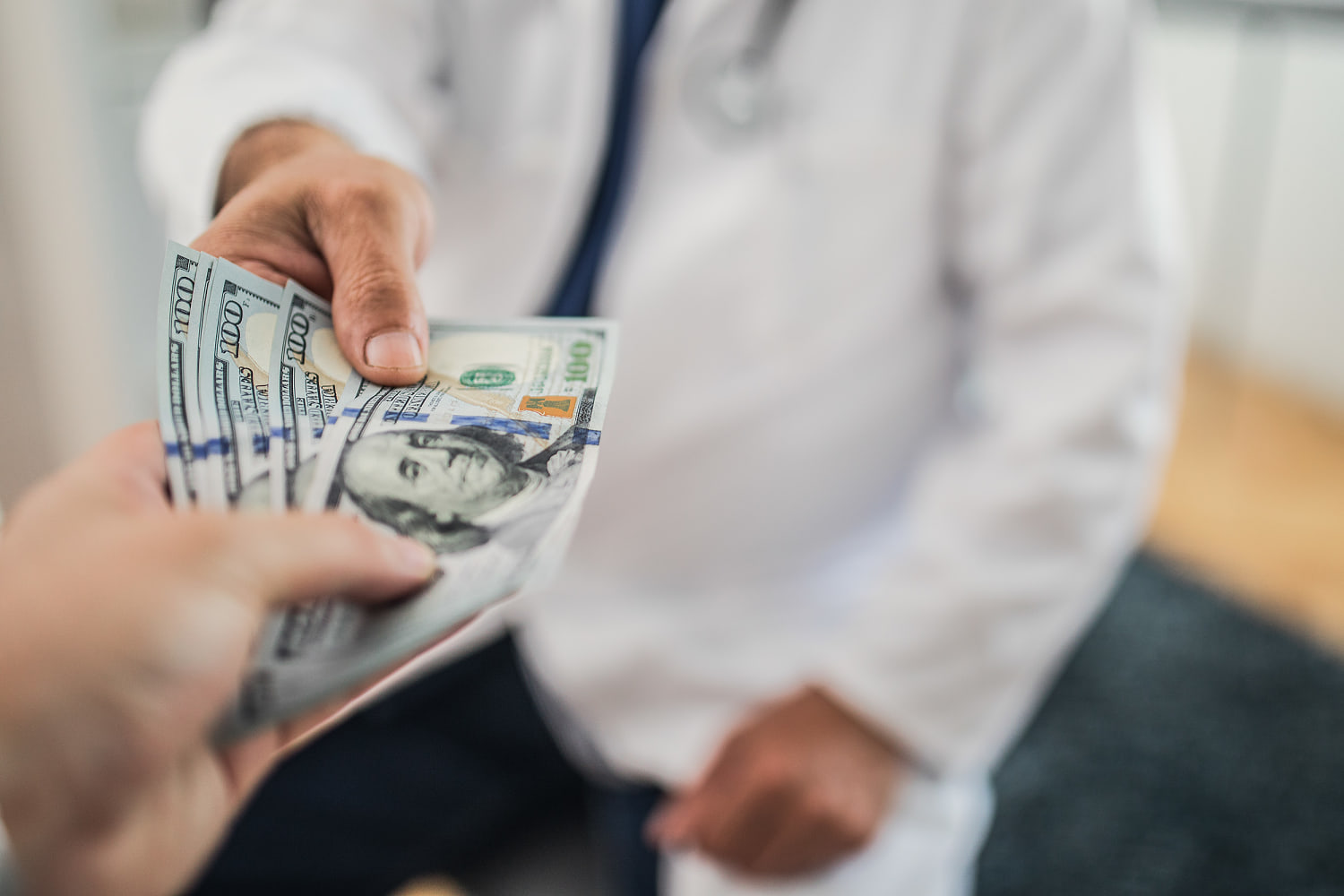
As the cost of health insurance sets to rise, some Americans are asking a surprising question: Is it really cheaper to get medical care without it?
The short answer: Sometimes. But not often. And it may require a little – or a lot – of homework.
Some hospitals and clinics offer self-pay or cash-only discounts to patients who pay without insurance, avoiding the paperwork and administrative costs associated with coverage. Hospitals are required by federal law to make their discounted cash prices publicly available online. An allergy test or an X-ray, for example, can thus be a few hundred dollars cheaper, especially for people on high-deductible plans. Nonprofit hospitals must provide free or reduced-cost charity care to people who cannot afford it, even to those with insurance.
But paying outside of health insurance means the cost doesn’t count toward your deductible or out-of-pocket limit — and if you end up needing more doctor visits than expected, your financial situation could get worse.
“You have to be very careful,” said Stacie Dusetzina, a health policy professor at Vanderbilt University in Nashville, Tennessee. “The price you pay in cash, even if they give you some sort of advertised discount, may be more than what you might actually pay through health insurance as a whole.”
The question of whether to opt out of insurance and pay cash arises as many Americans are expected to face higher premiums next year. The enhanced subsidies, which kept Affordable Care Act premiums lower for many middle-class people, are set to expire at the end of the year without action from Congress. Premiums for people who get health insurance through their jobs or outside of the ACA are also expected to increase next year.
Some ACA enrollees are wondering whether to drop their coverage altogether — a move that experts say could expose them to large medical bills in the event of an unexpected emergency.
“If you like Russian roulette, then you’ll like approaching health care that way,” said Michele Johnson, executive director of the Tennessee Justice Center, a nonprofit law firm and advocacy group that helps people dispute medical bills.
Johnson said that “part of the mistake is that as American consumers we ask ourselves, ‘How do I negotiate the best deal?’ » »
“Health care is not like that,” she said. “If you’re healthy, you put all the chips on the table in the hope that you’ll be mostly healthy.”
Loss of benefits
Insurance, for all its frustrations, can offer crucial protections: capping out-of-pocket costs, access to negotiated rates, and free preventative care, such as cancer screenings, annual physicals, and routine immunizations.
For non-urgent care, a doctor or hospital may require the patient who isn’t using insurance to pay the full cost up front or see another provider, said Erin Duffy, director of research training at the USC Schaeffer Center for Health Policy and Economics.
“It seems risky,” Duffy said. “If you thought you could continue to see the primary care doctor you saw when you were insured, you might find that there are different financial barriers.”
For those who are healthy, paying cash can be a smart decision for predictable, less expensive services, like an X-ray or CT scan, Dusetzina said.
“This comes up all the time in the prescription drug world,” Dusetzina said. “People often pay for generic drugs out of pocket because it is cheaper than paying with health insurance in some cases. »
But patients would not have access to their insurer’s negotiated rate — the amount an insurance company agrees to pay for a medical service, Dusetzina said. Even if people haven’t met their deductible, they still get the negotiated rate, which can be cheaper than paying cash. And whatever they pay wouldn’t meet their deductible or spending limit.
“What happened historically is if you went to a medical center and you wanted to pay cash, the upfront price was often twice as much or more than health insurance,” she said. “So you lose the benefit of having a negotiated rate without health insurance.”
A person’s savings can disappear quickly if something unexpected happens, Johnson said. Emergency room visits, hospital stays or surgeries – even at discounted rates – can cost tens of thousands of dollars. Uninsured patients are charged the full amount. It’s usually not possible to sign up for health coverage after an emergency occurs, she said. There is also a limited period to register; In most states, ACA registration runs from November 1 to January 15. Open enrollment for people who receive health insurance through their employment usually occurs around the same time.
“This is the only time you can register until next year, so essentially you have to hold the bag, not just for emergency visits, but for all follow-up care,” she said.
Johnson said before they even think about negotiating care with a doctor or provider, they should first check to see if they have a Federally Qualified Health Center nearby. Health clinics receive federal grants to provide low-cost care to underserved populations, including the underinsured and uninsured.
“If you need primary care, you can often get primary care at a Federally Qualified Health Center,” she said.
If specialized care is needed, doctors can negotiate, but they often require patients to pay the full amount up front, Johnson said. If you want to get an idea of how much you might pay, websites like Turquoise Health list the average cash price hospitals can charge for certain medical procedures.
If you get a lower rate from a doctor, the process might not end there, Johnson said. Depending on the complexity of the medical procedure, you may need to obtain an agreement with the entire healthcare team concerned.
“Even if you have a doctor who says, ‘I’ll do this for you,’ then somehow you have to have an anesthesiologist do it, and you have to have the labs do it, and you also have to have the nurses do it,” she said.
Duffy said to call the billing office and “ask very specific questions about when you will need to pay, what is the full range of assistance options and payment plans that might be helpful to someone who is uninsured or low income or just facing a bill that you may not be able to pay all at once.”
For those who need emergency care or hospital care, Duffy noted, there is a federal law — the Emergency Medical Treatment and Work Act — that requires hospitals participating in Medicare to provide care to anyone who presents to the emergency department, regardless of their ability to pay.
After that, the person may be able to negotiate with the hospital or provider, or get a payment plan.
None of these strategies are particularly helpful for people who are not healthy and likely to use a lot of health care, said Lawrence Gostin, director of the O’Neill Institute for National and Global Health Law at Georgetown University.
“The self-pay option will be more attractive to healthy and affluent patients, who risk forgoing adequate health insurance,” he said.


