Everybody Around Trump Hates the Unhinged Laura Loomer. Except Trump.


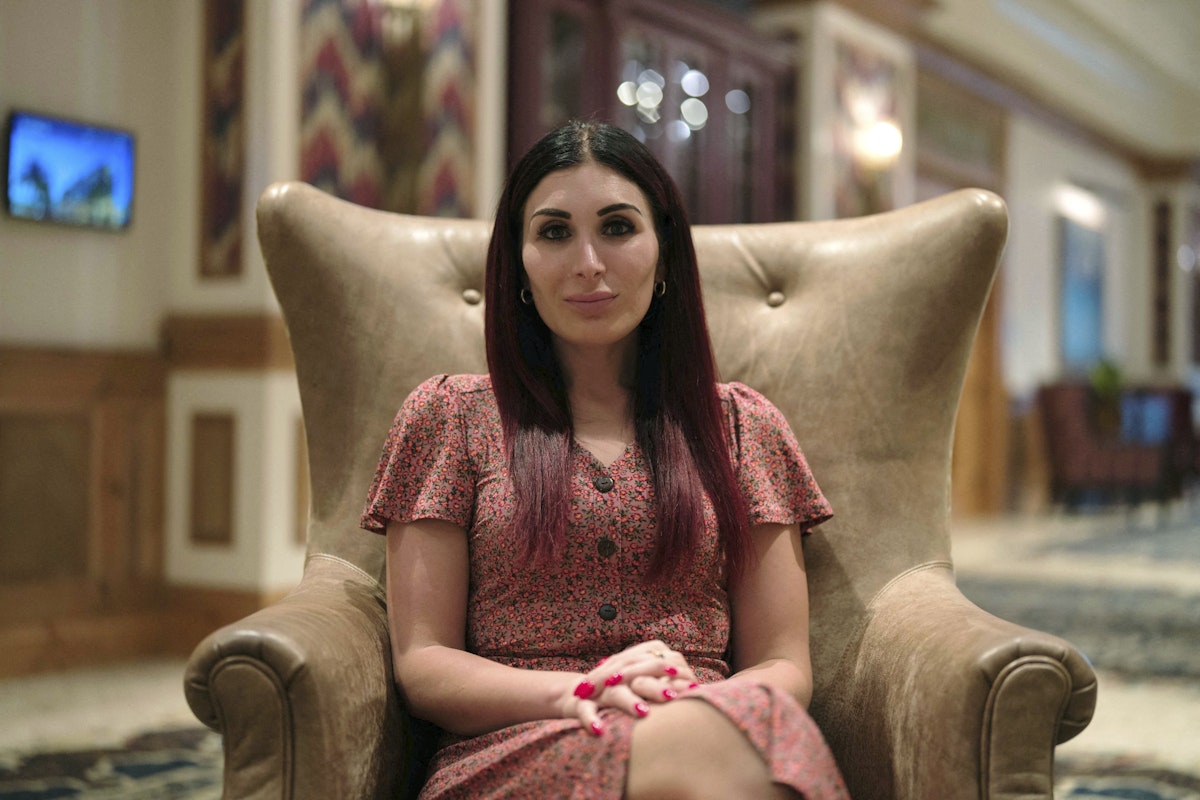
Loomer’s boldness and attention-seeking have always been aspects of his personality. She grew up in Arizona, in what she described, in her memoir, as a climate of fear and violence in her home. “The truth is that at a very young age I learned that most people cannot relate to the horror show that was my childhood,” she wrote. “Having friends over at my house was never an option, as my brother’s severe mental illness and unpredictable bouts of violence meant the police were at my house every week. Most of the time I didn’t even have a bedroom door,” she wrote, because her brother would break down her if she locked herself “to escape being beaten or stabbed.”
Loomer spent his high school education hundreds of miles away, at a ranch-style boarding school in northern Arizona, with a graduating class of 32. She was blonde and chubby, almost unrecognizable from the raven-haired sylph of today. A classmate recalled an awkward teenager who acted out for attention, drawing pity from his classmates. “We were all close, you kind of just took care of Laura,” the classmate said. “You felt bad for her.” This classmate recalled an incident that illustrates her situation: at one point, she had to undergo surgery. Neither her mother, a nurse, nor her father, a doctor, made the several hours drive from Tucson to be with her. She was cared for in the dormitories by the mothers of two other students. “I think they just placed [her] there, her father wanted her to leave,” the classmate said.
Her conservatism was already chiseled: As a teenage supporter of John McCain, she often unleashed extreme anti-Islam sentiments, even shouting at two Turkish exchange students that they were terrorists as they prayed, according to her high school classmate. As an adult, Islamophobia became his trademark. At Florida’s Barry University in 2014, Loomer caught the attention of Gateway Pundit and Breitbart News with an Islamophobic Facebook post about how her school’s 9/11 interfaith service was opened by, as she put it, “an imam… literally chanting Allahu Akbar.” That little notoriety landed her an invite to a 2014 David Horowitz Freedom Center gala in West Palm Beach, where she met and offered her services to Project Veritas founder James O’Keefe.


