Moon, Mars, and meteors: Why July 28 is the best night for skywatching all summer


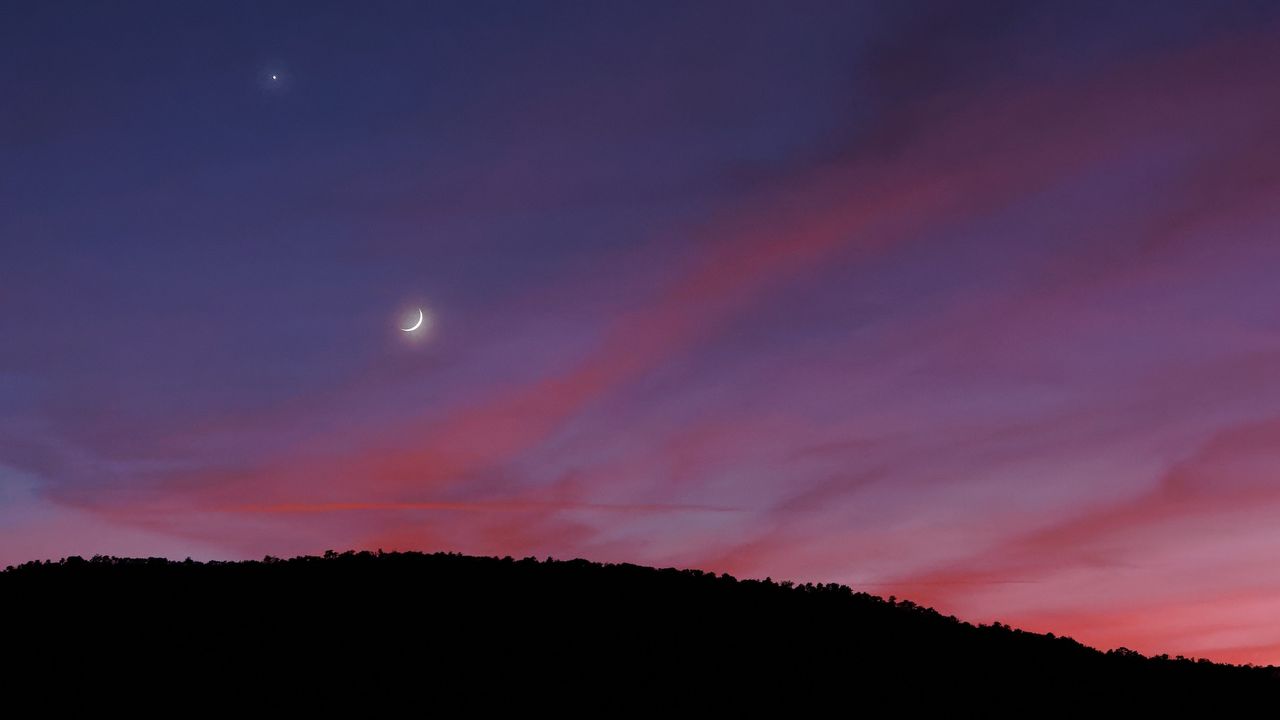
A beautiful crescent moon will appear near March after nightfall on Monday, July 28. The dance duo will start about 45 minutes after sunset and will be visible from around the world – just like several meteor showers are approaching their heights.
The conjunction between Crescent Moon with 19% illuminated wax and the red planet will take place above the west, which makes it visible for most people, although a park or an open field will offer a better view. The space between the Moon and Mars will be about 1 degree – roughly the width of your little finger held at the length of the arm.
Mars has overcome its brightest point this year, but there remains a distinct reddish point in the twilight sky. The moon, on the other hand, will show Earthshine, a ghostly lighting on its night side caused by sunlight reflecting off the earth.
The spectacular view of two of the most brilliant objects in the solar system next to each other, while meteor showers are starting to dominate the sky. The peak of the Austrinid Pist meteor shower will be in the early hours of July 28, while up to five meteors per hour will be visible in a dark and light sky. This makes it a minor affair, but it is only one of the four showers of meteors approaching their peak.
From July 29 to 30 will be the summit of Delta Aquarid and Alpha Capricornid Meteor Showers. While the peak of the old is known to be wide, up to 20 shooting stars per hour are possible. The latter adds five more per hour.
As a bonus, the crescent moon – with Mars – will take place a few hours after sunset, leaving the dark and free nocturnal sky with moonlight.
As if that were not enough, the Perseids – the most prolific meteor shower of the year – are undoubtedly better seen in late July. This is because its peak night, from August 12 to 13, will be spoiled by a brilliant moon. The complete sturgeon moon of August occurs on Saturday August 9, and the peak night, an illuminated moon 84% will shine all night, which makes meteors weak difficult to see.
All this makes July 28, no doubt one of the best evenings to see “shoot stars” this summer. The best views will come from locations with low levels of light pollution, such as a Dark sky square or an area that seems dark on a Light pollution card. Check the local weather forecasts, allow you to adapt to darkness for at least 20 minutes and avoid watching smartphone screens or other artificial lights.


