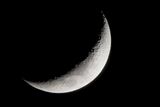
Amongst the hype of settling the moon, building out spaceports, and using it as a base to launch humanity to Mars, there is an ongoing and vitally important effort to settle on how time will work on our nearest celestial neighbor. Establishing a standard-time zone for the moon is crucial to the success of any long-term human presence.
“On the moon, future missions will involve multiple spacecraft, landers, rovers, astronauts, and communication systems operating simultaneously,” Bijunath Patla, a physicist at the National Institute of Standards and Technology, told Discover. “If all of these rely only on Earth-based time, coordination becomes slow, fragile, and dependent on long-distance communication.”
That’s complex, as time on Earth passes more slowly than on the moon. Two processes — gravitational time dilation and kinematic time dilation — drive this difference, Javier Ventura-Traveset, Lunar Navigation and Science Manager at the European Space Agency, told Discover. Basically, the moon’s weaker gravity and its movement around the Earth mean that clocks will tick faster.
Read More: Scientists Are Still Pondering These Mysteries of the Moon
How Much Faster Is Time on the Moon vs. Earth
Exactly how much faster the clock ticks is about 56.02 microseconds per day. Patla was part of the team that made this calculation. That might not seem like much, but as the difference builds, it could spell trouble for navigation and communication, he said. He has also led work that shows clocks on Mars will tick 477 microseconds faster than on Earth, but with large fluctuations due to the planet’s eccentric orbit.
“Nanosecond variations have a major practical impact,” said Ventura-Traveset.
So for future moon missions and settlements, getting the time right is crucial. NASA is leading efforts to create Lunar Coordinated Time, aiming to achieve it this year.
That’s certainly possible in theory, Neil Ashby, who is also a physicist at the National Institute of Standards and Technology, told Discover, but that means developing accurate clocks that actually work on the moon. “Missions to actually put clocks on or near the moon are currently only in the talking or planning stage,” he said.
The European Space Agency is one of those organizations that’s developing such missions.
“We are developing the Moonlight and NovaMoon missions, which will be equipped with atomic clocks in lunar orbit and on the lunar surface,” Ventura-Traveset told Discover.
Moonlight plans to develop up to five satellites in the moon’s orbit, while NovaMoon aims to deploy a timing station directly on the moon’s surface.
Why a Moon Time Zone Is Important
For astronauts deployed on the moon, standard time and working clocks will mean much smoother work and better living conditions. Yet other challenges could have health implications, Venture-Traveset pointed out. While a day on our home planet has 24 hours, the day-night cycle on the moon is far longer, 29 and a half Earth days.
“This extreme light-dark cycle can significantly affect human circadian rhythms, and must be carefully managed to mitigate psychological effects, maintain cognitive performance, and ensure operational efficiency,” Ventura-Traveset told Discover.
Astronauts will keep to this 24-hour day cycle for health reasons, just as those on the International Space Station do, despite the fact that they see 16 sunsets and rises every 24 hours. But that also gives rise to a debate as to whether the moon should have time zones, just like on Earth, to help manage this vast difference between light and dark times.
“There could be a case for lunar ‘time zones’ if aligning a crew’s daily schedule with specific regions on Earth helps to optimize communication, operations, and coordination among each other,” Ventura-Traveset said. But that’s a debate that’s likely only to be settled once several moon missions have occurred.
Ultimately, the extensive work to establish a moon-based time system will be key to any planned long-term human presence on the moon. It’s also essential in developing time for any eventual ventures to Mars, Patla told Discover.
“The moon forces us to treat relativity as the foundation of timekeeping rather than as a small correction,” Patla said. “In doing so, lunar timekeeping becomes a stepping stone toward developing time systems for Mars and beyond, where Earth-centered assumptions no longer apply.”
Read More: Why We See Only One Side of the Moon’s Surface
Article Sources
Our writers at Discovermagazine.com use peer-reviewed studies and high-quality sources for our articles, and our editors review for scientific accuracy and editorial standards. Review the sources used below for this article: