Evacuation Day was once bigger than July 4th before Thanksgiving took over


NEWYou can now listen to Fox News articles!
When President Abraham Lincoln first proclaimed Thanksgiving, a national holidaylittle did he know that it marked the beginning of the end of the significance of the original patriotic celebration held during the last week of November: Evacuation Day.
In November 1863, Lincoln issued an order thanking God for harvest blessings, and by the 1940s Congress had declared the 11th month of the fourth Thursday of the calendar year as Thanksgiving Day.
That commemoration, however, combined with the gradual move toward détente with what is now the United States’ strongest ally — Britain — moved the day when Americans celebrated the last of the redcoats fleeing their country.
Following the Declaration of Independence in Philadelphia in 1776, New York City – just 99 miles to the northeast – remained a British stronghold until the end of the Revolutionary War.
Captured mainlanders were held aboard prison ships in New York Harbor, and British political activity in the West was anchored in the Big Apple, according to the Department of Veterans Affairs.
THE SACRED TRADITION OF GEORGE WASHINGTON
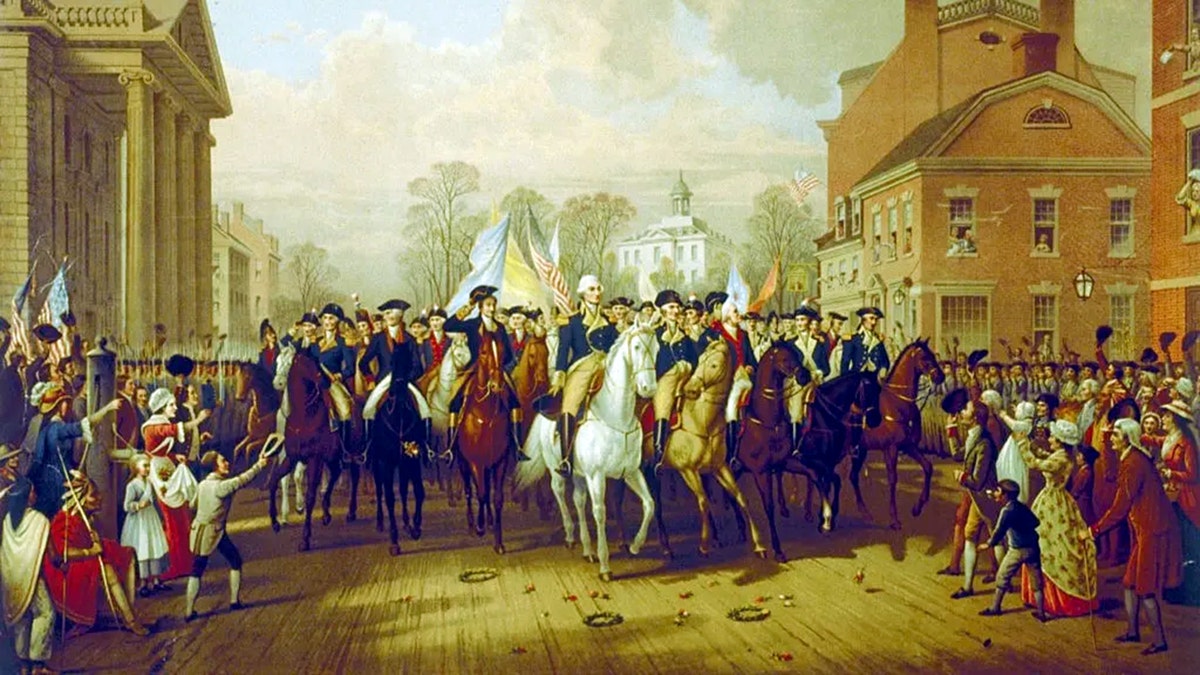
General George Washington parades through Lower Manhattan on the day of the evacuation; November 25, 1783. (Lithograph from the Library of Congress via Getty)
However, all of this came crashing down on the crown after the signing of the Treaty of Paris, and the new “Americans” eagerly watched as the British left their hard-won country on November 25, 1783.
In their haste to escape the United States, the British took the time to grease the flagpoles on which the Union Jack still flew. An important post was at Bennett Park, at what is now West 183 Street, near the northern tip of Manhattan.
Undeterred, Sgt. John van Arsdale, a veteran of the Revolution, cobbled together crampons that allowed him to climb the smooth flagpole and bring down the then-enemy flag. Van Arsdale replaced it with the Stars and Stripes flag – and if it weren’t for today’s skyscrapers, the changing colors at the island’s highest point could be seen further into downtown.
In the harbor, a final blast from a British warship was aimed at Staten Island, but missed a crowd gathered to watch the 6,000 military men begin their journey back across the Atlantic to King George III.
SYLVESTER STALLONE CALLS TRUMP “THE SECOND GEORGE WASHINGTON”
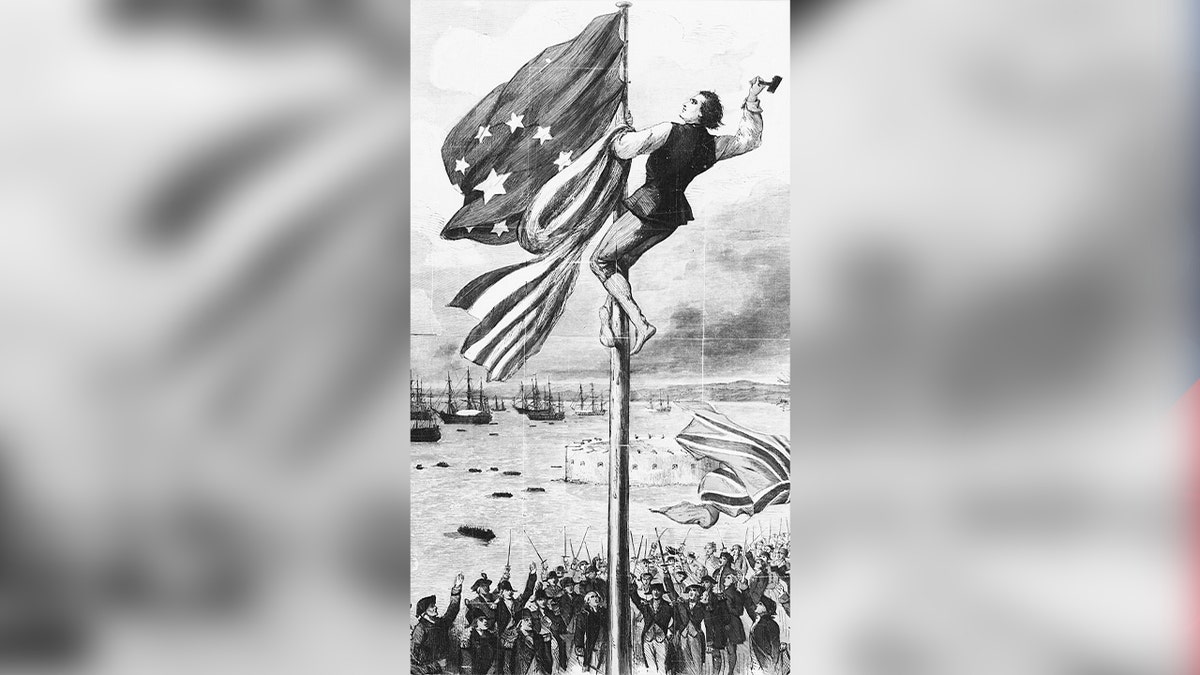
John Van Arsdale replaces the Union Jack with the American flag at Bennett Park – just north of today’s George Washington Bridge – as the British evacuate New York on November 25, 1783. (Getty)
Later today, the future President George Washington and New York Governor George Clinton – who had negotiated an “evacuation” with England’s Canadian governor, Sir Guy Carleton – led a military march down Broadway through crowds of revelers to what would today be the Wall Street financial district on the other side of Manhattan.
Clinton hosted Washington for dinner and a “Farewell Toast” at the nearby Fraunces’ Tavern, which houses a museum dedicated to the original American holiday. Samuel Fraunces, owner of the watering hole, provided food and would have information to the Continental Army.
Washington gathered at Fraunces’ house a little more than a week later to announce his departure from the army, surrounded by Clinton and other prominent revolutionary figures like German-born General Friedrich von Steuben — whom New York’s Oktoberfest-style parade officially honors, but who is often supplanted by beer themes elsewhere.
AMERICA’S OLDEST INDEPENDENCE PARADE MARKS 240 YEARS OF PATRIOTIC TRADITION
“With a heart full of love and gratitude, I now take leave of you. It is my sincere wish that your final days will be as prosperous and happy, as your preceding ones have been glorious and honorable,” Washington said.
Before Lincoln – and later Congress – normalized Thanksgiving as mass family affair as it became, Evacuation Day was more important than its successor and Independence Day, according to several sources, including Untapped New York.
November 25 was a public holiday in the 19th century and people recreated van Arsdale’s climb up the flagpole at Bennett Park. Formal dinners were held at the Plaza Hotel and other high-end institutions for many years, according to the outlet.
The New York Public Library reportedly offered a Delmonico’s Steakhouse menu from the centennial celebration of Evacuation Day in 1783; celebrants ate fish, pheasant and turkey, according to Eurasia Review.
An official parade reminiscent of the current Macy’s Thanksgiving Day Parade was held annually in New York until the 1910s.
CLICK HERE TO GET THE FOX NEWS APP
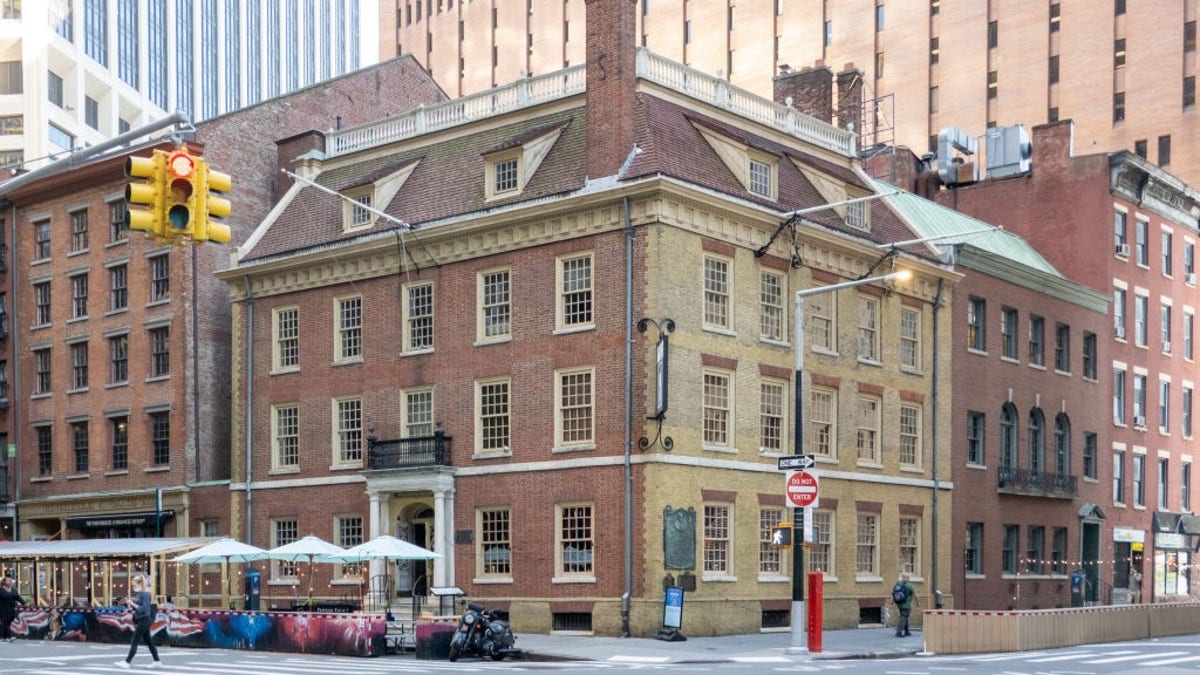
Fraunces’ Tavern, at Pearl and Broad streets in New York. (Getty)
As diplomatic relations with the United Kingdom warmed at the dawn of the 20th century and the United States’ alliance with London during the World Wars proved crucial, the celebration of Evacuation Day became less and less important.
However, in the 2010s, commemorative flag raisings were held sporadically in Bowling Green, the south end of Broadway.
For the 242nd anniversary of Evacuation Day in 2025, the Lower Manhattan Historical Association reportedly organized a procession on Saturday from Fraunces to Evacuation Day Plaza – where the Wall Street “bull” stands today.
A flag raising then took place across the street in Bowling Green, according to DowntownNY. This historic green space is the city’s oldest public park and was a regular gathering place in British colonial New York.
On the first day of the evacuation, Washington’s dinner at the Fraunces Tavern was preceded by the new US Army marching down the iconic avenue to officially take back New York.
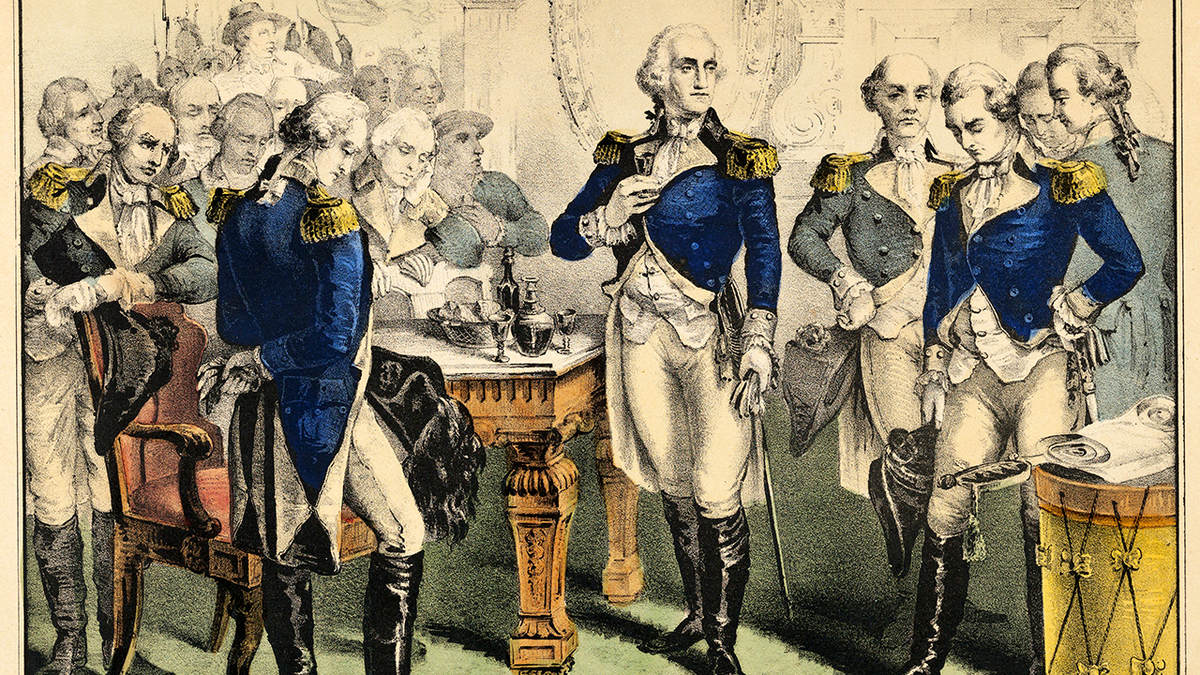
Washington takes leave of his army officers – at Francis’s Tavern, Broad Street, New York – “With a heart full of love and gratitude, I now leave you. I sincerely wish that your last days are as prosperous and happy, as your previous ones were glorious and honorable. (1848 lithograph by Nathaniel Currier/Pierce Archive/Buyenlarge via Getty Images)
Thirteen toasts – marking the number of the United States – were raised to Fraunces, each expressing the new government’s hopes for the new nation or thanking those who helped bring it into being.
A Washington aide wrote them down for posterity, and the Sons of the American Revolution recite them at an annual dinner, according to the tavern museum website.
“In the United States of America” the first toast is gone. The second paid tribute to King Louis XVI, whose French army played a crucial role in the American victory.
“To the defenders of the rights of humanity in the four corners of the world,” reads another. “May a close union of the States guard the temple which they have erected to liberty.”
The 13th toast issued a warning to any other countries that might one day seek to invade the new United States:
“May the memory of this day be a lesson for princes.”


