Exoplanet atmospheres are the next clue to finding life on planets orbiting distant stars

When you purchase through links on our articles, Future and its syndication partners may earn a commission.

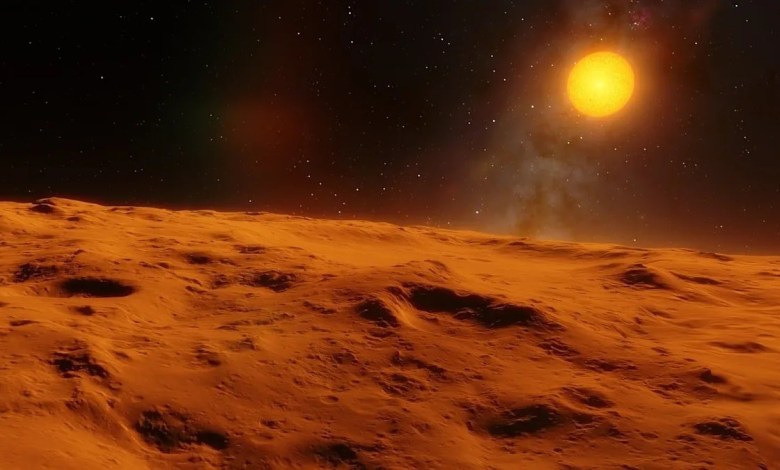
What clues do scientists look for to know if an exoplanet is habitable? | Credit: Pixabay.com
This article was originally published on The conversation. The publication contributed the article to Space.com Expert voices: opinion pieces and perspectives.
When astronomers look for planets that might have liquid water on their surfaces, they start by looking at the surface of a star. habitable area. Water is a key ingredient for lifeand on a planet too close to its star, the water on its surface can “boil”; too far and it could freeze. This area marks the intermediate region.
But being in this sweet spot does not automatically mean that a planet is hospitable to life. Other factors, such as whether a planet is geologically active or has processes that regulate gases in its atmosphere, play a role.
The habitable zone provides a useful guide for looking for signs of life on exoplanets – planets located outside our solar system orbiting other stars. But what’s in these planets’ atmospheres is the next clue to whether liquid water – and possibly life – exists beyond Earth.
On Earth, the greenhousecaused by gases like carbon dioxide and water vapor, keeps the planet warm enough for liquid water and life as we know it. Without an atmosphere, the Earth’s surface temperature would be average around zero degrees Fahrenheit (minus 18 degrees Celsius), well below the freezing point of water.
The limits of the habitable zone are defined by the degree of greenhouse effect necessary to maintain surface temperatures that allow liquid water to persist. It is a balance between sunlight and atmospheric warming.
Many planetologists, including meseek to understand whether the processes responsible for regulating Earth’s climate operate on other habitable worlds. We use what we know about Earth’s geology and climate to predict how these processes might appear elsewhere, and that’s where my geoscience expertise comes in.

An artistic depiction of the “habitable zone”, the range of orbits around a star where liquid water can exist on a planet’s surface. | Credit: Erik A. Petigura
Why the habitable zone?
The living zone is a simple and powerful idea, and for good reason. It provides a starting point, directing astronomers to where they might expect to find planets containing liquid water, without needing to know every detail of the planet’s atmosphere or history.
Its definition is partially informed by what scientists know about Earth’s rocky neighbors. Marchwhich lies just outside the outer edge of the habitable zone, shows clear evidence of ancient rivers and lakes where liquid water once flowed.
In the same way, Venus is currently too close to the sun to be in the habitable zone. However, some geochemical evidence And modeling studies suggest that Venus may have had water in its past, although the amount and duration remain uncertain.
These examples show that while habitable area is not a perfect predictor of livability, it is a useful starting point.
Planetary processes can shed light on habitability
What the habitable zone does not do is determine whether a planet can maintain habitable conditions over long periods of time. On Earth, a a stable climate allowed life to emerge and persist. Liquid water could remain on the surface, give sufficient time for slow chemical reactions to build the molecules of life and let the first ecosystems develop their resilience to change, which reinforced habitability.
Life appeared on Earth, but continued to reshape the environments in which it evolvedmaking them more conducive to life.
This stability likely unfolded over hundreds of millions of years, as the planets’ surfaces, oceans, and atmospheres worked together as part of a a slow but powerful system to regulate the Earth’s temperature.
A key element of this system is the way in which The Earth recycles inorganic carbon between the atmosphere, surface and oceans over millions of years. Inorganic carbon refers to carbon bound in atmospheric gases, dissolved in seawater or locked in minerals, rather than biological matter. This part of the carbon cycle acts like a natural thermostat. When volcanoes release carbon dioxide into the atmosphere, the carbon dioxide molecules trap heat and warm the planet. As temperatures rise, rain and weather pull carbon from the air and store it in rocks and oceans.
If the planet cools, this process slows down, giving way to carbon dioxide, a warming greenhouse gasto accumulate again in the atmosphere. This part of the carbon cycle has helped Earth recover from past ice ages and avoid runaway warming.
Even as the sun gradually brightened, this cycle helped keep temperatures on Earth within a range where liquid water and life can persist for long periods of time.
Today, scientists wonder whether similar geological processes could occur on other planets and, if so, how they might detect them. For example, if researchers could observe enough rocky planets in the habitable zones of their stars, they could look for a model relating the amount of sunlight a planet receives and the amount of carbon dioxide present in its atmosphere. Finding such a trend could suggest that the same type of carbon recycling process could occur elsewhere.
The mixture of gases in a planet’s atmosphere is shaped by what happens on or below its surface. A study shows that measuring atmospheric carbon dioxide on a number of rocky planets could reveal whether their surfaces are broken into multiple moving plates, like Earth’s, or whether their crusts are more rigid. On Earth, these displacement plates lead to volcanism and rock weathering, which are essential to the carbon cycle.

A series of exoplanets and their place in the habitable zone. | Credit: NASA
Keeping an eye on distant atmospheres
The next step will be towards a population-wide perspective planets in the habitable zones of their stars. By analyzing atmospheric data from many rocky planets, researchers can look for trends revealing the influence of underlying planetary processes, such as the carbon cycle.
Scientists could then compare these models with a planet’s position in the habitable zone. This would allow them to test whether the zone accurately predicts where habitable conditions are possible, or whether certain planets maintain conditions suitable for liquid water beyond the edges of the zone.
This type of approach is particularly important given the diversity of exoplanets. Many exoplanets fall into categories that do not exist in our solar system – such as super Earths And mini Neptune. Others stars orbiting smaller and cooler than the sun.
The datasets needed to explore and understand this diversity are on the horizon. NASA’s next Habitable Worlds Observatory will be the first space telescope designed specifically to search for signs of habitability and life on planets orbiting other stars. It will directly image Earth-sized planets around Sun-like stars to study their atmospheres in detail.
The observatory’s instruments will analyze the starlight passing through it these atmospheres to detect gases such as carbon dioxide, methane, water vapor and oxygen. When starlight filters through a planet’s atmosphere, different molecules absorb specific wavelengths of light, leaving behind a chemical fingerprint which reveals what gases are present. These compounds offer insight into the processes that shape these worlds.
The Habitable Worlds Observatory is the subject of active scientific and technical development, with potential launch planned for 2040s. Combined with today’s telescopes, which are increasingly capable of observing the atmospheres of Earth-sized worlds, scientists may soon be able to determine whether the same planetary processes that regulate Earth’s climate are common to the entire galaxy or just ours.


:max_bytes(150000):strip_icc()/Health-GettyImages-2248835730-fe6699b745b0487e8498a74899770c60.jpg?w=390&resize=390,220&ssl=1 "11 Snacks That Provide More Sustained Energy Than an Energy Drink")