Prediction market app Kalshi faces 19 federal lawsuits : NPR


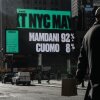
Ads for Kalshi in New York predicted a victory for Zohran Mamdani in the city’s mayoral election before votes were counted and polls closed on November 4, 2025.
Olga Fedorova/Associated Press
hide caption
toggle caption
Olga Fedorova/Associated Press
The prediction market platform Kalshi boomed so much during Trump’s second term that it sparked something of an arms race: Robinhood, Coinbase, FanDuel and DraftKings have all announced competing services in an attempt to exploit the prediction market mania, as traders invest hundreds of thousands of dollars speculating on future events.
But the long-term prospects of this nascent industry could depend on how a series of legal battles define a single word: gaming.
Kalshi allows people to bet on sports, current events and all kinds of cultural events, processing billions of dollars in weekly bets and entering into partnerships with major news agencies.
While high-value betting on news grabs the headlines, around 90% of activity on Kalshi is sports-related. Still, Kalshi is not considered a sports betting site, like FanDuel and DraftKings.
Instead, they are overseen by the Commodity Futures Trading Commission, an agency that regulates “futures contracts,” which Kalshi says he offers.
Under federal law, “gambling” is a prohibited type of futures contract – a subject currently the subject of litigation in many federal courts.
The future of Kalshi, and perhaps the entire prediction market industry, may depend on whether the courts can convince people that placing monetary bets on sporting events is not a type of gambling.
Nineteen federal lawsuits are pending at various stages challenging the legality of the app in the context of state gambling laws, which traditionally monitor bettor activity, according to an NPR study.

Traders place bets on news on the Kalshi platform.
Screenshot by NPR
hide caption
toggle caption
Screenshot by NPR
Kalshi recruited a group of high-profile attorneys to argue that sports betting on the site is not “gambling” and that state laws do not apply to them, since they are federally regulated.
“Mountains of authority confirm that the [federal law] preempts the application of state law,” Kalshi’s attorney, Neal Katyal, wrote in a brief this week in a case pending before the 4th U.S. Circuit Court of Appeals. “Let each state regulate [prediction markets] otherwise would clearly defeat Congress’s goal of subjecting the futures markets “to a uniform set of regulations.”
Daniel Wallach, a video game lawyer who has become an outspoken critic of prediction markets, said Kalshi’s linguistic maneuvers to skirt state laws conceal the true nature of the business.
“They’re in on the game no matter what they try to call it,” Wallach said. “If you look at their offerings, including parlays, prop bets, on sports, it’s the epitome of sports gambling.”
As trials drag on, the Supreme Court or Congress could have the last word
Kalshi has faced a series of lawsuits, just as the company has launched its own legal attacks in federal courts across the country.
Eight of the lawsuits come from state gaming commissions and Indian tribes accusing Kalshi of operating an unlicensed sports gaming platform; six of the lawsuits are Kalshi on the offensive, suing state regulators claiming they don’t fall under state gaming rules. The other five complaints were filed by individuals who argue that Kalshi is an illegal service that aggravates gambling addiction. Four of these cases are seeking class-action status.

Kalshi traders bet on the outcome of world events, including dark scenarios that could involve issues such as displacement and famine.
Screenshot by NPR/Kalshi
hide caption
toggle caption
Screenshot by NPR/Kalshi
The state-federal feud over Kalshi will set the tone for the entire prediction markets industry, said Koleman Strumpf, an economics professor at Wake Forest University who studies prediction markets.
“This is a question that the Supreme Court, and perhaps even Congress, will have to decide on,” Strumpf said. “The fundamental question is to what extent technical skills are still involved. [in the betting] and what is the definition of ‘gaming’,” he said.
Kalshi had been facing regulators for years before introducing sports betting. In January 2025, it announced the introduction of sporting events, and its popularity quickly exploded. It allowed people to access live, second-by-second sports betting in states where sports gambling is illegal, such as California and Texas.
“What’s changed?” » said lawyer Wallach. “The election of Donald J. Trump”,
Kalshi was under pressure, then Trump was elected
Donald Trump Jr., the president’s son, is now an advisor to Kalshi and Polymarket, who was forced to leave the United States under Biden but is now staging a return to the United States. The president’s social network, TruthSocial, is also considering launching its own market prediction service.
With political support from the Trump administration, Kalshi’s lawyers have argued in nearly 20 lawsuits that federal law takes precedence over state gaming rules.

Under Trump, the CFTC opened the way for Kalshi to arrange bets on sports, elections and the outcomes of various other future events, from the number of migrants the United States will deport to the song that will open musician Bad Bunny’s NFL halftime show.

An example market on the Kalshi trading platform.
Screenshot by NPR/Kalshi
hide caption
toggle caption
Screenshot by NPR/Kalshi
For Kalshi, being regulated as a futures contract subjects the business to far fewer rules than if it fell under the supervision of the state gaming commission or was treated as a security, like the stock market, financial experts say.
However, there are safeguards. For example, under the Commodity Exchange Act of 1936, which was updated after the 2008 financial crisis, five types of futures contracts are prohibited: betting on illegal activities, assassinations, terrorism, war, and gambling.
In a proposed rule under the Biden administration, the CFTC sought to rein in the industry by blacklisting sports and election betting, arguing they were “contrary to the public interest,” but the rule was not finalized until the Trump administration regained control in Washington.
While the Trump administration has taken a hands-off approach toward the industry, the courts are divided.
A federal court in Washington DC ruled in 2024 that election betting does not constitute “gaming” in the same way as poker or slot machines, while courts in Maryland and Massachusetts have ruled that Kalshi betting is indeed gaming.
When the law was updated as part of the 2010 Dodd-Frank Act, no one anticipated the emergence of prediction market apps, former CFTC officials told NPR, with one describing DC’s move as a “rocket booster” for the industry.
Kalshi says he’s confident the federal courts will ultimately rule in his favor, but gaming lawyer Wallach predicts the company has a good chance.
“They are throwing as many darts at the wall as possible and hoping there will be disagreement in the courts to give them more room to maneuver,” he said. “But the Supreme Court, or Congress, can end this very quickly for them.”