Contributors to Scientific American’s October 2025 Issue


September 16, 2025
4 Min read
Contributors to American scientistOctober 2025
Writers, artists, photographers and researchers share the stories behind the stories
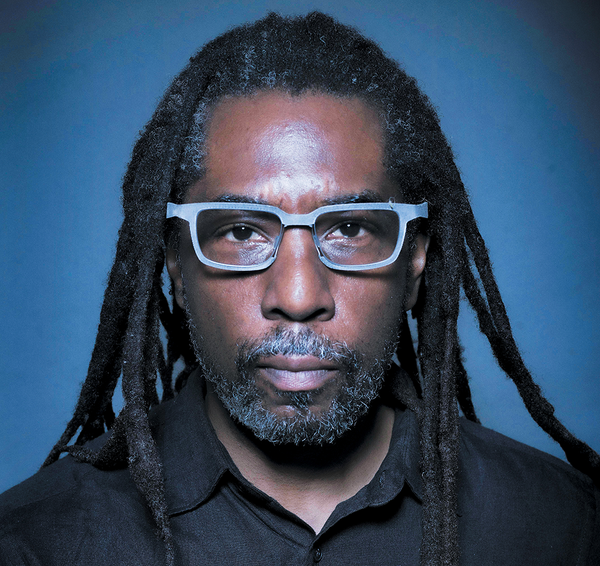
Chris Gunn
The life of dead trees
For almost 25 years Chris Gunn (above) worked as a contractual photographer for NASA, where he shot precious objects such as Moon Rocks brought back from the first landing of Apollo and, as a main photographer of the project, captured three years from the construction of the James Webb space telescope. This often meant working in clean rooms, with their rigid protocols and their highly controlled conditions. Thus, when Gunn entered the dense forests of Oregon to take photos for the history of journalist Stephen Ornes on a long -term study of decaying newspapers, it was an entirely different experience. “Having turned in places with such austere geometric patterns for so long, entering the forest, at first, I said to myself:” Oh, my God, some trees are not straight, “he said, laughing. “They spoil my photo!”
Gunn, who lived in the Washington region, DC, almost in his life, sought missions that would bring him closer both to nature and to communicate environmental change. “In a large part of my previous work, I was a stranger who looked at something, and this time I was really inside,” he said. Gunn likes his images to be super sharp, so he observed how the light fell through the canopy; Exposure control has given depth to its photographs. Although the subject was dead trees, “there was still so much life,” he said. “It was magic from the point of view of imaging.”
On the support of scientific journalism
If you appreciate this article, plan to support our award -winning journalism by subscription. By buying a subscription, you help to ensure the future of striking stories about discoveries and ideas that shape our world today.
Cassandra Willyard
Decode blood
Alzheimer’s disease has touched almost everyone’s life in one way or another, explains that independent journalist Cassandra Willyard, whose article in the special report of this issue on Alzheimer’s disease concerns a recently approved diagnostic blood test for the disease. “This is a complicated subject because there is still a controversy in the field on how it should be used correctly,” she says. But Willyard, who works as a scientific writer for two decades, deliberately continues stories with great complexity. Sorting the nuances and presenting clear dishes to readers is a satisfactory challenge. For his entire career, “I focused very on medical subjects such as the development of drugs and infectious diseases because I find it so fascinating and so relevant for what everyone is going through.”
Watching federal research funding is dismantled has been particularly dismaying for Willyard, as it reported the long trajectories of certain tests and treatments, such as the development of genetic therapies and a possible vaccine for Lyme disease. “But speaking to scientists helps me to stay committed and to hope for the future,” she says, “because they are enthusiastic about what they learn.”
Lauren N. Wilson
The dawn of the migration of polar birds
“Most children go through a dinosaur scene,” said paleobiologist Lauren N. Wilson. “I never grew up.” Wilson co-owned a functionality with Daniel T. Ksepka in this issue on their discovery of the oldest known evidence of polar migration in birds. She says she found it fun to write about their research for a popular audience because she was able to talk about what delighted her most: “The baby-bird fossils were so cute. Most of the bones I worked on were two millimeters or more.”
When Wilson, who is now a doctorate. A student at Princeton University, went to Alaska for higher education, she thought she would spend her first summer to identify and describe the fossils of birds alongside Ksepka. “We started to make sense that some of these things were quite important,” she recalls. “I sent an email [Ksepka] Non-stop for the next three years, saying: “Wow, it’s weird, look at this, what do you think?” “The result of their work in the field was a” holistic study not only of birds but of the whole ecosystem, “she said.
Stories like this are important, says Wilson, because we would not be able to understand how abnormal global warming is if we did not know how things have happened in the past. “We have learned that birds nest in the same region in Alaska for 73 million years,” she said. “Then humans arise, and in the blink of an eye, we endanger this.”
Rebecca Gelernter
The dawn of the migration of polar birds
Illustrator Rebecca Gententer likes to make Paleoart, “and I can’t do it very often,” she said. For this issue, she illustrated 10 old birds for a cladogram in the characteristic of Lauren N. Wilson and Daniel T. Ksepka about the dawn of bird migration. While GELERTER speaks of skeletal reconstructions, it is easy to feel his joy of bringing fossil birds back to life. “I really like A guide on the ground on mesozoic birds and other winged dinosaurs [by Matthew P. Martyniuk] Because it is structured as a bird guide, with notes on the proportion and the lip, “she says.
GELERTER has been a “bird person” since they were 10 years old, and she studied ornithology in college. She then discovered the scientific illustration and signed up for a higher education program, “which was one of the best decisions I have ever taken.”
The most funny part of the work is when Gelenter manages to solve the gaps in knowledge, for example by designing plumage colors for dinosaurs. “I like to add a little ridge here, funny fabrics there,” she says. “The birds are just weird. They have all kinds of bizarre display structures, so it’s difficult to find something really unreasonable.”
It’s time to defend science
If you enjoyed this article, I would like to ask for your support. American scientist has been a defender of science and industry for 180 years, and at the moment can be the most critical moment of this two -centuries story.
I was a American scientist The subscriber since the age of 12, and that helped shape my way of looking at the world. Sciam Educates me and always delights me, and inspires a feeling of fear for our vast and magnificent universe. I hope that does this for you too.
If you subscribe to American scientistYou help make sure that our cover is focused on significant research and discoveries; that we have the resources necessary to report the decisions that threaten laboratories in the United States; And that we support the budding scientists who work at a time when the value of science itself does not become often again.
In return, you get essential news, Captivating podcasts, brilliant infographics, Maybe not miss newsletters, videos to watch, Difficult games and the best writings and reports in the scientific world. You can even Give someone a subscription.
There has never been more time for us to get up and show why science counts. I hope you will support us in this mission.


