FBI boss Kash Patel gave New Zealand officials inoperable but illegal 3D-printed guns


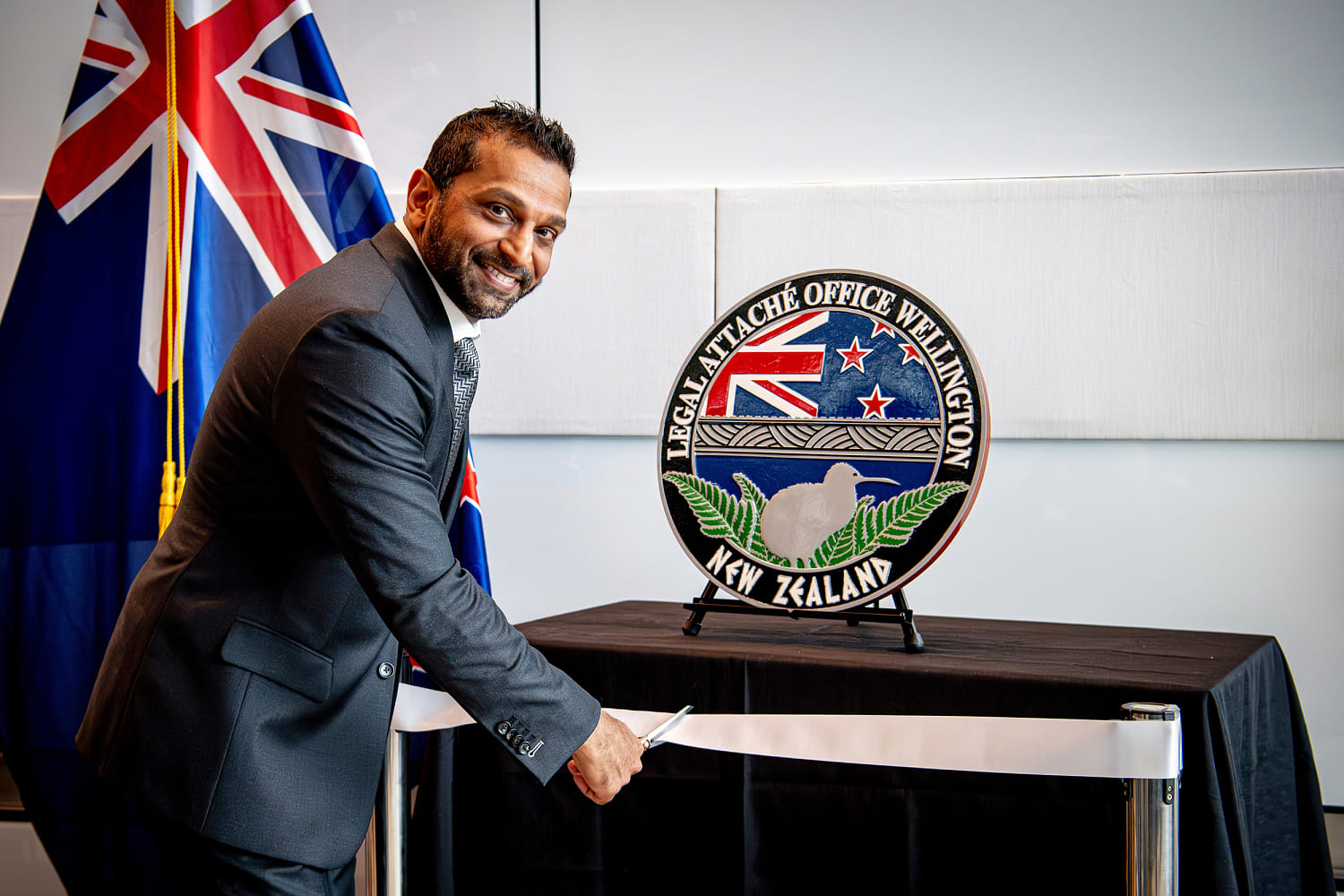
FBI director Kash Patel gave “plastic plastic plastic” pistols “deemed illegal illegal under New Zealand firearms to at least three senior police, security and intelligence officials during a visit to the country earlier this year, the law enforcement agencies confirmed NBC news on Tuesday.
Patel presented firearms to the New Zealand police commissioner Richard Chambers; Andrew Hampton, director general of the country’s intelligence service; and Andrew Clark, director general of the government of the Communications Security Office (GCSB), According to the police and the departments of Hampton and Clark.
Patel went to the capital, Wellington, to open the first FBI autonomous office in New Zealand on July 31.
The agencies did not say exactly how many people have presented themselves with gifts, including a spokesperson for the New Zealand intelligence community described as “a standing change stand” whose pistols were “part of the design”.
The inoperable weapons that can be modified or modified to be made operable is illegal to have under the New Zealand law. An additional permit, beyond an ordinary firearm license, is required to have a pistol.
The maximum prison sentence for a person who illegally owns a pistol in New Zealand is three years or a fine of 4,000 New Zealand dollars ($ 2,300). There is no suggestion that Patel could be billed.
Chambers, in a written declaration at NBC News, said he had asked for the advice of the country’s Firearms Safety Authority, the government body responsible for regulating the possession and use of firearms in New Zealand, one day after receiving the gift.
“Although inoperable in the form in the form that they were gifted, a later analysis of the Firearms Safety Authority and the police armory determined that the modifications could have made them operational,” said Chalmers.
“To guarantee compliance with the laws on firearms, I asked the police to keep them and destroy them,” he added.
The spokesperson for the New Zealand intelligence community said that Hampton and Clark donations were also given to the country’s national police forces.
New Zealand police, the NZSIS and the GCSB did not respond to the NBC News investigation as to whether one of the beneficiaries holds the relevant license required to have a pistol.
The FBI refused to comment.
New Zealand tightened its firearms restrictions in 2019, after Australian opened fire on the faithful of two mosques of Christchurch, killing 51.
An investigation into the attacks revealed that the attacker had been able to raise a mine of semi-automatic weapons, the authorities not applying the appropriate checks on firearms licenses. The sale of all types of semi-automatic weapons and assault rifles was then prohibited.
The violent crime of firearms and the possession of firearms in the urban areas of New Zealand are rare, with possession largely limited to those of rural areas for hunting and combating parasites or among the police, according to John Battersby, senior member at the Center for Defense and Security Studies at Massey University of the country.
While the New Zealand police are trained to use firearms and have access to it, they often leave their weapons locked up in their vehicles, he said in NBC News on Tuesday during a telephone interview.
The approach of New Zealand on firearms is “fundamentally different” of the United States, he said, noting that possession is not inscribed as a law in law.
“We do not have a culture of acceptability of firearms in public places,” he said. “If someone was seen with [a firearm] In any type of normal and daily context, the police would be called. “”
During his visit in July, Patel opened the first FBI office in New Zealand, an attempt to counter China’s activities in Indo-Pacific, the protection of the five eyes of the five eyes and the reprimand against cybercrime.
He is the most senior member of the Trump administration to visit New Zealand since the president’s second term.


