Trump’s trade deals are arriving, but details on how they’ll benefit the economy have yet to materialize


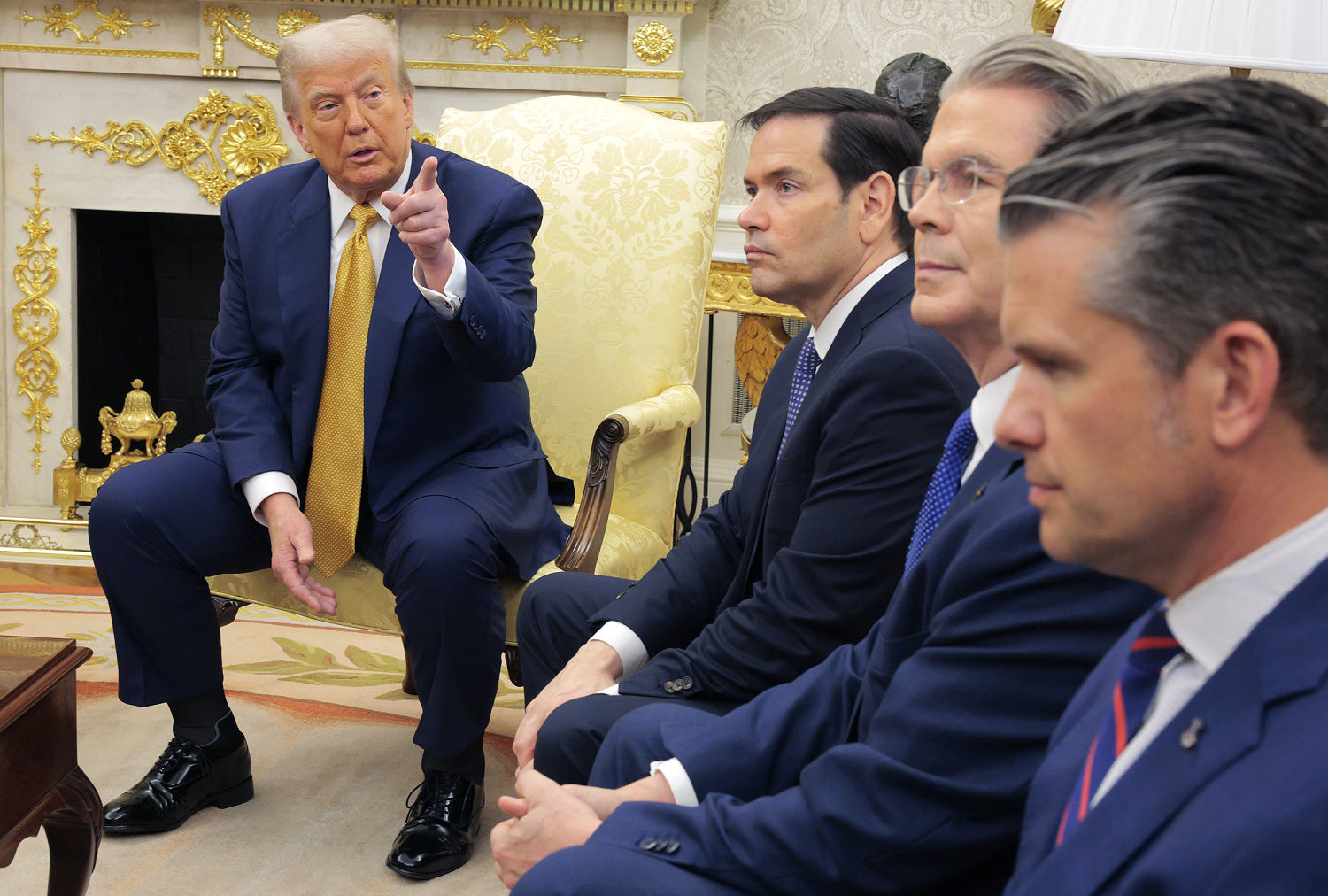
President Donald Trump began to announce a series of new bilateral trade agreements. The details of the transactions – and which, if someone, benefit from it – remain largely unknown.
Trump on Tuesday announced three new agreements with Indonesia, the Philippines and Japan. The announcements came without any information on the application or the guarantees, apart from the price levels set out by Trump – 19% for the first two, 15% for Japan – and the promises to eliminate obstacles to imports of American products.
Instead, the transactions were overshadowed by the warnings of American companies on the impact of Trump’s prices to their results, extending a cloud of uncertainty on an American economy already operating at the speed of the stall.
Although the chances of recession have been covered in recent weeks, the economists interviewed by the Wall Street Journal still see 33% ratings of an arrival within one year, against 22% at the start of 2025. Meanwhile, profits estimates for the S&P 500 compiled by factset research group have been 3% lower since then, said the newspaper.
And even if the main stock market indices continue to be higher to quasi-Records recordings, analysts claim that gains are increasingly motivated by a band of ever more narrow companies, such as technological companies, which are not affected by prices. Reuters reported this week that on 68 American companies that provided explicit reactions to the prices, 26 issued beneficiary margin warnings, while 24 announced price increases.
It is not clear how none of the new offers will improve the questions. The new most important agreement recently announced by Trump is with Japan. It imposes a tax of 15% on products imported from this country, Japan committing to “open up” to more American products “including cars and trucks, rice and certain other agricultural products and other things”. Trump has also announced an unspecified investment worth $ 500 billion, of which the United States would make 90% of the profits.
Commerce secretary Howard Lunick said on Wednesday that $ 500 billion could be used for “anything” – from the manufacture of pharmaceuticals to the construction of semiconductor factories or the exploitation of critical minerals. Japan “will finance the project, then we will give it to an operator who will execute it and the profits will be divided-90% to the taxpayers of the United States and 10% of the Japanese,” he said.
When asked if the billions were only loan guarantees, Lutnick said that he encompassed “actions, loans and loan guarantees”. He added that Japan would be “the banker” for the projects that the United States wanted to continue.
Lutnick said that the investment had been proposed as well as reducing prices to 15% because “the Japanese will never really open their market as Donald Trump wants them to open it”. Shortly after Lunick made these comments on Bloomberg Television, Trump wrote on his social platform Truth, saying that “Japan is, for the first time, opening his [MARKET] In the United States “, adding that the agreement includes” cars, SUVs, trucks, and everything else “.
Put aside contradictory remarks, The agreement is used to massively increase the effective tax rate billed to companies that import Japanese products from 2% to 15%. With most analysts agreeing that the import company – and, in many cases, the end consumer – ultimately pays the price, it translates into nearly $ 23 billion in private expenditure lost in the American economy, given the value of around $ 150 billion in goods that the United States imports from Japan.
Early Wednesday, the three major automakers in Detroit expressed their concerns concerning the agreement in Japan, claiming that if nothing changes, Japanese automobile imports are now faced with a rate of price lower than those imported from Canada and Mexico, where the trio still maintains a large part of their production capacity. The warning intervened after GM announced a stroke of $ 1 billion at its prices of tariffs already collected.
“Any agreement that charges a lower price for Japanese imports without practically no American content than the price imposed on North American built vehicles with high American content is a bad deal for American industry and American car workers,” said Matt Blunt, who heads the American Automotive Policy Council, in a press release.
Investors also react, but not as they did before.
Unlike at the start of his second term, when Trump’s deployment of prices caused one of the strongest sales in history, the markets are now upstart when Trump announces the new transactions – pending simultaneously that the impact of prices appears in the economy, while not knowing that Trump announced will eventually stick.
In a note to customers published on Wednesday, Piper Sandler Financial Group analysts said they doubt that transactions being concluded.
“These transactions are concluded under constraint,” they wrote. “Instead of being based on fixed free or fair trade principles – or you could say, reciprocity – these transactions consist of a lever effect. But leverage changes all the time.”
For the moment, they have said, it is clear that any agreement announces that Trump will understand higher import rights.
“Investors should expect higher rates after August 1,” they wrote.


