FCS standard bearer North Dakota State seeks fresh challenge with leap to FBS


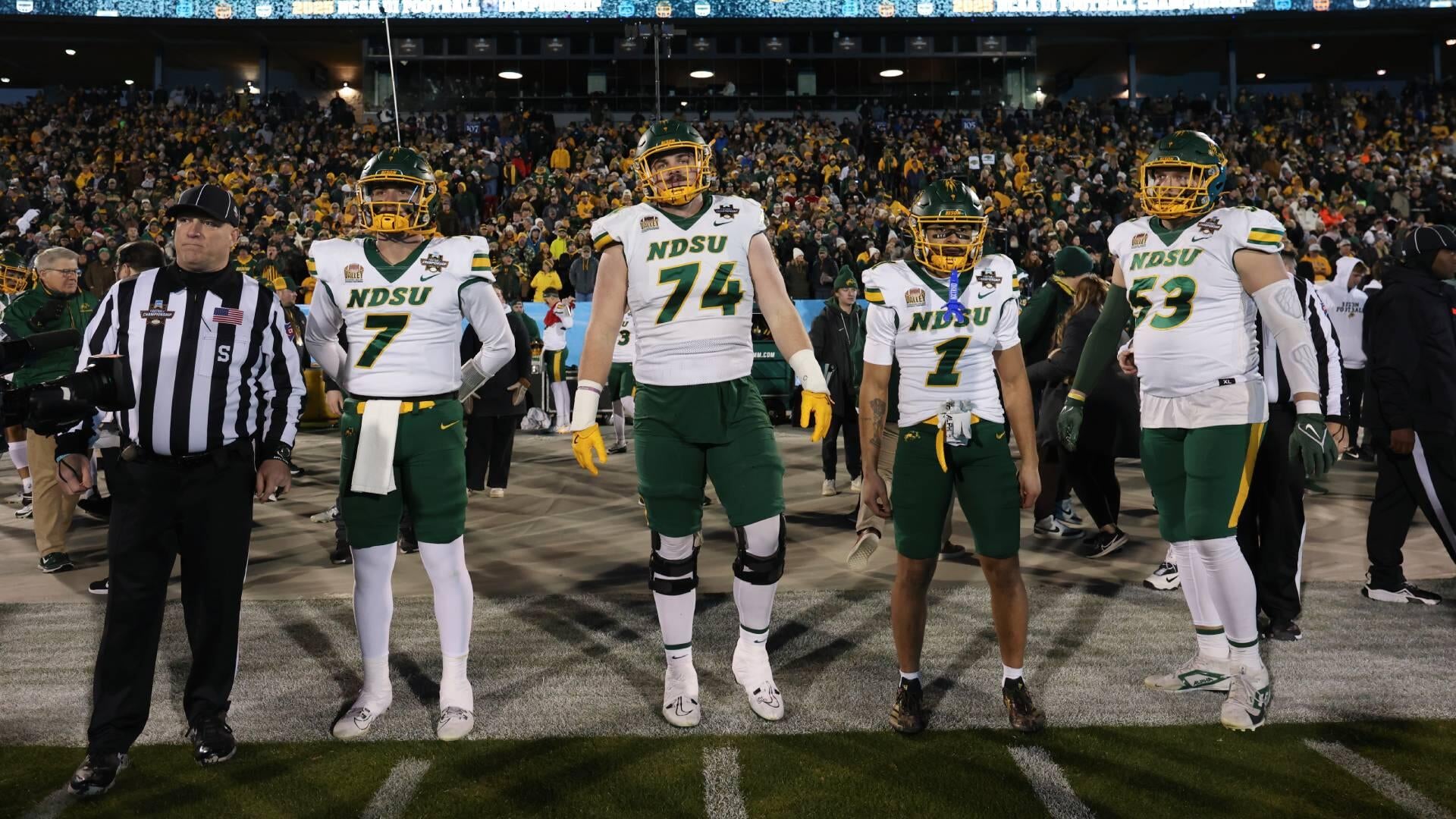
North Dakota State’s newest FBS school found itself in a similar position to Alabama fans at the height of Nick Saban’s dynasty: They simply won too much. The school has won 10 national championships in 15 years. Within the fan base, the expectation is not just success, but success at the highest level.
Attendance for the first-round home playoff games that NDSU was expected to win hands down suffered. This year’s loss to Illinois State drew 10,464 official fans to the 19,000-seat Fargodome, half full. Despite five interceptions by Redbirds quarterback Tommy Rittenhouse, the No. 1 Bison lost. It was the first time NDSU fell before the quarterfinals since 2009 and the first time a No. 1 seed lost its first playoff game since 2004.
Few people knew it at the time, but it was NDSU’s last game at the FCS level. A process that began to intensify in late fall accelerated in January, when athletic director Matt Larsen began to believe the program was making progress from the division it had dominated since 2004. For a segment of the Bison fan base, the move to FBS will pose a new challenge.
“I think there is an element of our fan base that has had great success in the sequel, is there a next iteration at a higher level for Bison football?” NDSU AD Matt Larsen told CBS Sports. “And so I think that’s where, if you ask me, where the fan base was, six or seven years ago, they probably weren’t there yet, right? But four national championships later, and I think the majority of Bison Nation would tell you this is the right next step, and it’s the right time to do it.”
To compete in the FBS, North Dakota State must be up to the task not only on the field, but financially as well. NDSU will pay $5 million to the NCAA for the transition and a $12.5 million entry fee to the Mountain West over six years.
Consider the Fargodome. The Bison’s longtime home is owned by the city of Fargo and requires voter approval for renovations. A referendum has failed twice in recent years. Larsen said the Fargodome has a reserve fund earmarked for renovations, but the 32-year-old building needs updates, especially for more premium seating. An ongoing convention center project – which may or may not be located on the Fargodome site – is also being factored into the decision-making.
North Dakota State opened a 117,000-square-foot, $54 million football facility in 2022. Its athletic department’s total budget is about $30 million a year, and Sportico reported the school spent $8.4 million on football last fiscal year. Larsen expects that figure to double within two years, taking into account personnel, scholarships, revenue sharing and coaching compensation.
The school’s main athletics fundraising arm said it had “tentatively raised” $25 million for the move. NDSU does not plan to add sports to offset the increase in football scholarships from 65 to 85 when moving to FBS.
The school will receive a full share of the Mountain West’s television revenue by 2032, but as CBS Sports previously reported, it will collect 50 percent of the College Football Playoff and bowl revenue distributed to full members this year and 100 percent after its second postseason appearance. The school plans to challenge the NCAA’s two-year probationary period that prevents it from playing in the postseason.
As with many cases of realignment, the loss of tradition is part of the cost. South Dakota State and North Dakota State have met 118 times and have played for the Dakota Marker Trophy since 2004. The rivalry has often determined FCS supremacy, with one or both teams ranked in the top five when they meet. After the 2022 season, they faced each other in the national championship game.
“I would say for the foreseeable future, it’s probably on hold,” Larsen said. “I think our rivalry was born out of a lot of respect between programs that did it the right way. And so I think there are so many positives in this decision, I think the one thing you could say that our fans are going to miss is playing for the Dakota Marker, because there have been some epic games over the last 10-15 years that have created great memories and great opportunities for our fans.”
As one FCS administrator warned CBS Sports, there’s a “be careful what you wish for” element to moving forward: trading double-digit winning seasons and championship runs for years that could end in a lower-level bowl game in a remote, hard-to-reach location. Novelty may seduce at first, but it fades without winning.
Still, there is reason to be optimistic about the Bison’s ability to compete quickly. Programs with less FCS pedigree have made successful transitions in recent years.
New FCS to FBS members Delaware and Missouri State both finished 7-5 and reached bowl games in their first seasons. After struggling in its 2024 debut, Kennesaw State went 10-2 under new coach Jerry Mack and won a conference championship against Jacksonville State, which advanced in 2023 and won at least eight games in each of its first three FBS seasons under two different coaches. Sam Houston also advanced in 2023 and, in its second year, narrowly missed a Conference USA title while winning 10 games. James Madison made the transition in 2022 under Curt Cignetti and has won at least eight games every year since. The 2025 season under Bob Chesney culminated with a College Football Playoff berth.
The relative ease of these transitions raises questions about the gap between the top half of the FCS and the Group of Five conferences.
In many ways, North Dakota State accomplished all it could at the FCS level. Now the FBS journey begins.