FDA approves Wegovy weight loss pill from Novo Nordisk


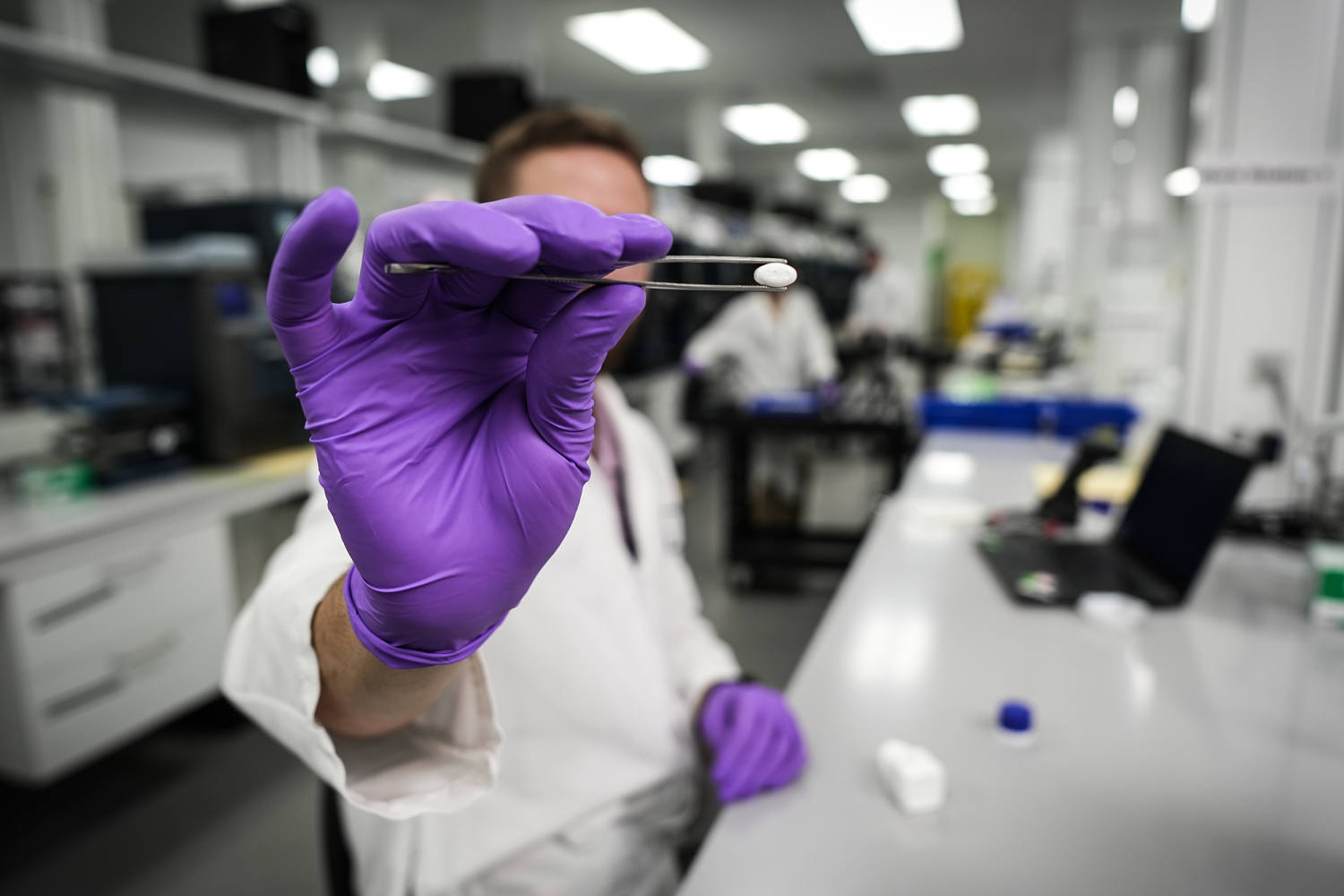
The Food and Drug Administration on Monday approved a pill version of Wegovy, Novo Nordisk’s blockbuster weight-loss drug.
The Wegovy Pill, as it is known, is the first oral version of a GLP-1 drug to be brought to market for weight loss. A second pill, from Eli Lilly, is also expected to be approved in the coming months.
GLP-1 drugs — which include semaglutide, the drug found in Novo Nordisk’s Ozempic and Wegovy, and tirzepatide, the drug found in Lilly’s Mounjaro and Zepbound — have gained popularity in recent years. The compounds, initially approved for diabetes, may also provide significant weight loss.
The medications all come in injectable form. (Novo Nordisk makes a tablet version of semaglutide, called Rybelsus, for diabetes. It comes at a lower dose than the new version for weight loss.)
“This is a significant step forward in the field,” said Dr. Christopher McGowan, a gastroenterologist who runs a weight-loss clinic in Cary, North Carolina. “It won’t replace injectables, but it will greatly expand our toolbox. »
“The pills are familiar, non-intimidating and fit more naturally into most people’s routines,” McGowan added. “For many patients, a pill is not only easier, it is more psychologically acceptable.”
Novo Nordisk has not released the list price for the pill, which must be taken daily, but it is expected to be cheaper than weekly injections. Questions remain regarding insurance coverage; many private insurers limit coverage for injections because of their high cost. The law prohibits Medicare from covering weight-loss drugs, but the pill has also been approved to reduce the risk of heart disease — which Medicare covers.
In November, Novo Nordisk struck a deal with the Trump administration to sell the lowest dose of the pill for $149 a month to people who pay out of pocket, in exchange for tariff relief. Lilly struck a similar deal for its diet pill.
Like injections, the pill will come in several doses. People usually start with the lowest dose and gradually increase over several weeks to adjust to side effects.
How well does the Wegovy pill work?
Results of the phase 3 clinical trial published in the New England Journal of Medicine found that people who took the highest dose of the Wegovy pill lost 16.6% of their body weight on average after 64 weeks, compared to 2.2% weight loss in the placebo group.
This is roughly comparable to Wegovy’s injectable version, which in clinical trials demonstrated a weight reduction of about 15% after 68 weeks.
Dr. Shauna Levy, medical director of the Tulane Weight Loss Center, said the biggest challenge for people who opt for the pill version will likely be compliance: The pill must be taken early in the morning, on an empty stomach, with no more than 4 ounces of water.
People in the clinical trial who didn’t follow the strict program lost less weight, 13.6% of their body weight on average.
The open question is “real-world performance,” McGowan said. “Will patients tolerate daily dosing and a strict schedule? Will they stay on treatment long enough to see significant results? We don’t know yet.”
As with GLP-1 injections, the most commonly reported side effects during the trial were gastrointestinal, including nausea and vomiting. In some cases, the pill version’s side effects may seem “more intense,” McGowan said, because the drug hits the stomach all at once and can trigger nausea.
“The challenges we see with injectable GLP-1s don’t magically disappear with a tablet,” he said.
Although the weight loss seen with the Wegovy pill is comparable to that of the injection, Levy said that in general, oral GLP-1 medications don’t typically cause as much weight loss as the newer injections.
Lilly’s Zepbound helped people lose 22.5% of their body weight on average after 72 weeks of clinical trials. And Lilly’s next-generation shot, retatrutide – which has not yet been approved – resulted in an average weight loss of 24% after 48 weeks.
“Zepbound maintains its status as the best medical treatment for obesity, inferior only to bariatric surgery in terms of results,” Levy said.
Novo Nordisk says differences in weight loss may be due to swallowing a pill. The body breaks down part of the pill as it moves through the digestive tract, so less medicine enters the bloodstream compared to an injection. To counter this, the pill comes in a higher dosage than the injections and must be taken daily rather than a weekly dose.
The Wegovy pill is better in terms of effectiveness than Lilly’s orforglipron, which helped people lose about 10.5% of their body weight after 72 weeks in a late-stage trial.
These are not direct comparisons because the drugs were not compared in a comparative clinical trial.
The company expects the Wegovy pill to be widely available in January, according to a Novo Nordisk spokesperson.
When Wegovy was first approved, it faced prolonged shortages. This time, to compensate for shortages, the company increased production of the pill in anticipation of its launch, the spokesperson said.
McGowan said oral formulations are often easier to manufacture than injectables, which could help avoid shortages.